Gorton and Denton: what do voters see when the campaign they can't avoid invades their phones and their homes?
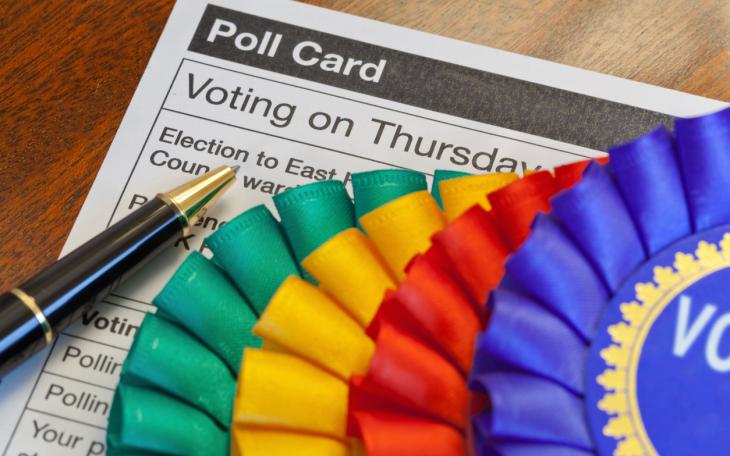

“So much stuff has come through my door, all from the Green Party. There’s half a forest behind my door,” said a voter in Gorton and Denton to Sam Coates from Sky News earlier this week. It's a familiar complaint in a Westminster by-election, where local voters find themselves in the centre of a political storm for a couple of months, before the circus packs up and moves on.
I’ve campaigned in dozens of competitive by-elections over the past quarter century and can’t help but feel for the locals when the political machines roll into town. You can’t get to the supermarket without being accosted by a cabinet minister or a journalist, keen for your voting intention or a quick soundbite for the evening news.
The harassment doesn’t end at the doorstep – it follows you into your house and specifically onto your phone. All three parties that appear to be in contention in this by-election (neck and neck between The Green Party, Labour and Reform UK, according to the most recent constituency poll) have very talented and innovative social media and digital teams and will see this as an opportunity to road test new tactics ahead of the more significant Welsh/Scottish/local elections in May.
In my opinion, the organic digital campaigns tell you little in a by-election beyond messaging strategy – much of the reach of the parties and their prominent campaigners will be national rather than local. So paid social gives us the best chance of seeing what the parties want people in the constituency (or certain demographics/locations in the constituency) to see. Paid targeted social is where you find out what messages are being delivered to specific types of voters rather than to the electorate as a whole.
Labour
Labour had a hugely successful pre-roll campaign on YouTube at the 2024 General Election and have continued this approach here. The messages are predictable: Angeliki Stogia is local local local, only Labour can stop Reform, attacks on the Green Party leader’s views on drug legalisation. Some messages are hyper-local, delivered by local residents or the candidate herself. Others are more generic and regional, with the targeting showing that they are being shown to a wider area than the constituency itself, normally a tactic to allow the allocation of national spend beyond the tight limits imposed on a by-election.
Google search ads are focused on the squeeze message that only Labour can beat Reform. Meta ads (Facebook, Instagram) are a similar mix to YouTube – anything that has resonance beyond the constituency is being delivered from the national party’s account, anything local comes from the candidate or the Labour North West regional account.
In summary: Greens can’t win, only Labour can beat Reform. Lots of Andy Burnham, very little Keir Starmer. Smart use of YouTube pre-roll to get beyond phones and onto TV screens.
The Green Party
The Green Party campaign focuses on candidate Hannah Spencer and her local track record, highlights popular party leader Zach Polanski and attempts to set the narrative that the Greens are the tactical choice to stop Reform. They have run ads using betting odds, constituency polls and the headlines generated by these polls to convince voters, whilst also highlighting the advice from left-leaning tactical voting websites to vote Green. Interestingly, they are also highlighting the endorsement they received from socialist newspaper The Morning Star to a much wider audience than its readership in the constituency. The Greens are also the only major contender in this by-election running ads in Urdu.
The Green paid social strategy does not appear to extend to YouTube or search ads and is heavily focused on the Meta platforms.
In summary: Labour can’t win, only the Greens can beat Reform. Lots of Hannah Spencer and Zach Polanski. Urdu ads were criticised by opponents but will be effective.
Reform
Reform’s paid digital campaign also appears to focus on Meta, with no obvious sign of Google search ads or YouTube. Meta ads are coming from candidate Matt Goodwin’s account rather than the national account, although the national account is running one ad which is probably targeting the constituency alongside many other areas – a data gathering petition highlighting Labour’s current trouble over Lord Mandelson.
The format is mainly video of Goodwin out on the campaign trail alongside a more polished video of Nigel Farage. Naturally, the tone is not the squeeze messaging of the Greens and Labour but focuses on direct attack of these parties alongside a more positive change message about putting the people of Gorton and Denton first. Attack lines include challenging the Greens on their drugs policy and Labour on immigration.
Reform’s target pool is smaller than that used by Labour and the Greens which makes sense in light of reports that Reform is performing more strongly on the Denton side of the constituency.
In summary: Labour have let you down, Reform will bring change and is the only party that will focus on the constituency rather than Labour internal politics or Gaza. Less emphasis on Farage than I would have expected, perhaps relying on Matt Goodwin's celebrity as a GB News presenter.
What to read next
Browse below for the latest news, insights and thought leadership from our team of experts
It’s about housing, stupid

Budget 2026: What’s in store for developers?

Delegation Nation
Reframing Britain’s Brexit debate

The missing sector in Britain's growth strategy

Pacific Pre-COP31: Testing the waters ahead of Turkey

How communications drives deal outcomes
Vibes win the click. Only substance wins the trust.