AR7: How the Conservatives challenged Labour's "cheap wind" claim
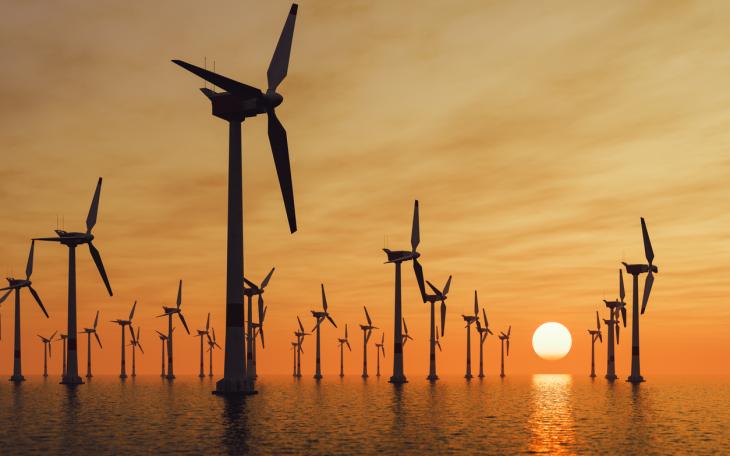

In January, the government announced the results of AR7, the UK's largest ever offshore wind auction.
A record 8.4GW of offshore wind secured. "The price secured in this auction is 40% lower than the alternative cost of building and operating a new gas plant,” said the government.
The biggest issue voters care about in relation to net zero is the lowering of bills. It is a luxury that many do not have to solely care about the environmental benefits.
The view of the government was wind is cheap, bills will fall, mission accomplished.
The comparison the government makes is the AR7 strike price (£91/MWh in 2024 prices) versus new gas plant (£147/MWh). Wind is cheaper.
The comparison to gas is favourable.
The comparison to recent wind auctions is less so. Strike prices have nearly doubled since 2022 although this can be put down to wider inflation.
The Conservatives have seized on the AR7 results as evidence that Labour's clean energy push will raise, not lower, household bills.
The argument put forward by Claire Coutinho, the Shadow Energy Secretary, is that the government's comparison is misleading because it excludes the "extra costs of grid, backup, and wasted wind" from offshore wind while including the carbon tax in the gas figure. At £91/MWh, these are the highest offshore wind prices in a decade, and that's before system costs are added. If you remove the carbon tax from gas (a political choice) and add the system costs to wind, the "40% cheaper" claim disappears.
Coutinho's broader argument is about consent. "The public have been told that Clean Power 2030, and therefore AR7, is the route to lower bills. Not 'higher but stable' bills. Lower bills. There is no public consent to lock people into higher prices for decades."
She argues that if the industry wants to make the case that paying a premium protects consumers from price spikes, they should make that argument honestly. "Pretending that securing record amounts of capacity at the highest price in over a decade, before the extra costs of grid, balancing, and backup, is going to cut the cost of the energy system and cut people's bills is not being honest with the public."
On the government's comparison, she is blunt: "Ministers may point to the Levelized Cost of Energy (LCOE) of a gas power plant and say that wind is '40% cheaper', but if they want to compare the LCOE of a dispatchable power source to CfD strike prices, then they should add in all the extra costs that offshore wind adds to the system but does not pay for, and remove the carbon tax which is a policy choice which does nothing but artificially increase prices for consumers."
Coutinho argues that backup generation is still required. "Regardless of how many wind farms we build, we have to build new dispatchable generation to ensure security of supply when wind and solar generation drops to zero. What this government is doing is building those dispatchable plants anyway, and then forcing them to run at extremely low load factors because of a self imposed political target."
Her conclusion: "Everything I have seen from this government is that they care more about the Clean Power 2030 target than protecting consumers."
Reform UK has gone further than criticising the auction results, the party actively tried to sabotage AR7 before it happened. In July 2025, deputy leader Richard Tice wrote to the CEOs of every major offshore wind developer warning them not to bid. "Net Stupid Zero is ruining our countryside and economy," Tice wrote on X. "Reform intend to stop it." The letter, which Tice called a "Renewable Notice," warned that "the renewables agenda no longer enjoys cross party support" and threatened that Reform would "seek to strike down all contracts signed under AR7" if the party wins the next election or holds the balance of power. "If you enter bids in AR7, you do so at your own risk," he wrote.
With Reform UK now leading in the polls, and openly hostile to the entire renewables agenda, the number one mission for DESNZ must be to reduce bills meaningfully before the next election.
What to read next
Browse below for the latest news, insights and thought leadership from our team of experts

The art of the teal
Pay to stay: can England’s mayors follow Manchester’s lead and turn a ‘tourist tax’ into growth?

All change on local government reorganisation

From drought to disruption: Why adaptation matters now

Australia's AI chart crackdown signals a wider shift in trust and disclosure

From Waiting for Godot to winning trust: Communications lessons from IPEM 2026

Farage, Burnham, and the battle for authenticity
What Aristotle can tell us about corporate statements