Another cost-of-living crisis is coming – who will get the blame?

No one knows how long the Iran War or the Hormuz ‘chokehold’ will last. The wild fluctuations in oil price over the past few days suggest markets do not really have a clue. The optimism that traders appeared to have earlier this week over Trump’s comments that the war will be "over soon" now appear to have dissipated as Iran ramps up strikes on shipping and infrastructure and the International Energy Agency (IEA) warns that global oil markets are suffering “the largest supply disruption in history”.
Added to the list of those who are largely powerless but hugely impacted by events is the UK government. Bloomberg have reported that internal UK government analysis shows that even a ‘mid-range scenario’ of a protracted conflict that runs into the middle of April could see the price of oil rise to $130 with repeated spikes in gas prices. It further notes that even a few weeks of disruption of liquefied natural gas (LNG) supplies will tilt European energy politics for years. The domestic impact of this could overshadow pretty much anything the government is doing on the economy in the short term.
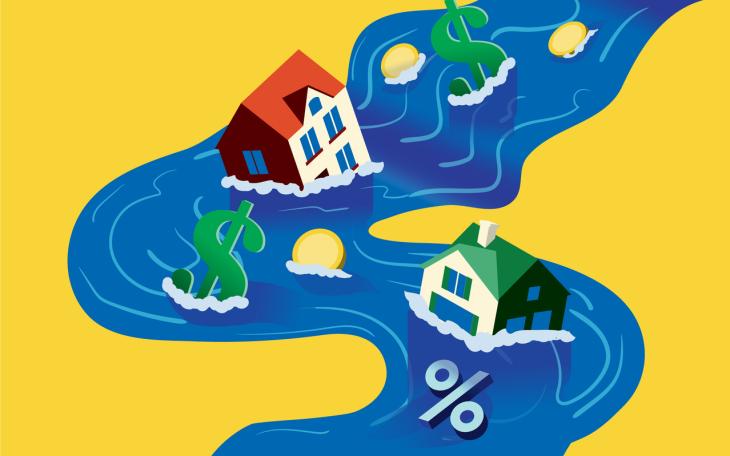
My colleague Imogen outlined some of immediate implications this is having on the energy debate, but it is worth stressing that the impact of this could extend way beyond the energy market. As well as oil and gas, the global supply of fertiliser could be greatly restricted, affecting UK agriculture. Price spikes in energy and food will feed into wider inflation, which in turn will affect interest rates and mortgages (markets are now pricing in interest rate rises instead of cuts). In short, unless this conflict de-escalates very soon, we will have another cost-of-living crisis.
The government’s room for manoeuvre on this is fairly limited. Rachel Reeves spoke yesterday to the Treasury Committee about measures that could be taken, such as a review of planned fuel duty increases. However, any mass intervention to shield UK public from the effects of inflation and prices shocks appear very unlikely – particularly with the government’s limited fiscal headroom.
Equally important from the government’s perspective is the wider politics of this crisis. Bluntly - who will the general public blame when they are hit by further price rises? Earlier this week, TUC General Secretary Paul Nowak said out loud what the government cannot for diplomatic reasons, that "working people are now facing a Donald Trump-made cost-of-living crisis”. It will be interesting to see how many people agree with him. Opposition parties, meanwhile – particularly Reform UK and the Conservatives – will be far keener to focus public anger squarely on the government, making criticisms of Labour’s energy policy and its diplomatic response to US actions (although Reform and the Conservatives may need to counter accusation of the inconsistencies in their own positions).
Recent history does provide plenty of examples of how the public view cost-of-living crises and ultimately who they blame. In 2022, following Russia’s invasion of Ukraine and the subsequent spike in energy prices, the then Conservative government under Boris Johnson weathered much of the initial concerns about inflation. It wasn’t until the widely perceived recklessness of Liz Truss’s mini-Budget later in the year that the public began to blame the government directly for the then cost-of-living crisis - a position the Conservatives never recovered from.
Similarly, during the 2008 global financial crisis, Gordon Brown initially managed to position much of the market turmoil as a problem that started in the US. By 2010, however, David Cameron and George Osborne had largely succeeded in framing it as a result of Labour’s poor financial regulation and fiscal irresponsibility.
History suggests that the longer a cost-of-living crisis carries on, the more likely it will be that those in power will be punished. Regardless of the external factors, voters will ultimately lose patience and blame whoever is in government. Labour should be hoping that the conflict de-escalates very soon.
What to read next
Browse below for the latest news, insights and thought leadership from our team of experts
The art of the teal
Pay to stay: can England’s mayors follow Manchester’s lead and turn a ‘tourist tax’ into growth?
All change on local government reorganisation

From drought to disruption: Why adaptation matters now

Australia's AI chart crackdown signals a wider shift in trust and disclosure

From Waiting for Godot to winning trust: Communications lessons from IPEM 2026
Farage, Burnham, and the battle for authenticity
What Aristotle can tell us about corporate statements