What the swing to Reform UK in Barton & Winton says about the 7 May elections


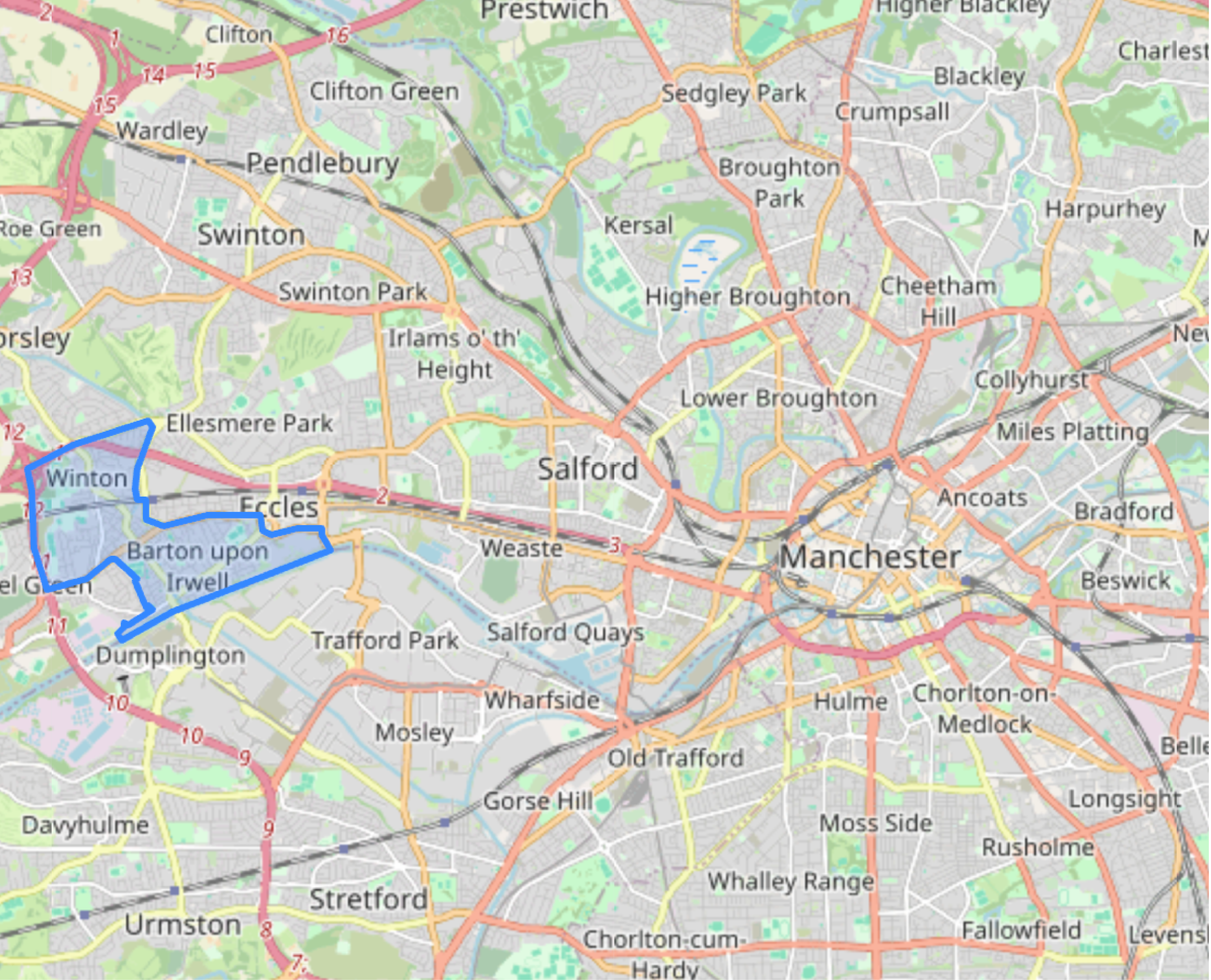
No stranger to swinging, the Barton & Winton ward of Salford City Council has history as a place of significant shifts.
It is home to Barton Swing Aqueduct, one of a kind in the world and opened in 1893 to carry the Bridgewater canal over the Manchester Ship Canal, enabling coal surfaced in nearby Worsley to power the furnaces of Manchester’s Industrial Revolution.
Alongside it, Barton Road Swing Bridge, a cast iron feat of engineering in operation since 1894, which still frequently pivots to allow large ships to pass between Salford and Liverpool.
And two weeks ago, a similarly dramatic swing from Labour to Reform UK in the Barton & Winton by-election, securing the party’s first seat on Salford Council, and becoming what some now see as a bellwether seat for the 7 May elections.
The by‑election was triggered by the death of Councillor David Lancaster MBE. Believed to be England’s longest serving councillor, he had represented the area continuously since 1965.
Under normal circumstances, the vacancy would have been rolled into the 7 May elections, when a third of the seats on Salford Council will be up for re-election, including another of the three Barton & Winton seats.
Instead, a little used provision of the Local Government Act 1972 meant the council was legally required to hold a standalone poll after two local electors - a Reform UK candidate in the nearby Little Hulton ward, and his relative - requested it in writing.
The cost to the council is said to be £20,000, with Labour figures in Salford describing the decision to force an early by‑election as “indefensible” on the basis of its cost, disruption and the fact that the poll took place before the late councillor had been laid to rest.
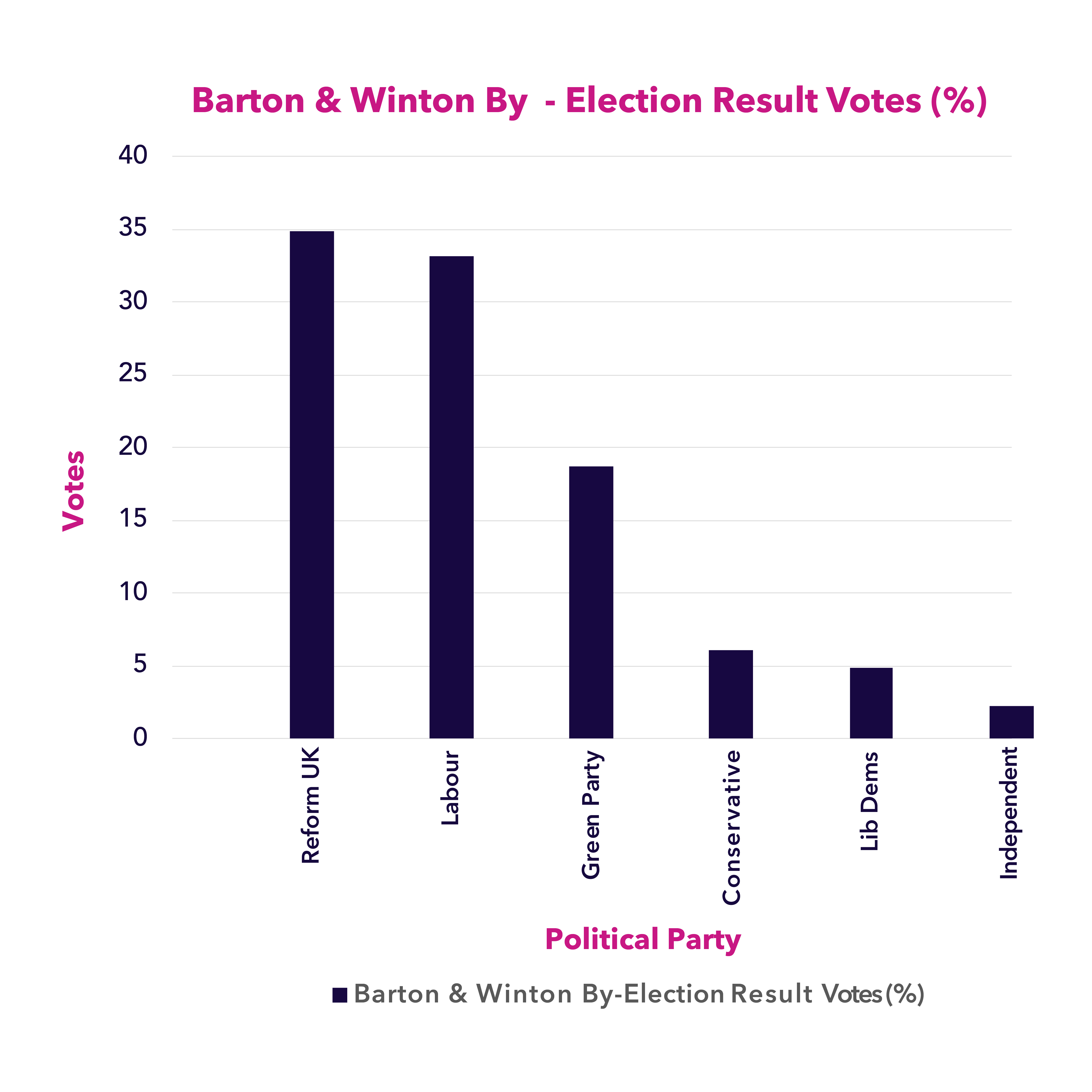
The outcome was extraordinarily close. Reform UK’s Michael James Felse won the seat by just 33 votes, securing 676 votes (34.9%) to Labour’s 643 (33.2%), on a turnout of 17.82%. The result required a recount on the night, underlining just how narrow the margin was.
To put that into perspective, Councillor Lancaster had held the seat in 2023 with 1,561 votes, a majority of 1,241. That year the Conservatives took 320 votes, with 262 for the Greens and 135 for the Liberal Democrats. Reform UK did not field a candidate.
Politically, it matters because this is Reform UK’s first ever seat on Salford Council, which is Labour led with an elected Labour mayor, Paul Dennett, who describes himself as a ‘sensible socialist’. Of the 60 seats on Salford Council, 45 are held by Labour.
Soundbites given by Councillor Felse provide no clues about his thoughts on Reform UK’s policy positions nationally: he cited largely localised issues, including suggestions that Labour has been wrong to pump money into the Salford Community Stadium, and that it would be better spent tackling potholes and litter.
Over on X, however, Reform UK leader Nigel Farage claimed more significance, trumpeting: “A huge win for Reform in Salford last night. The Labour vote dropped by 30 points. This is the best sign yet!”
But is it? What can we draw from Barton & Winton that applies elsewhere in the North West, where the Greens only recently secured a similarly historic win at Denton & Gorton parliamentary by-election?
Winton is largely residential, a mix of private and former council housing. The Barton side of the ward is home to a mosque - one of only three in Salford - with a concentration of Asian, Turkish and Polish retail outlets. But there’s no sense locally that Barton & Winton has been a target for Reform UK’s nationalistic narrative.
It is typical of dozens of former industrial towns across the North West, many of them current Labour strongholds.
According to 2021 Census Data, 82% of Barton & Winton residents were born in the UK, with 18% born outside of the UK. Two thirds of all households (66%) were deprived in at least one dimension (employment, education, health and disability, or housing (overcrowding). Just over half of all housing is social or private rented, with streets of traditional terraces, lots of affordable housing, and some new build properties. One in five residents is registered disabled under the Equality Act.
While it’s true that the Salford Community Stadium has been at the centre of something of a debacle, having been taken under local council ownership at public expense to safeguard its future, Labour can take credit for moves to revitalise Eccles town centre, which borders Barton & Winton.
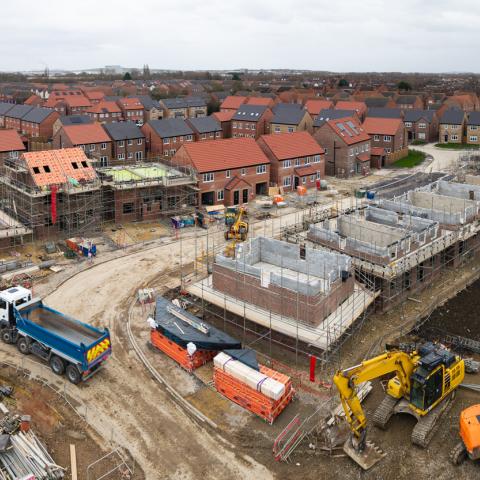
Salford Council acquired the ageing retail complex for £4.3m in late 2022 and it has since been partially demolished, with Muse appointed as the council’s lead developer for a masterplan spanning 1270 new homes and a refreshed retail offer.
Mirroring Labour’s good intentions nationally, there is evidence to the Labour council’s credit that does not appear to have been taken into consideration at the Barton & Winton by-election, or at least by too few people.
So what does this tell us about voter mood more generally? Turnout was low, which is typical of by‑elections and particularly of standalone local polls. But the pattern of the vote is still revealing.
Labour’s support fractured, with significant votes also going to the Green Party; Reform UK arguably converted disaffection into a tangible win, albeit one with a gap of only 33 votes; and the Conservatives and Liberal Democrats trailed well behind.
Nationally, Reform UK has been making gains in local elections, and the Barton & Winton result fits that broader story of protest voting, political volatility and weakening loyalty in long held strongholds. In places like Salford, the message may be less about wholesale realignment and more about frustration – with services, with governance, and with institutions that feel remote or unresponsive.
Crucially, voters in Barton & Winton will be back at the ballot box again on 7 May, when Reform UK is fielding another candidate who will be hoping to unseat a longstanding Labour councillor. John Mullen has served the ward since 2004.
Either way, the by-election leaves a mark.
For Labour, it is a reminder that even in its safest territories, controlling seven of the 10 Greater Manchester boroughs, it is not immune from challenge. For Reform UK, it provides a tangible foothold in a major northern city, even if overall control is largely out of reach this time out.
For booming Greater Manchester, which has enjoyed the spoils of a decade of political consensus, it potentially heralds the beginning of a new era, where its ambitions might not be so clearly shared.
The Barton & Winton by‑election may have been brief, controversial and low turnout, but it said a great deal about the swinging state of local politics.
What to read next
Browse below for the latest news, insights and thought leadership from our team of experts
The art of the teal
Pay to stay: can England’s mayors follow Manchester’s lead and turn a ‘tourist tax’ into growth?
All change on local government reorganisation

From drought to disruption: Why adaptation matters now

Australia's AI chart crackdown signals a wider shift in trust and disclosure

From Waiting for Godot to winning trust: Communications lessons from IPEM 2026

Farage, Burnham, and the battle for authenticity

What Aristotle can tell us about corporate statements