In office but not in power: What the latest development in the Mandelson saga means for the government’s ability to function
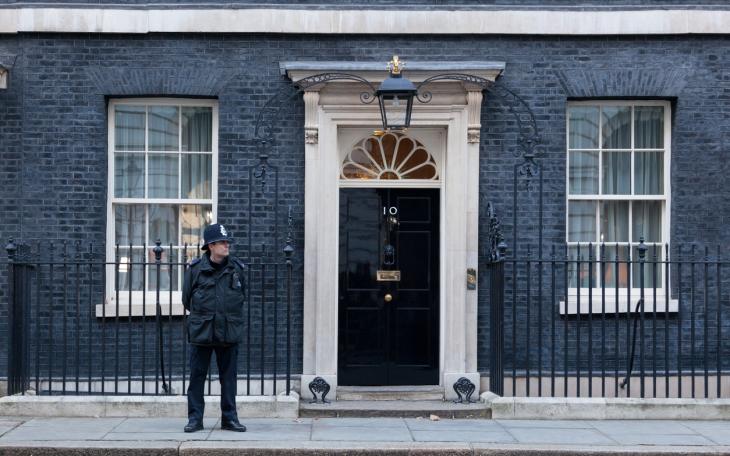

There is a clip doing the rounds on social media of the Prime Minister Keir Starmer from January 2020 during the Labour Party leadership hustings. “I had 8,000 staff for five years as the director of public prosecutions,” Starmer says. “When they had victories, I celebrated on their behalf… When they made mistakes, I carried the can. I never turned on my staff. You should never turn on your staff.”
Six years on, Starmer’s words now seem to ring hollow. Olly Robbins, the now former Permanent Under-Secretary of State in the Foreign Office, the latest of those around Starmer to have fallen victim of the Prime Minister’s decision to appoint Peter Mandelson as US ambassador, joining Morgan McSweeney, the Prime Minister’s former Chief of Staff, and Tim Allan, Director of Communications, who followed shortly after.
Enough has been written about the political implications for the Prime Minister. His position remains incredibly precarious, and what promises to be a set of disastrous results for the Labour Party in May’s elections may prove fatal for the Prime Minister.
While there is an increasing sense among Labour MPs that something has to give, the saving grace for Starmer is that this sentiment has not yet been channelled into a single would-be successor. Each of those names in the mix face their own challenges.
One dynamic which the Mandelson and now Robbins affair has thrown up is the increasingly strained relationship between Westminster and Whitehall. Often maligned by previous Prime Ministers as ‘the blob’ – the combination of state and deep state actors which help turn the cogs of government machinery – there had been hope that Starmer’s election as Prime Minister in July 2024 would reinvigorate the relationship between Number 10 and the civil service.
Two years on and the relationship looks like it could be at breaking point. Civil servants across the country are likely to have looked on in horror at the very public dressing down of Robbins by Number 10. While the exact details of the case continue to be debated, mostly in front of Dame Emily Thornberry’s Foreign Affairs Select Committee, Robbins’ ultimate crime seems to have been implementing the will of the government in appointing the Prime Minister’s choice of US ambassador. You can forgive civil servants for looking on and wondering what he might do to them, if this is what Starmer does to the most senior civil servant in the Foreign Office.
Why does any of this matter in the grand scheme of things? The civil service is a massive institution, comprising some 520,000 officials nationwide and helping to deliver the day-to-day functions of government and implementing the will of the government of the day, regardless of party colours. It is a symbiotic relationship: if the civil service does not function as it should, the government cannot implement the policy changes that it was elected to deliver.
Starmer, having been a civil servant during his time as Director of Public Prosecutions, knows all too well the valuable work that the civil service delivers every day. A motivated civil service can be a major asset for the government, while a demoralised one can hold things up significantly.
Recent history tells us that governments picking fights with the civil service rarely ends well for the former. Simon McDonald, the former Head of the Diplomatic Service, played a key role in the eventual downfall of Boris Johnson’s tenure as Prime Minister, effectively accusing him of not telling the truth during the Chris Pincher scandal. Later that year, Liz Truss fired the Permanent Secretary at the Treasury, Sir Tom Scholar, in the name of tackling “Treasury orthodoxy” to enact her radical proposals for changing Britain’s tax system.
The question is now whether this relationship can be repaired. In the short term, Starmer has tried to ease tensions during this week’s cabinet meeting – paying tribute to Robbins as a man of “integrity and professionalism”.
Yet for some within the civil service, this may have been a bridge too far and for Starmer’s future it may well be a case of when, not if, he resigns. Whoever comes next, there is a serious rebuilding job to be done, and yet another task to add to an increasingly long to-do list for the Labour government.
What to read next
Browse below for the latest news, insights and thought leadership from our team of experts

The art of the teal
Pay to stay: can England’s mayors follow Manchester’s lead and turn a ‘tourist tax’ into growth?
All change on local government reorganisation

From drought to disruption: Why adaptation matters now

Australia's AI chart crackdown signals a wider shift in trust and disclosure

From Waiting for Godot to winning trust: Communications lessons from IPEM 2026
Farage, Burnham, and the battle for authenticity
What Aristotle can tell us about corporate statements