Clean power, at what price?
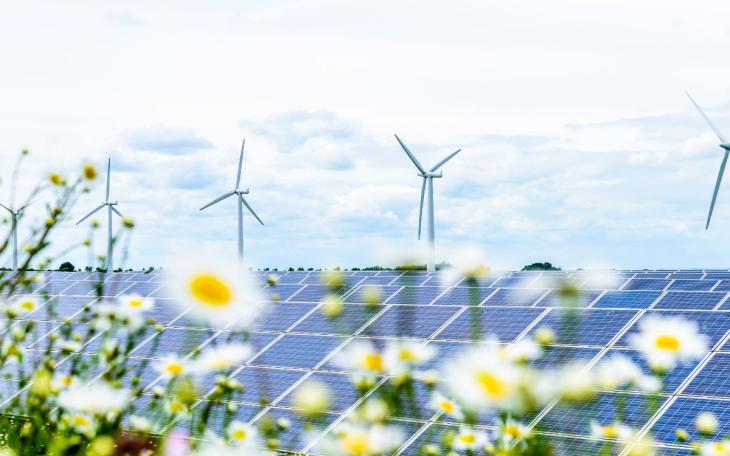

The government’s latest interventions on clean power arrive against a backdrop that appears, on paper at least, positive. Wind and solar had a record year in 2025, generating around 127 TWh and supplying roughly 44% of Britain’s electricity. Renewable capacity continues to grow, output is rising, and the marginal cost of generation remains low.
Yet the benefits of that shift remain difficult to feel. Electricity bills are still volatile, exposed to international shocks and closely tethered to the price of gas. It is this disjuncture - between a system that is cleaner in composition but still fragile in outcome - that framed Ed Miliband’s intervention at the Good Growth Foundation’s National Growth Debate, where he argued that “the era of clean energy security must come of age”. The announcements now being rolled out by DESNZ form the policy substance behind that claim, sharpened by renewed instability in global energy markets.
At the centre of the problem sits the way electricity prices are set. Under current arrangements, the wholesale price is determined by the last unit of electricity required to meet demand at any given moment. In Britain, that marginal unit is frequently gas‑fired generation. The result is familiar: cheaper renewables can be running at scale, yet bills still spike when gas prices rise, with costs passed through to consumers regardless of how much clean power is actually on the system.
The government’s response stops short of wholesale market reform, but it does attempt to weaken this link in targeted ways. Central to Miliband’s argument is the offer of voluntary long‑term fixed‑price contracts to existing low‑carbon generators that are not already on fixed arrangements, covering around a third of Britain’s power supply. Framed as a consumer protection measure, the aim here is to limit exposure to gas‑driven volatility. DESNZ has been careful to stress that contracts will only be offered where they represent clear value for money for consumers, signalling a desire to balance bill stability with fiscal restraint.
Alongside this sits a more overt political lever. The Electricity Generator Levy is being increased from 45 per cent to 55 per cent, expanding the windfall tax on electricity generators during periods of high gas prices. Ministers present this both as a way of capturing excess profits to support households amid cost‑of‑living pressures linked to the Middle East crisis, and as a further nudge toward fixed‑price arrangements by making continued exposure to wholesale volatility less attractive. By intervening in pricing rather than generation, DESNZ is tacitly acknowledging that the constraint is no longer simply how much clean power Britain produces, but how that power is translated into outcomes consumers can see and trust.
Beyond pricing, a wider package begins to take shape. Support for households on heating oil and LPG is being strengthened through an enhanced Boiler Upgrade Scheme grant of up to £9,000, targeted at those most exposed to price volatility, particularly in rural areas. Further detail has also been published on Transitional Energy Certificates, aimed at providing greater certainty for investors in existing or already‑explored areas near licensed fields, as part of a managed transition.
Delivery is a recurring theme. Additional funding for the Social Housing Fund will support up to 57,000 new solar installations this year, building on existing programmes to cut bills and move homes toward EPC C. Rooftop solar is also being extended across the public estate, with further investment planned for schools and colleges through Great British Energy, allowing savings to be recycled back into public services. More broadly, the government is looking to unlock renewable capacity across brownfield and publicly owned land, with even limited use potentially supporting gigawatts of new generation.
What rounds out the picture is an emphasis on removing friction. Planning and land access rules are set for their most significant overhaul to date under the clean energy mission, intended to cut delays to grid upgrades and renewables and explore faster routes to connection. Measures to make EV chargers, heat pumps and solar easier to install particularly for renters and households without driveways sit alongside early moves to pilot support for plug‑in solar for low‑income households, hinting at a more granular, street‑by‑street approach to delivery.
All of this feeds into a longer trajectory. A Reformed National Pricing Delivery Plan promises system‑wide efficiencies and lower costs over time, alongside the implementation of voluntary long-term fixed contracts – expected to be delivered through a wholesale Contract for Difference later this year, with a formal allocation process in 2027. Unlike traditional CfDs for new generation, this mechanism would allow existing generators to exchange wholesale exposure for fixed pricing, extending price stability without reopening legacy subsidy schemes.
Overall, these moves point towards a broader destination. The Energy Independence Bill, widely expected to feature as a cornerstone of the next King’s Speech, is coming into view as the moment at which clean power is recast as a national ambition rather than sectoral policy. Ministers have remained deliberately vague on timing, but the direction is clear: clean power is no longer being framed primarily as a climate objective, but as a pillar of economic resilience and national security.
What to read next
Browse below for the latest news, insights and thought leadership from our team of experts

Pensions reform in focus

Data Centres - Will we learn from the past?

Profit warnings and the importance of context

Delhi's protest. India's growth story.

It’s about housing, stupid

Budget 2026: What’s in store for developers?

Delegation Nation

Reframing Britain’s Brexit debate