The election on my phone and the one in real life
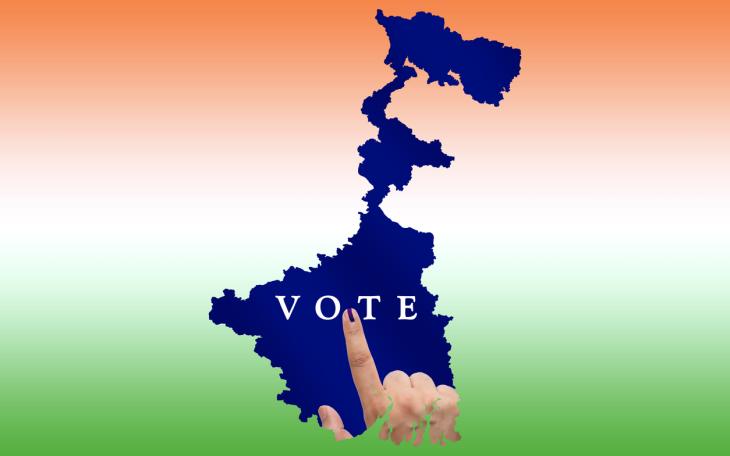

West Bengal has always been close to me. It's where I'm from, and during elections it comes alive through family discussions and local updates. The contest between the All India Trinamool Congress, the dominant state party, and the Bharatiya Janata Party, the national ruling party, has always been intense and highly visible.
With the Bengal elections now reaching their peak as voting approaches, this atmosphere feels stronger than ever. But I find myself experiencing the same politics in a completely different way this time. Not through people or the place, but through memes, short YouTube videos, and Instagram reels.
Alongside what I hear from home, I'm also watching the election unfold online, and it doesn't really look like politics. It shows up as a joke about a leader, a quick clip framing an issue in a certain way, a trending sound attached to something you'd otherwise scroll past. It feels casual, even funny. The kind of thing you'd forward to your family and friends group chat without thinking twice.
That is exactly what made me stop and think.
Influence doesn't announce itself. There is no direct argument, no visible attempt to persuade. Instead, it accumulates through repetition, through humour, through the simple fact of appearing in your feed often enough. You don't feel like you are forming an opinion. But over time, maybe you are.
When I compare this with what my family tells me, the difference is stark. What they describe is local, messy and specific. What I see online is sharper, humorous, shaped to be shared in seconds. It is not inaccurate, just very well curated!
This shift is not unique to West Bengal. In the Indonesian general election of 2024, short videos and memes on TikTok moved from the edges of campaigning to its centre. What was striking wasn't just that candidates used humour to reach younger voters, it was how quickly that format began to set the terms of the conversation. Complex policy positions got compressed into clips designed to be felt rather than analysed. Perception started to matter more than argument.
A similar dynamic shaped the rise of Zohran Mamdani in New York, whose campaign felt less like traditional politics and more like content informal, immediate, built for the platforms people already use rather than the ones they feel they should. Politicians like Zack Polanski in the UK are now studying that approach, recognising that attention today isn't just won through policy, but through presence.
What has changed is not just where politics happens, but how it reaches people. For many younger viewers, politics is not something they go looking for. It is something they come across while scrolling.
That is where it gets harder to navigate. When politics blends into entertainment, the moment of influence is invisible. You are not reading an argument and deciding whether to accept it.
You are just watching something and then watching something else. Opinions form through exposure rather than reflecting on what’s going on, and by the time you do notice, they already feel like your own thoughts.
Watching West Bengal from afar has made that visible to me in a way it might not have been otherwise. There are two versions of the same election running in parallel for me. One is lived, argued over, felt on the ground. The other is packaged and consumed on a screen.
The unsettling part is that two contradictory versions of the same election can coexist so easily, and you never notice where one ends and the other begins
What to read next
Browse below for the latest news, insights and thought leadership from our team of experts

The art of the teal

Pay to stay: can England’s mayors follow Manchester’s lead and turn a ‘tourist tax’ into growth?

All change on local government reorganisation

From drought to disruption: Why adaptation matters now

Australia's AI chart crackdown signals a wider shift in trust and disclosure

From Waiting for Godot to winning trust: Communications lessons from IPEM 2026

Farage, Burnham, and the battle for authenticity
What Aristotle can tell us about corporate statements