Brexit – a love story?
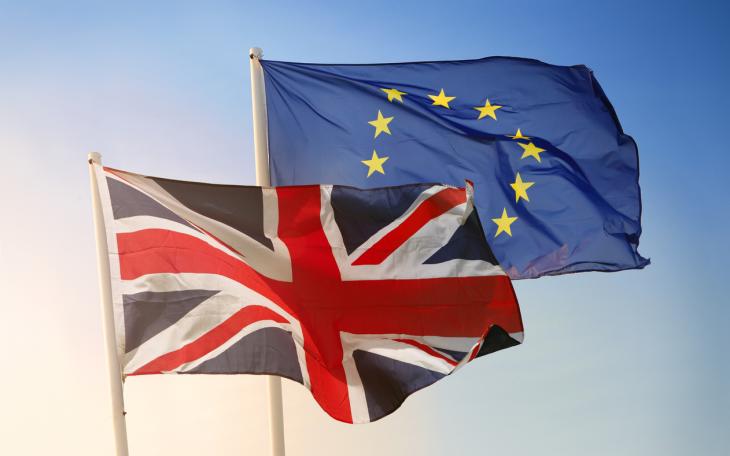

By Feriel Saouli, CEO of SEC Newgate EU
When a couple splits up, having built a life together, defined by mutual interest and joint decisions, it’s often a sad but inevitable fact that one will move into the future confidently, while the other struggles to find their new identity.
Ten years ago, the UK voted by the slimmest of margins to leave the EU. For some this was Independence Day – a moment to ‘take back control’. For others it was the greatest single act of self-sabotage exercised by any nation in recent memory.
In the EU, the result was almost universally met with a sense of bewilderment, shock and, in some quarters, anger. How could a nation - its people - have misunderstood the EU and its aims to that degree?
Impact in the UK can be measured in numbers. Estimates suggest trade is around 30% lower than it would have been, with SMEs worst affected. The Office of Budget Responsibility (OBR) calculates the UK economy shrinking by 4% long term. Ironically, with migration a key driver of ‘Leave’, net migration has increased substantially. And of course, another statistic linked to Brexit; six Prime Ministers in 10 years – so far!
That’s not to say the impact hasn’t been felt on both sides of the Channel. In the EU though, the results are less obvious, if no less significant. It lost one of its largest economies, strongest military powers and most globally connected members, weakening the EU’s influence globally.
The UK was a strong advocate for free markets and liberal trade policies. Since Brexit, the EU has adopted more protectionism and interventionism.
The loss of London as a financial hub reduced the EU’s competitiveness as its capital markets were fragmented and diluted. Brexit negotiations consumed time and energy and sent a message that membership of the EU wasn’t necessarily irreversible.
However, Brexit also forced the EU to take a much-needed hard look at itself. Rather than triggering a collapse, Brexit strengthened the EU’s sense of purpose and toughened its resolve. The EU leadership reinforced the principle that membership comes with obligations as well as benefits, but that leaving the EU should not appear more attractive than remaining.
Europe also faced a series of external challenges, uniting it further. Covid led to unprecedented collective action, including a recovery fund. Russia’s invasion of Ukraine accelerated defence cooperation, energy security and industrial policy. The EU has moved from being seen primarily as an economic and regulatory project to a geopolitical force; it has found a new identity.
In that sense, for Brussels, Brexit has given the EU confidence in its future. It has been a positive learning experience.
And here we have the biggest irony. Just when the EU has moved on – like that ex-partner who can’t quite get closure – the UK comes knocking again. For a variety of internal and external reasons, Prime Minister Keir Starmer is abandoning pledges about EU reintegration and is rapidly seeking closer ties.
The question is: does the EU still care as much about the UK as the UK does about the EU, or is it really over it?
What to read next
Browse below for the latest news, insights and thought leadership from our team of experts

The art of the teal

Pay to stay: can England’s mayors follow Manchester’s lead and turn a ‘tourist tax’ into growth?

All change on local government reorganisation

From drought to disruption: Why adaptation matters now

Australia's AI chart crackdown signals a wider shift in trust and disclosure

From Waiting for Godot to winning trust: Communications lessons from IPEM 2026

Farage, Burnham, and the battle for authenticity

What Aristotle can tell us about corporate statements