Housing is political, Trump knows it and Europe’s investors should too


While it might not be the variety and abundance anyone was hoping for, it is safe to say we are spoiled for choice when it comes to recent words and actions from Donald Trump that have implications for Europe. With a buffet that includes global security and climate change, it may seem odd to settle on US single-family housing. Yet Trump’s criticism of institutional investment in this asset class is worth examining, not least because it raises two uncomfortable questions: does Donald Trump have a point, and should institutional investors in Europe be concerned?
For context, the current US president has this week signed an executive order seeking to advance efforts to restrict large institutional investors from buying single-family homes, before declaring at the World Economic Forum in Davos that “homes are built for people, not for corporations”.
Housing affordability is undeniably under pressure and the debate around ownership is far from new. In the US, critics argue that institutional investors crowd out owner-occupiers in certain local markets. In Europe, the challenge is just as stark: almost 10% of the EU’s urban population spent more than 40% of their disposable income on housing in 2024, according to the European Commission.
So, does Trump have a point? For some in the US, it may feel that way. While large institutional owners - typically defined as entities holding more than 1,000 homes - account for only around 3-4% of US single-family rental stock and an even smaller share of all single-family homes nationally, their ownership is far more concentrated in certain markets, including cities such as Atlanta, Jacksonville and Charlotte. In these locations, it is easier to see why the perception has taken hold that well-capitalised investors are competing directly with households aspiring to home ownership.
However, the broader reality is that affordability challenges are far more closely linked to chronic undersupply, demographic change and planning constraints than to institutional ownership alone. Still, it is worth remembering that while housing is an asset like any other, it is also a home - and one that carries significant emotional and political weight.
These dynamics matter in Europe too, particularly as institutional capital has increasingly shifted towards residential real estate. According to the INREV Annual Fund Index, residential assets grew from 6.6% of institutional real estate AUM in 2013 to 22.7% in 2023. As investors have moved from ‘bricks to clicks’ in retail and reassessed the role of offices post-pandemic, many have been drawn to the residential sector’s non-cyclical demand and stable, long-term income. The sector also remains relatively under-institutionalised compared with other asset classes, offering scope for scale, professionalisation and operational improvement.
Against this backdrop, any narrative suggesting that institutional capital is extracting value rather than creating it risks gaining traction, particularly in cities where affordability is already politically explosive. Between 2015 and 2024, house prices in the EU rose around 55% faster than incomes, while European Commission research estimates that more than two million new homes a year will be needed to meet demand through to 2035. Permitting delays, labour shortages and construction cost inflation continue to constrain supply, reinforcing what is now a deeply entrenched affordability challenge.
This brings us to the second question: should European investors look at developments in the US and feel concerned? The answer, in my view, is no - as long as the difference between the two markets is clearly understood.
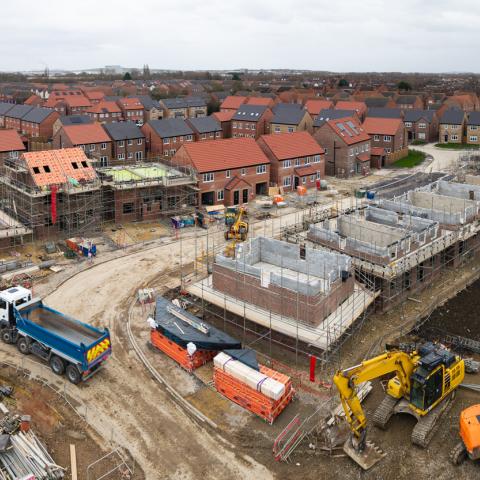
Unlike in parts of the US single-family market, institutional investors in Europe are generally not competing for existing homes at scale. Across build-to-rent (BTR), single-family rental and purpose-built student accommodation (PBSA), capital is overwhelmingly focused on adding supply. Homes are typically delivered through new development, often on brownfield land and increasingly in partnership with local authorities, housing associations and universities.
This distinction is critical. Europe’s housing problem is not who owns homes, but that there are not enough good-quality homes to begin with. Institutional capital is stepping in where public funding and smaller developers struggle to deliver at scale, particularly in an environment of higher interest rates, rising construction costs and regulatory complexity.
When deployed responsibly, institutional ownership improves outcomes for residents. Professionally managed rental housing tends to be better maintained, more energy-efficient and more transparent, offering greater security of tenure and more consistent standards than fragmented private rental markets. In sectors such as BTR and PBSA, institutional involvement has helped raise expectations around design, sustainability and resident experience.
These investors are typically backed by pension and insurance capital seeking stable, long-duration income, which is an alignment that matters in a continent where housing needs are structural and long-term.
Trump’s comments should not be dismissed outright, but nor should they be taken at face value. They are best understood as a warning: when housing investment is perceived to become disconnected from public benefit then political backlash follows.
For Europe, the conclusion is clear. Institutional ownership is not the enemy of affordability. On the contrary, it is one of the few mechanisms capable of delivering the volume, quality and professionalism Europe’s housing markets urgently need. The responsibility now lies with investors to prove it by focusing on new supply, affordability, energy efficiency and transparency.
What to read next
Browse below for the latest news, insights and thought leadership from our team of experts
The art of the teal

Pay to stay: can England’s mayors follow Manchester’s lead and turn a ‘tourist tax’ into growth?

All change on local government reorganisation

From drought to disruption: Why adaptation matters now

Australia's AI chart crackdown signals a wider shift in trust and disclosure

From Waiting for Godot to winning trust: Communications lessons from IPEM 2026

Farage, Burnham, and the battle for authenticity

What Aristotle can tell us about corporate statements