Natures rises up the national security agenda
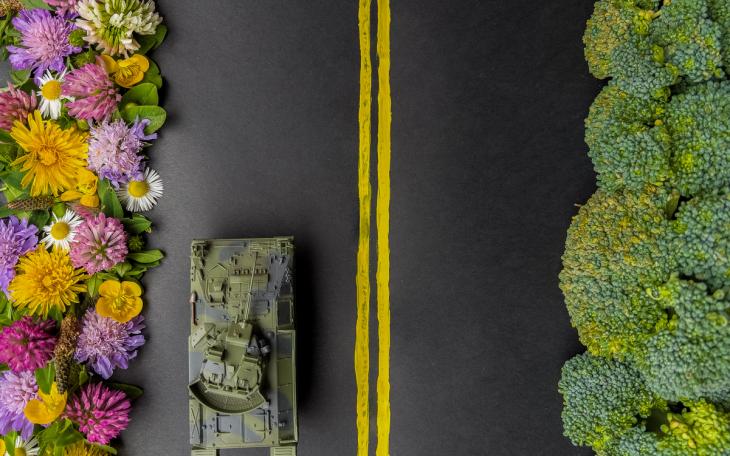

Biodiversity loss has been the sideline conversation to climate up until now. The biodiversity COP summits for example, have been low key in comparison to the climate COPs. However, last year’s climate COP in Brazil was the first to put nature at its heart, so the emphasis is shifting. Nature also transcends political divides with its loss more visible and tangible, meaning it is resistant to some of the scepticism that net zero is up against.
An interesting development of late, is the recognition of what biodiversity loss means for national security. With little fanfare, the UK government recently released a Nature Security Assessment, formally recognising global biodiversity loss and ecosystem collapse as direct threats to national security.
Apparently conducted by a Joint Intelligence Committee (not just ecologists), the analysis warns that accelerating ecosystem degradation is already undermining the UK’s resilience and will intensify in the coming decades without major intervention.
It makes for difficult reading. Published by DEFRA the report concludes that every major global ecosystem is now degrading, and several - such as Southeast Asian coral reefs and boreal forests - could begin to collapse as early as 2030. The potential consequences include water scarcity, drastic crop losses, fisheries collapse, altered weather patterns and heightened pandemic risks. Six regions are identified as strategically critical to the UK’s security: the Amazon and Congo rainforests, boreal forests, the Himalayas, and Southeast Asia’s coral reefs and mangroves.
The assessment also warns that ecosystem decline will trigger cascading security risks: rising migration driven by food and water insecurity, increased organised crime exploiting scarce resources, geopolitical competition over fertile land and minerals, and growing vulnerability to zoonotic disease outbreaks. With the UK importing around 40% of its food, officials caution that disruptions in global supply chains could sharply raise prices and threaten domestic food security.
Media reports say that the release of the assessment was delayed from last year over concerns it was “too negative”, but has now been released following Freedom of Information pressure. But what makes it so unusual is the analytical lens: the UK is now applying the same structured uncertainty frameworks used for military and geopolitical threats to environmental breakdown. A review from the Oxford University Smith School notes that this marks a fundamental departure from treating nature loss as a niche environmental issue; instead, it is now framed as a systemic risk that underpins national stability, prosperity and public wellbeing.
Another development came this week as 150 countries approved a new Business and Biodiversity Assessment, a three‑year scientific blueprint designed to guide how companies measure, manage and mitigate their impacts and dependencies on nature. The assessment - produced by 80 experts from every region of the world - is set to become the authoritative global reference for understanding nature‑related risks and opportunities in business, providing evidence‑based options for action across value chains. UK Nature Minister Mary Creagh described it as “a vital framework for global businesses to help them better understand the risks they face from nature degradation and the action they can take”.
All of this comes at a moment when King Charles III’s longstanding philosophy of living in harmony with nature has re-entered public conversation too. A new documentary, ‘Finding Harmony: A King’s Vision’, highlights his belief that humans must recognise themselves as part of the natural world, not separate from it - a principle he has championed for over five decades. In the film, the King argues that restoring the balance between people and the environment is essential to addressing climate change and safeguarding the planet for future generations.
The King describes his philosophy simply: “We are actually nature ourselves; we are a part of it, not apart from it.” This view, perhaps once considered eccentric, is presented as a coherent framework linking climate change, sustainable agriculture, urban design and social cohesion.
The release of the Nature Security Assessment appears to validate many of the concerns King Charles has voiced for decades. The report, and the pending Business and Biodiversity Assessment’, adds to the growing emphasis of nature protection and restoration as a critical element of a secure and sustainable future. And of course, the scrutiny of business impact on nature will increase with this.
What to read next
Browse below for the latest news, insights and thought leadership from our team of experts

It’s about housing, stupid

Budget 2026: What’s in store for developers?

Delegation Nation

Reframing Britain’s Brexit debate

The missing sector in Britain's growth strategy

Pacific Pre-COP31: Testing the waters ahead of Turkey

How communications drives deal outcomes

Vibes win the click. Only substance wins the trust.