Playground politics: What Birmingham’s new council reveals about power after the election
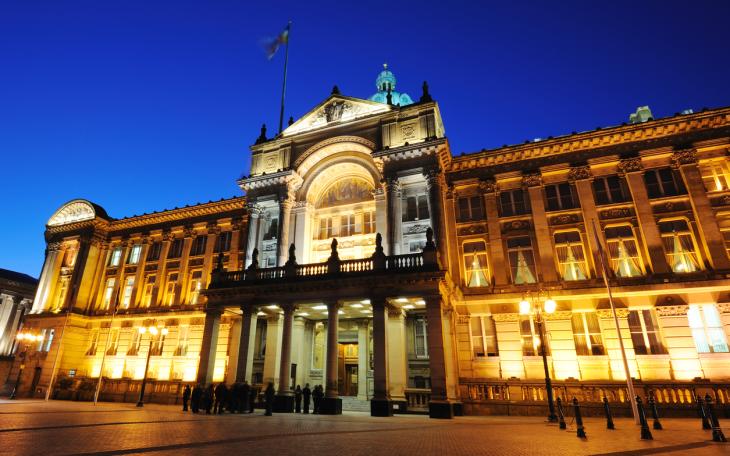

Anyone who remembers the ritual of picking teams in the school playground will recognise the dynamics now shaping Birmingham City Council.
It never simply came down to who was best at the game. Instead, it was about who could work with others, who was trusted not to disrupt play, and who others were willing to stand alongside. Sometimes, the loudest or most dominant player was left waiting, not because they lacked ability, but because no one really wanted them on their side.
That is, in many ways, exactly what has happened in Birmingham following the 7 May 2026 local elections.
The result was as fragmented as it was decisive. Labour’s 14-year grip on the council ended abruptly, and no party came close to the 51 seats required for a majority. Reform UK emerged as the largest party with 23 seats, followed by the Greens on 19, Labour on 17, Conservatives on 16, Liberal Democrats on 12, and a sizeable independent bloc.
On paper, Reform had “won”. In practice, though, they found themselves in a familiar playground position: first picked in terms of numbers, but not someone others wanted to partner with.
What followed resembled the long, awkward process of choosing teams when no obvious combination works. Unlike a traditional two-party contest, Birmingham’s result created a “rainbow” council, a patchwork of groups with different priorities, personalities and red lines.
Early signals were telling. The Liberal Democrats, despite holding just 12 seats, moved quickly, reappointing Roger Harmer as leader and setting out a platform for collaboration. The Greens, buoyed by a strong showing, were open to partnership. Independents, meanwhile, held the kind of quiet influence that often proves decisive in these scenarios.
At the same time, several parties signalled they would not work with Reform UK, effectively ruling out the most obvious numerical configurations from the outset. That single factor reshaped the entire game.
Labour’s own internal fractures added another layer to the playground drama. Months before polling day, four sitting Labour councillors quit the party after not being selected to stand again, releasing resignation letters that criticised both local leadership and the direction of the party more broadly. In playground terms, it was not just that Labour had lost its place as team captain; some of its own players had already walked off the pitch, frustrated by who had been picked and who had been left out.
Back on the playground, it’s the moment when a group of players silently agree: “We’re not picking them.” And once that happens, the rest of the teams begin to form around that decision.
By early June, the outcome was clear. A coalition of Liberal Democrats, Greens and independent councillors came together to form a new administration, with Harmer as Leader and Green councillor Julien Pritchard as Deputy.
It is not a majority coalition in the traditional sense, more a carefully assembled team built from those willing to play together. But it was, crucially, a team that could actually take the field.
This is where Birmingham’s situation becomes particularly instructive. Political power here has split into two distinct forms: formal control and narrative influence.
The Liberal Democrats, Greens and their independent partners hold the former. They run the council, set agendas, and are responsible for delivery. But they do so with relatively modest numbers and must maintain internal cohesion to govern effectively.
Reform UK, meanwhile, holds something different: the authority that comes from being the largest single party, combined with the freedom of opposition. Their argument is simple and potent, that they won the most seats but have been excluded by a coalition of smaller groups.
Again, the playground analogy holds. The team left standing on the sidelines often spends the rest of the game arguing it could have won if only it had been picked and waiting for mistakes to prove the point.
Overlaying all of this is a more sobering reality. Birmingham is still grappling with deep structural challenges, including financial strain following its effective bankruptcy and ongoing service pressures such as waste collection disputes which have been ongoing for over a year.
In that context, the success of the new administration will not be judged on political choreography but on something far simpler: whether it can get the basics right.
Can it clear the bins? Fix the roads? Restore a sense of competence?
If it can, the coalition will validate the idea that collaboration, even a messy, multi-party collaboration, can outperform raw electoral strength.
If it cannot, Reform’s position outside the tent becomes far more powerful.
So, Birmingham’s new council is less like a settled government and more like a game just getting underway. The teams have been picked, not on the basis of size alone, but on who was willing to work together.
The question now is the same one asked in every playground: which team actually plays better once the whistle blows?
What to read next
Browse below for the latest news, insights and thought leadership from our team of experts
The art of the teal
Pay to stay: can England’s mayors follow Manchester’s lead and turn a ‘tourist tax’ into growth?
All change on local government reorganisation

From drought to disruption: Why adaptation matters now

Australia's AI chart crackdown signals a wider shift in trust and disclosure

From Waiting for Godot to winning trust: Communications lessons from IPEM 2026

Farage, Burnham, and the battle for authenticity
What Aristotle can tell us about corporate statements