The battle for Burnham’s throne: Greater Manchester’s mayoral fight begins
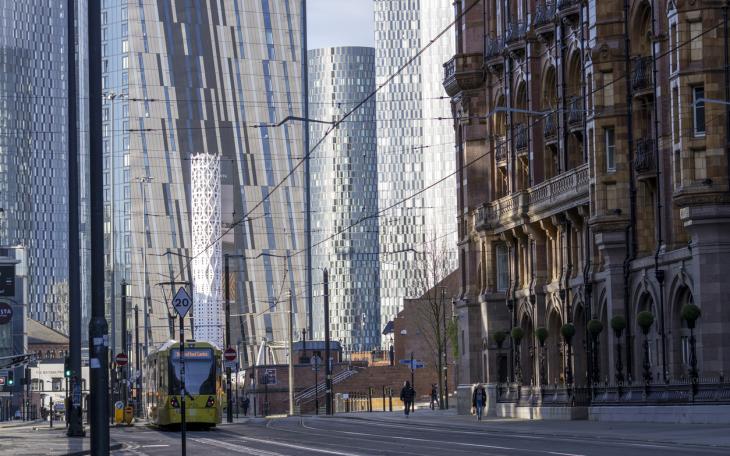

Enough has been said about Andy Burnham in recent days, and he’s likely to dominate the column inches in the coming weeks and months, so I’ll spare you any further analysis of the “King of the North” as he heads south to conquer the kingdom. But for those of us up here in Greater Manchester, there is one glaring question: what now for Burnham’s former job as the city region’s mayor?
A new mayor will be elected on 30 July in what will be the biggest by-election ever held in Britain and the first for a combined authority (metro) mayor. The position is one of the most influential in British politics outside of Westminster, and a role that the outgoing mayor successfully grew and made his own.
The electorate of over 2 million people spans an area of 493 square miles, from the well-known urban centre of Manchester to the lesser-known towns that populate the city region’s varied 10 metropolitan districts. Diverse and disparate suburban expanses are skirted by rural hinterland stretching from the Pennine Moors in the north and east, to the sweeping Cheshire plains in the south. The politics vary too.
Whilst Burnham electorally dominated the entire city region in his three successive election wins, 2026’s contest is looking much more competitive. Reform UK topped the poll across the region in May’s local elections, achieving just under a third of the vote, with Labour on 23.7% and the Greens closely behind on 19%. The by-election will undoubtedly turn into a three-horse race, with Reform and the Greens looking to maintain and build on their existing positions and Labour hoping to ride the coat tails of their departed king.
The spanner in the works for anyone trying to make predictions is the hastily rushed-through change to the voting system that will be in force. The by-election will be fought under the supplementary vote (SV) system, whereby voters pick a first and second choice candidate, with second choices counted for the top two candidates if no one wins more than 50% initially. Although the jury is out how this will affect the final result, some pundits are saying that it will benefit Labour in a final two fight with Reform, as Green and Lib Dem voters are more likely to second preference the red team over Farage’s party.
As I write, Labour, the Greens and Restore have selected their candidates. While none of the names could (as yet) be called big-hitters, Labour’s candidate is probably the most high-profile. Bev Craig, the current leader of Manchester City Council, is the favourite and will be looking to maintain Burnham’s legacy of economic growth, regeneration and yellow buses, whilst also making her own mark on this prestigious job.
Reform will be keen to capitalise on their performance in May, though will undoubtably be licking their wounds after their resounding defeat in the Makerfield by-election. Whether they can make a resurgence in a GM-wide contest, or whether Burnham has spelled the beginning of their end in electoral politics (at least in Greater Manchester), remains to be seen. The Greens may poll well, but their vote is very concentrated in the central urban areas of the region, with limited appeal to the more “small c” conservative outlying boroughs.
Greater Manchester has without doubt been making the political weather in 2026, what with the Gorton & Denton and Makerfield by-elections, not to mention the gifting of Andy Burnham to the nation. By those standards the election on the 30 July will probably not be quite so pivotal to the course of British politics, but any outcome that challenges the Labour hegemony in the region will undoubtably make headlines and indeed be a fly in the ointment of the next Labour Prime Minister.
What to read next
Browse below for the latest news, insights and thought leadership from our team of experts
Abundant energy at Climate Week NYC
Conference season meets energy reality

Ed Sheeran’s case study on the death of strategic neutrality
Merz's election setback and what it means for Germany
From manifestos to bricks and mortar: how do we get more homes built?
From coalition to collapse ... and back again?
Framing the narrative in favour of Jackdaw
From Manchester to Manhattan: Andy Burnham's Trump test