Could Colombia be next for Donald Trump? Our team in Bogota weigh up the scenarios
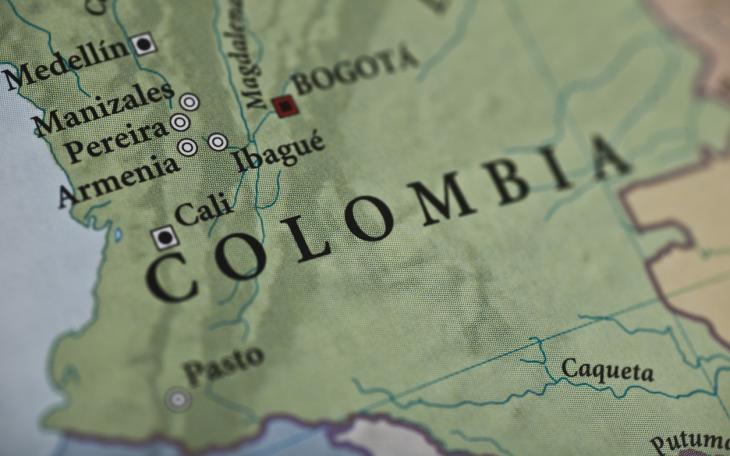

Written by SEC Newgate Colombia
The United States has decided to initiate a negotiation process with the Chavista regime in order to rapidly advance its agenda under conditions of public-order stability and without the need to deploy troops on Venezuelan soil. The Trump administration’s agenda includes at least five objectives:
Boost oil production through the modernization of the industry
Ensure that the resulting oil is sold to buyers designated by the US
Exercise border control to curb drug trafficking
Dismantle Venezuelan cooperation with geopolitical rivals (Russia, Iran, China, Cuba)
Revitalise the economy and urban infrastructure while guaranteeing returns for the capital to be invested by US companies and/or institutions.
The US State Department understands that the Chavista regime has consolidated power in Venezuela far beyond the figure of Nicolás Maduro. Control of PDVSA, banks, and key infrastructure (ports, airports, highways) is now concentrated in the hands of the military leadership (more than 2,000 generals), while public order in the streets is overwhelmingly managed by paramilitary groups known as colectivos.
Meanwhile, leaders of the United Socialist Party of Venezuela (PSUV) - including Delcy and Jorge Rodríguez, Diosdado Cabello, Pedro José Infante, and Eduardo Piñate - direct institutions such as the National Assembly, the Supreme Court of Justice (TSJ), and the National Electoral Council. They also oversee the Sistema Patria, the platform through which all government subsidies are managed.
In this context, Delcy Rodríguez - designated as interim president by the TSJ and sworn in yesterday before the newly installed National Assembly - represents, from the US perspective, three immediate elements: administrative continuity, direct communication with military leaders and colectivos, and coordination with the other branches of power.
Over the medium term, the US is expected to promote the development of elections to strengthen institutional legitimacy in support of its strategic objectives, although neither Trump nor Rubio has explicitly committed to doing so. Nevertheless, it will be difficult for the international community to accept anything short of a democratic transition. In such a scenario, the leadership of María Corina Machado would be especially relevant.
Potential scenarios under this strategy include:
PSUV leaders, the military leadership, and the colectivos agree to cooperate with Donald Trump’s agenda, enabling a peaceful transition period (of indeterminate duration) toward new elections under US supervision. This would not necessarily require public declarations of cooperation from regime members.
In this case, during the transition period, significant changes in guarantees for human rights, press freedom, or property rights are not expected. In other words, the fall of Nicolás Maduro would not necessarily translate into the fall of the dictatorship.
If the military leadership shows no willingness to concede, the US may carry out additional interventions in Venezuelan territory, accelerating the need to establish a new transitional government.
This scenario could also materialize if the current regime - through Delcy Rodríguez - acts in contradiction with US expectations, or if popular uprisings and public-order instability emerge. This would oblige the US to consider deploying troops to Venezuela.
It is important to note that, as of today, Caracas remains relatively calm. Although there is an increased presence of Venezuelan security forces and some incidents have been reported near the presidential palace, there have been no major demonstrations or significant acts of violence. Colombia’s immigration authority also reports no abnormal movements along the border.
The arrest of Nicolás Maduro and the potential implementation of the US agenda usher in a new phase for Latin America in several respects:
It provides a source of hope for the millions who migrated due to the severe social and economic crisis triggered by the Chavista dictatorship. Optimism stems from the possibility that the US will foster conditions for internationally supervised elections as part of its medium-term strategy.
It reinforces Donald Trump’s plan to revive the Monroe Doctrine - established by former President James Monroe (1817–1825) - which asserts US dominance in the Western Hemisphere as essential to national security, access to strategic resources (primarily minerals and energy), and economic expansion. In practice, what is now being referred to as the “Donroe” doctrine poses a threat to regional sovereignty.
It weakens Venezuela’s allies, such as Cuba and Nicaragua, which have long depended on Venezuelan oil and financing. It also accelerates the region’s political shift toward the right, following the recent government transitions in Chile and Argentina.
From a geopolitical standpoint, the intervention in Venezuela and the revival of the Monroe Doctrine establish a precedent that could enable powers like Russia and China to justify military action within their own spheres of influence, such as Ukraine and Taiwan. Indeed, on 5 January, Donald Trump stated that the US is evaluating taking control of Greenland, a territory between the North Atlantic and the Arctic that currently belongs to Denmark.
For Colombia, the situation in Venezuela entails risks but also significant opportunities. In practice, the development of the US agenda in Venezuela has three direct effects:
The return to Colombia of guerrilla groups previously sheltered by the dictatorship - an opportunity for the Colombian Army to more effectively target their leaders. These groups include members of the ELN and dissident factions of the FARC. However, during the return period, an escalation in violence and displacement is highly likely.
Changes in cocaine-export routes from eastern Colombia, given that the Venezuelan border had long provided an advantageous corridor. This may prompt a reconfiguration of drug-trafficking organisations, with activity shifting primarily toward the Pacific and Caribbean regions.
The revitalisation of demand for Colombian goods and services in Venezuela as a result of US investment. At its peak in 2008, Colombian exports to Venezuela exceeded USD $6.092 billion - around 16.2% of Colombia’s total exports that year (compared to just 2% - USD $1.003 billion - in 2024).
It should be noted that any potential rebound in exports may be accompanied by inflation, as Colombian household-consumption products have historically made up a significant portion of exports to Venezuela.
A collateral effect relates to Colombia’s 2026 elections. Maduro’s extremely low favourability in Colombia (1%, according to Invamer Poll #167), the economic strain caused by his administration’s impact on Colombia, and the social consequences of the Venezuelan diaspora (2.8 million migrants arriving since 2018) suggest that, broadly speaking, Colombians support US intervention in Venezuela despite the regional risks it poses.
This means that Maduro’s arrest on drug-trafficking charges has benefited right-wing presidential candidates, whereas the left-wing candidate, Iván Cepeda, has struggled to justify his previous support for the Chavista regime.
However, immediate political effects must be distinguished from medium-term ones - five months remain before the first round of the presidential elections. The outcomes of the US strategy, and the scenario that ultimately unfolds, will determine its real electoral impact in Colombia.
For example, on January 5, Donald Trump stated that Gustavo Petro is “a sick man who likes to manufacture cocaine and sell it to the United States, and he’s not going to be doing it for long”. When asked whether there would be a US operation in Colombia, he replied: “Sounds good to me”. This statement prompted swift support for the office of the Colombian Presidency from multiple political sectors, including the Centro Democrático.
In reality, Colombia’s situation is markedly different from that of Venezuela. While Petro has pursued negotiations with illegal armed groups that have facilitated increased drug production, and his favourability remains below 40% (Invamer Colombia Opina #19), he is a democratically elected president with no drug-trafficking cases before the courts.
Therefore, the prospect of US armed action on Colombian soil - including an operation to extract President Petro similar to the one conducted against Maduro - is unlikely to be supported by most Colombians. In fact, Trump’s remarks (along with those openly justifying intervention in Venezuela to secure oil for the US) have strengthened the narrative of the political left, which emphasises nationalism, natural-resource protection, and sovereignty.
Conversely, any US action targeting President Petro would generate immense political instability with unpredictable consequences.
What to read next
Browse below for the latest news, insights and thought leadership from our team of experts
It’s about housing, stupid

Budget 2026: What’s in store for developers?
Delegation Nation
Reframing Britain’s Brexit debate
The missing sector in Britain's growth strategy
Pacific Pre-COP31: Testing the waters ahead of Turkey

How communications drives deal outcomes

Vibes win the click. Only substance wins the trust.