Reforming the tactical playbook

Reform UK is dominating the news cycle right now, and it’s no accident. The party’s newly announced top team is openly planning to “flood the zone” during the short parliamentary recess and in the run up to the 7 May local elections (which are now back on), and it’s working.
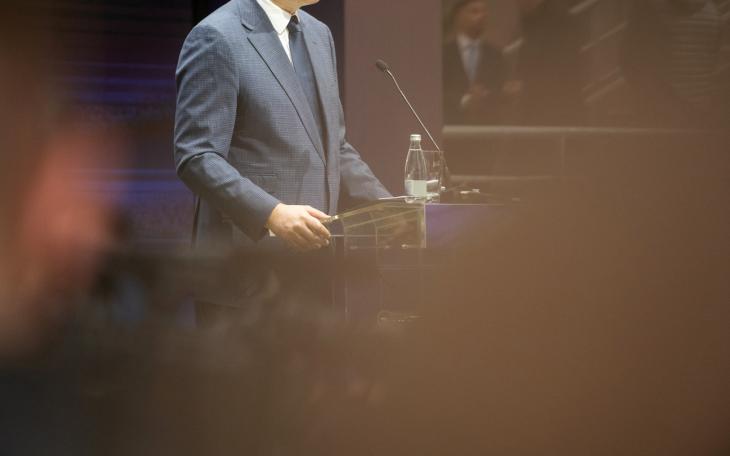
Yesterday I took my seat at Reform’s Economic Announcement with Robert Jenrick, former Conservative turned “Shadow Chancellor”.
I joined the media row - Bloomberg on my left, The Times and The Telegraph on my right - at what was billed as the party’s dedicated City-facing event. The setting certainly suggested that: a plush, historic livery hall on London Wall.
But while the audience was clearly meant to include the City, some in the audience felt the rhetoric was aimed more at members and the media than at financial stakeholders.
This didn’t stop the event achieving its main objective: media dominance and a sense of economic responsibility. The Times alone ran five separate pieces off the back of a speech, which, critics have argued, said relatively little in substantive terms, and probably didn’t say anything much different from what Sir Mel Stride - the actual Shadow Chancellor - would have been saying himself.
But that almost misses the point. Reform, in its tactical delivery of its messages, understands the modern political grid, and they are playing it aggressively.
A big part of this moment belongs to Jenrick, whose rebrand is noticeable and effective. New glasses (which became the subject of much media chatter), a calmer, more assured delivery and a confident Q&A afterwards.
The speech opened with a personal video about his upbringing, including doing his homework in his father’s factory as a child, which deliberately presented him as relatable and human.
Video has been central to Jenrick’s media strategy for some time, even before his defection, with viral videos of him confronting fare dodgers on the Tube and calling out antisocial behaviour, delivered via content designed to travel fast online. This is a politician who understands how and when to land a message.
Why does this feel so different from everyone else? Because the government is stuck in perpetual firefighting mode, while the official opposition is largely confined to following the agenda rather than setting it. That creates room for others to seize attention. There are echoes of Ed Davey’s paddleboard stunts during the last general election, except here the visibility is delivered under the framing of a “government in waiting”.
For now, Reform remains a largely ‘vibes-based’ operation. We were told taxes and regulation would be lowered, but beyond a loose nod to the Laffer Curve, there wasn’t much flesh on the bones. Jenrick was clear he wouldn’t make policy up on the spot, but he did confirm that Reform would reinstate the two-child benefit cap.
This matters not least because the party’s messaging on this has been inconsistent in recent weeks, with Nigel Farage and Lee Anderson offering different interpretations. As more policy detail emerges, it will be interesting to see how many more of these message shifts or interpretations there will be.
There were plenty of hints at what’s to come. Easter eggs alluding to upcoming economic and wider policy announcements were scattered throughout Jenrick’s speech. Pressed repeatedly on the triple lock and student loans, the answer was consistently “more to come”.
Meanwhile, commitments to only tinker with the Office for Budget Responsibility and to protect the independence of the Bank of England were clearly designed to bolster economic credibility.
With the party untested in government, it needs to ensure it provides confidence to voters in the coming months and years if it is to realise its polling figures. They are seeking to professionalise the party, to demonstrate it is fit for government.
This was Jenrick’s first outing in the role of front-bench Reform, appearing as the party’s latest and potentially one of its most effective spokespeople. Reform has turned the political grid on its head. They are throwing a lot at the wall, and much of it is sticking.
What to read next
Browse below for the latest news, insights and thought leadership from our team of experts
It’s about housing, stupid

Budget 2026: What’s in store for developers?

Delegation Nation
Reframing Britain’s Brexit debate

The missing sector in Britain's growth strategy

Pacific Pre-COP31: Testing the waters ahead of Turkey

How communications drives deal outcomes

Vibes win the click. Only substance wins the trust.