The UK is building a nuclear pipeline and I’m proud to be part of it
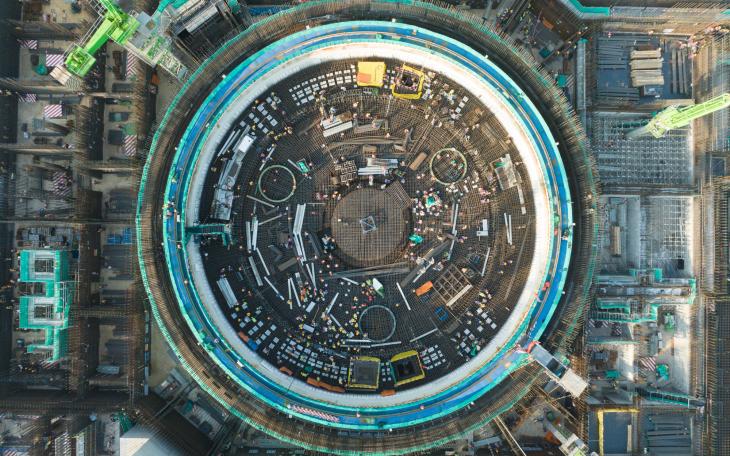

As the UK accelerates into what ministers are calling a ‘new golden age of nuclear,’ the momentum behind advanced nuclear technologies has never felt more real and urgent. Targets set by the government to quadruple nuclear capacity to 24GW by 2050 demonstrate the ambitious nature of their vision for a nuclear future, and could make the technology the cornerstone of the country’s future energy mix.
This context makes the upcoming Nuclear Industry Association (NIA) & Women in Nuclear UK (WiN UK) Parliamentary Networking Event that members of our infrastructure team are attending next week particularly timely. The event is focused on early‑career professionals and mid‑career switchers entering the sector, offering an opportunity to build connections, strengthen understanding of the nuclear landscape and improve parliamentary awareness of the people shaping the industry.
We are looking forward to attending the event to learn more about the future of the UK’s nuclear sector and meet some of the people shaping it.
The government’s recently published Advanced Nuclear Framework provides the clearest signal yet that the UK intends to accelerate nuclear deployment, laying out policies to support the development, commercialisation and deployment of innovative nuclear projects. The Framework sets out the beginnings of clearer targets for nuclear, designed to deliver energy security, economic opportunity and decarbonisation.
The Advanced Nuclear Framework outlines plans to foster an ‘Advanced Nuclear Pipeline,’ enabling credible projects to access early engagement and support, particularly those involving Small Modular Reactors (SMRs) and Advanced Modular Reactors (AMRs). These technologies promise faster deployment, more flexible siting and the ability to power everything from homes to energy‑intensive industries. When combined with major projects already underway such as Hinkley Point C, Sizewell C and the future SMR fleet at Wylfa, the scale of opportunity is huge.
Being on the edge of these innovations, and the push to increase deployment is an exciting place to be. However, public confidence in nuclear is still less than certain and public support for these technologies remains nuanced.
Our own SEC Newgate research – The Nuclear Divide - shows that public sentiment towards nuclear remains divided: only half of the UK public currently view nuclear positively as a low‑carbon energy source. Concerns persist around safety, waste and disruption. This is particularly clear when our research survey turned to how acceptable members of the public would find having a nuclear power station in their area. At this point, only 26% would find it acceptable. The acceptability rises when we asked about SMRs instead, at 46%. However, this is still substantially lower than the acceptance level we have seen in previous research for solar and wind.
For most of these people, the resounding key theme emerging as the reason for opposing nuclear is the perception of the health and safety risks, despite SMRs being positioned as safer than nuclear power stations. It will be vital as nuclear technologies develop to engage with communities effectively to help reduce these concerns and overall minimise local opposition to schemes. The advancement of this innovative technology goes hand in hand with community engagement.
Our research shows that support varies across demographics. Men, older adults (65+), and Reform UK voters are more supportive of new nuclear, and on the other end of the scale, younger people are also much more receptive to the technology. For these groups, some of the reasoning behind their support does align, including nuclear infrastructure providing jobs, being more efficient and reliable, and generating more power. In addition to this, the other most common benefit from our research was the importance of boosting the UK’s energy independence.
This growing openness amongst the public presents an opportunity to combine the government-led push for nuclear with the slowly increasing public acceptability amongst certain groups. This is where public messaging around new projects will be vital, and stakeholder engagement will be central to bridging the gap between national ambition and public understanding.
It is an exciting moment to be part of a rapidly evolving sector, but also to represent an organisation whose expertise in communications and engagement can help deliver the UK’s nuclear ambitions. Within the team, we have already helped deliver the DCO for Hinkley Point C and are now managing stakeholder and community relations as construction continues. We are looking forward to building on these nuclear credentials.
The future of nuclear is not abstract, but being built by people, partnerships and conversations happening right now.
What to read next
Browse below for the latest news, insights and thought leadership from our team of experts
Time to plug in baby (solar goes mainstream)

Housing Delivery Test results: the focus shifts from planning approvals to housing delivery

Back to school and the term ahead

Back to school for Number 10 as Burnham’s autumn test begins

The end of upward-only rent reviews could change how investors see real estate

AI financing hits a new frontier

Working 9 to 5: Lessons from a music legend on investing and wealth management

Britain’s weather obsession has just got serious