Dirty Business: a water system under strain

Channel 4’s Dirty Business opens with a note of confidence from the past: Margaret Thatcher, speaking in the Commons, promising that the privatisation of water would one day allow us to “pontificate in the light of the facts” about its success.
The choice is arresting not because the series seeks to rehash ideological battles of the 1980s, but because it immediately frames a question of outcome rather than intent. Four decades on, Dirty Business asks whether the facts we now inhabit resemble the future that was once so confidently promised.
One of the series’ key appeals lies in how closely its themes align with the pressures now shaping the real water sector. Less accusation than accumulation, it gestures towards a system increasingly ill-equipped for the realities it faces: namely ageing infrastructure, environmental stress and eroding public trust.
Wastewater has become the clearest expression of that strain.
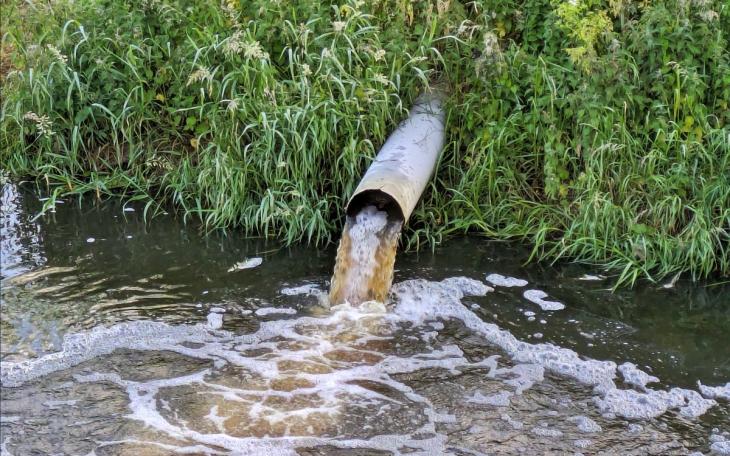
Across England, infrastructure that is largely Victorian and largely invisible has emerged as the pressure point where environmental damage, regulatory failure and everyday disruption converge. Coastal sewage discharges as portrayed in the series have captured public attention, but the same overstretched systems are quietly reshaping inland villages, roads and farmland too. Storm overflows, tanker convoys and flooded fields are no longer exceptional; they are symptoms of networks designed for a different century.
Recent weeks alone have offered stark illustrations. In Oxhill, South Warwickshire, sewage has been leaking from a submerged manhole in a nearby field for more than two years. Locals say a drain serving two neighbouring villages cannot cope during heavy rainfall, forcing raw sewage to the surface and requiring overnight tanker removals. What were once described as temporary fixes have become semipermanent, with the impacts on roads, sleep, businesses and farmland absorbed locally as responsibility diffuses across agencies.
The same pattern plays out at a different scale on the coast. In the South West, sewage pollution has moved beyond protest and into the courts, with more than 1,400 residents, swimmers and businesses are now bringing a group legal action against South WestWater and its parent company over the alleged impacts of repeated discharges on beaches across Devon and Cornwall. Local leaders have described the situation as an ongoing civil emergency.
As Dirty Business itself makes clear, these concerns are not new. The series recalls the death of 8-year old Heather Preen in 1999 after she contracted E. coli on a Devon beach, underscoring not only how longstanding the risks around water quality have been but how at its core, this is a tragic story – one of the consequences being fatal when water systems fail.
Policy is beginning to catch up with that reality. The government’s “A New Vision for Water” White Paper, published in January, promises the most significant reform of the sector in decades: a single strengthened regulator, physical inspections of assets, earlier intervention for underperformance and accelerated action on storm overflows. Alongside this, Defra’s consultation on reforming the sludge framework signals a recognition that wastewater can no longer be treated as a peripheral issue. However, for communities operating alongside the consequences of failure, reform still feels more like direction of travel than lived change.
It is in this gap that the politics of water are hardening. Calls for a People’s Plan for Water, backed by MP Clive Lewis and following last summer’s People’s Commission on the Water Sector, reflect a growing view that the current model has reached its limits. Both rising bills and customer complaints have shifted the debate beyond technical fixes towards questions of ownership, accountability and longterm stewardship.
Dirty Business lands, then, at a moment of uneasy course correction. Its strength lies not in offering solutions, but in capturing a public mood: a sense that something fundamental is misaligned. Until the sector can convincingly demonstrate that it is investing in resilience rather than managing decline, the facts we are now invited to judge will remain stubbornly uncomfortable.
What to read next
Browse below for the latest news, insights and thought leadership from our team of experts

Pensions reform in focus

Data Centres - Will we learn from the past?

Profit warnings and the importance of context

Delhi's protest. India's growth story.

It’s about housing, stupid

Budget 2026: What’s in store for developers?

Delegation Nation

Reframing Britain’s Brexit debate