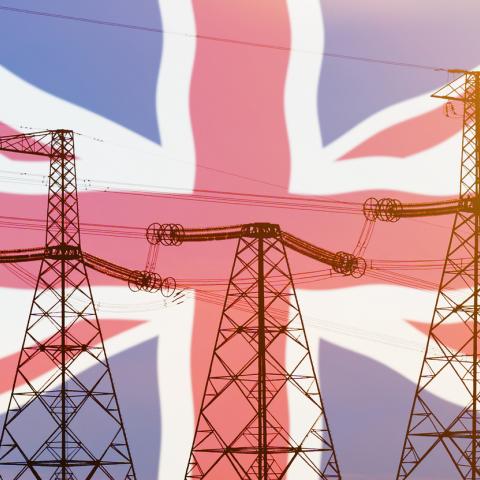
‘Nice-to-have’ to necessity: Why renewables now sit at the heart of global security

Three months out from London Climate Action Week (LCAW), the energy conversation feels sharper than it has for years. London will once again act as a hub and convener for shaping climate conversations and new forms of cooperation. But this year, the backdrop is fundamentally different as the global energy system has been reminded of just how exposed it remains to single points of failure.
This year’s theme - operating climate action in a fragmented world and finding new ways of working together – couldn’t be more timely. It cuts to the heart of how energy, economies and societies are being re‑evaluated in real time.
The past few weeks have delivered what analysts are calling the largest disruption to oil flows ever recorded. Tanker movements through the Strait of Hormuz fell to almost none, removing 20% of global crude supplies and commercial shipping facing multiple threats. Brent crude rose roughly 50% after the Iran-US-Israel war began and European natural gas prices doubled their benchmark. The shock has been systemically revealing, exposing the fragility of an energy model still routed through narrow corridors and volatile commodity markets.
As the world grapples with disrupted supply chains, rising energy costs and a geopolitical climate that complicates cooperation, renewable energy is being considered in a new light. The most revealing question is: What would this conflict look like if our energy system hadn’t been built around a handful of chokepoints that can be threatened, manipulated or turned off?
For much of the past decade, renewables were often framed mainly as a climate solution, championed by climate advocates and invested in by forward‑looking businesses, but often dismissed by sceptics as optional and “fluffy” technologies. That view is shifting. What was once characterised by some as a “nice‑to‑have” or an exclusively environmental priority, now sits at the intersection of security, sovereignty and resilience.
UN Secretary‑General António Guterres captured the shift: much of the world still depends on fossil fuels sourced from a few regions, where conflict causes economic repercussions felt everywhere. The difference today is that countries now have an “exit ramp” in home‑grown renewables. By allowing countries to produce power at home, wind and solar offer energy sources that are not only cheaper, but cannot be blocked or weaponised, reducing exposure to events beyond their control. In an increasingly unpredictable world, that reliability has real value.
Domestic generation is no longer just about cutting emissions, but a means to gain strategic advantage. Seen this way, renewables are not a retreat from globalisation, but a means of operating more safely within it.
As Linda Kalcher, an adviser to European climate policymakers, notes, moments of disruption tend to clarify rather than derail priorities. While some governments may look to short‑term measures such as boosting gas storage, the broader policy debate is already turning back towards accelerating domestic energy build‑out in the form of building solar and wind power.
That said, it is important to remember what has come before. Bringing us optimists back down to earth, some analysts dismiss the shift to renewables is “just wishful thinking”, reminding us that similar hopes surfaced after Russia’s invasion of Ukraine, only for some European governments to fall back on “even dirtier coal”.
It is also worth recognising that today’s economies are more diverse than in previous crises. In the UK, for example, renewables now account for more than half of electricity generation, but we so often get swept up in the narrative of total system exposure to fossil fuel dependency. The reality likely sits somewhere in between - a system more resilient than before, but still susceptible to the reverberations of global shocks.
In 2026, energy security is the energy transition. As we approach LCAW, we must move the conversation beyond ambition to delivery: improving grid connections, expanding energy storage, and creating investment frameworks that can hold up during geopolitical turmoil. The question is no longer whether renewable energy matters, but how recent events have fundamentally changed why it matters.
What to read next
Browse below for the latest news, insights and thought leadership from our team of experts
From rhetoric to reality. Is the North going to deliver in an age of uncertainty?

Your company’s reputation is being rewritten by AI. Are you paying attention?

MIPIM – Global problems, local solutions!

Data centres are no longer invisible, and that changes everything
Green hydrogen, red tape? Time for delivery in the hydrogen sector.

Is London’s office bounce back under threat?

Combatting AI-driven disinformation and its rising reputational risk

Building trust in the energy transition narrative