Over a third of councils seek to cancel May elections
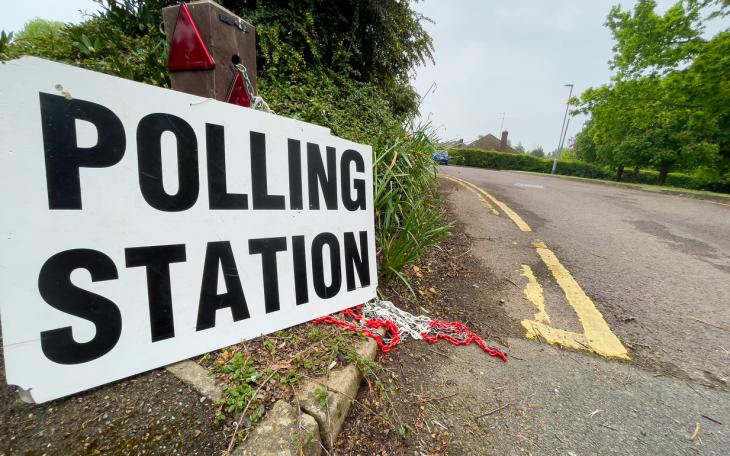

The government is accused of running a “banana republic” and breaching human rights as police are called to tackle protestors who have taken to the streets to demand their right to vote. In a turbulent world, this line could easily be confused with Tehran, Caracas or Minneapolis. However, this has all been taking place in the usually more sedate English market towns such as Chichester, Ipswich and Redditch.
A famous quote often attributed to Mark Twain is that “If voting made any difference, they wouldn’t let us do it”. The government has clearly been paying heed to this in recent weeks, as they have mapped out options for postponing some of the elections scheduled for May.
As the clock strikes midnight tonight, the deadline will pass for the 63 English local councils to ask to have their elections postponed for this May. Those representations will be submitted to Local Government Minister, Alison McGovern, who unveiled the opportunity to these councils on 18 December. The letter was an early Christmas present for some and a missive from the naughty elf for others, but it heralded a frantic couple of weeks for councils that have hastily scheduled meetings and discussions to decide whether or not they would like to postpone their elections. Eight of the councils met just last night to agree their response before the deadline and one is even meeting this evening.
Public galleries have been packed, opposition councillors have been able to unite across the most unlikely divides, and town halls up and down the country have taken on a whole new focus as debating chambers on the very fundamentals of democracy. Nothing is as good at boosting our national sense of democratic participation as the threat to have it denied.
Of the 63 councils, the latest count is that 23 have requested an election delay, although to be fair, Suffolk County did not specifically ask for it, instead suggesting it would help their resources, but emphasising the decision was ultimately one for the government to take. Another 32 councils have explicitly stated that they want their elections to go ahead in May, while eight others have either not yet confirmed their decision, or have failed to respond to the letter at all.
Politically, there is a clear emphasis on Labour-led councils asking for the elections to be postponed – councils such as Norwich, Basildon and Exeter make up some of the 17 Labour-run councils that are seeking to move the elections. To give exact numbers, the total political split of those councillors requesting elections to be cancelled is 411 Labour, 254 Conservative and 140 Liberal Democrats, although with some of the councils electing in thirds, these numbers do not represent the seats that are actually due to be contested this May.
As much as this may be labelled as political expediency to avoid having to face the electorate, there are logical arguments for postponing some of the elections, to provide certainty and resource during a period of massive local government upheaval and change. Is it better for council officers to spend their time and budget organising an election, or should they be focused on combining services and making the transition to unitary councils as easy as it can be? The only issue with this argument is that the natural conclusion is that it would therefore make sense to cancel elections altogether as they just get in the way of effective government.
The logistics of the next steps also provide a little more complexity – the letter from the Minister is not an invitation to cancel elections, rather an invitation to make representations about how such a move would impact capacity and local government reorganisation. The news headlines today that say elections have been cancelled are currently incorrect and we will find out in the next couple of weeks which councils, if any, have been given their wish.
Due to the complex nature of the local government reorganisation areas, there is also a difficult balancing act between councils that want different things. While there is unanimity amongst the authorities in Lancashire and Sussex, there is not the same agreement in other parts of the country.
A great example of this is my own local county of Essex, where two Labour-led councils (Basildon and Thurrock) have requested the elections be postponed, while five other councils have requested the elections go ahead as planned, including Essex County Council. This is not all political either, as Labour-led Southend-on-Sea backed continued elections, and councillors of all hues have joined forces in other areas to commit to voting on 7 May. The Minister cannot run county council elections in part of the county, and there is little point running polling day for county divisions in Basildon but not for the district wards in the same area, so this will take some delicate handling.
This is the third time in less than 12 months that I’ve written about plans to cancel elections. Last February, the government confirmed plans to postpone some of the 2025 county council elections until May 2026 and then, in early December, we received confirmation of plans to postpone the election of four new strategic mayors from May 2026 until May 2028 – which was in addition to the first two mayors who had seen their elections postponed from May 2026 to May 2027. Then, just 28 days ago, came the invitation for councils to request to postpone the elections for some 10 million voters.
I previously pulled out the example of places such as Worthing, where residents would have voted for district councillors in May 2024 and then their Members of Parliament in July. However, their planned county council elections in May 2025 were scrapped, then their proposed new Strategic Mayor elections in May 2026 were moved to May 2028. If the scheduled district and county council elections are cancelled in May 2026, then they will have to wait until May 2027 to elect councillors to the new shadow unitary authority, but those councillors will not assume power until 2028. This effectively means that local residents would have missed out on four rounds of elections and not had a chance to provide any verdicts on their district councillors for four years or on their county councillors for seven years.
Discussions will continue far beyond this May around the ability and power of governments to cancel elections – previous delays because of war, Covid and foot-and-mouth have not extended into managing local government resources. A petition on the Parliament website calling for the Secretary of State to be stripped of the powers to cancel elections now has almost 140,000 signatures.
Last week, Donald Trump jokingly floated the idea of cancelling future elections before discounting it, so perhaps the Prime Minister has been listening to his new friend in the White House. Or could it be that set against a mind-numbingly complicated backdrop of local government reform, we can look to Mark Twain again for the best explanation – “Never put off till tomorrow what you can do the day after tomorrow”.
What to read next
Browse below for the latest news, insights and thought leadership from our team of experts
The art of the teal
Pay to stay: can England’s mayors follow Manchester’s lead and turn a ‘tourist tax’ into growth?
All change on local government reorganisation

From drought to disruption: Why adaptation matters now

Australia's AI chart crackdown signals a wider shift in trust and disclosure

From Waiting for Godot to winning trust: Communications lessons from IPEM 2026
Farage, Burnham, and the battle for authenticity

What Aristotle can tell us about corporate statements