The past, present and future of radical political reform in Manchester
The political spotlight is firmly on Manchester as the rest of the country asks what might be expected from a government shaped by its recent experience.
But at a time when the prospect of Number 10 North is grabbing the headlines, it’s worth considering that Manchester’s rich story of radical political reform is no recent thing.
Way back in 1819, the devastating experience of the Peterloo Massacre sparked reforms way bigger than Manchesterism is ever likely to.
And yes, there are parallels with some of the disconnection between state and citizens that it might reverse.
Ordinary people were living through hardship and poverty only four years after the end of the Napoleonic Wars, which left Britain with massive national debt, severe unemployment, and high food prices caused by the Corn Laws.
Upwards of 60,000 people from towns and villages across modern day Greater Manchester had walked miles into St Peter’s Fields on August 16 1819 to hear orator Hunt call for parliamentary representation for local people, or Universal Suffrage, and repeal of the Corn Laws.
Terrified local magistrates sent armed men on horseback to crush what they saw as insurrection, killing 18 innocent people and injuring hundreds. The fallout from this awful experience can be felt in the attitude and politics of the city today: people and place before politics, always.
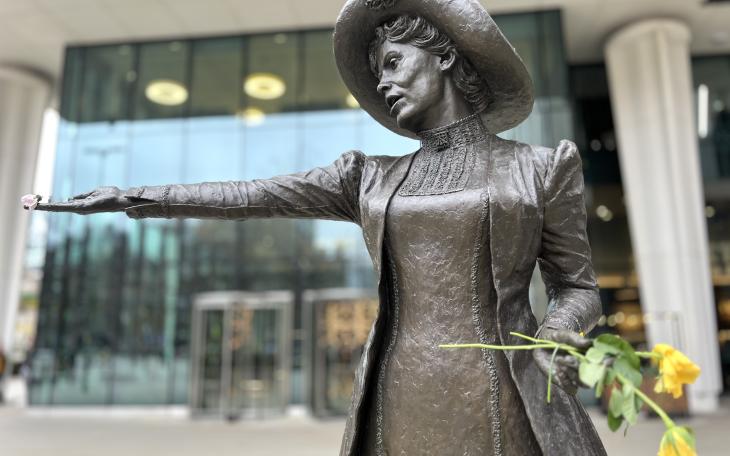
A century on from Peterloo and Manchester was again at the forefront of political protest and calls for reform, this time led by Emmeline Pankhurst, founder of the Women’s Social and Political Union, whose home, next to Manchester Royal Infirmary, can still be visited. The Representation of the People Act (1918) gave votes to women over 30.
Political reform in Greater Manchester has continued to be relatively radical in more recent times. The Association of Greater Manchester Authorities (AGMA) was formed in 1986 as a voluntary joint committee following the abolition of the Greater Manchester County Council.
Giving Greater Manchester a head start, AGMA began the work of attracting devolved powers and funding that would address issues at a city region level. This was formalised through creation of the Greater Manchester Combined Authority.
In what may also be considered a piece of radical history, it was George Osborne, Conservative Chancellor, who paved the way for Andy Burnham to become Mayor of Greater Manchester and soon, Prime Minister.
Osborne insisted on an elected metro-mayor for Greater Manchester as a strict "no mayor, no devolution" prerequisite to ensure clear political accountability.
The lessons learned in Greater Manchester’s pioneering years of political devolution – with powers and funding placed in the hands of local politicians – can now help other areas to understand what it might mean for them.
As Andy Burnham prepares to build a Number 10 of the North, Manchester’s radical history of political reform will only continue.
With an office in Greater Manchester and a team which worked at the heart of some of the reforms unlocked by devolution, SEC Newgate is perfectly placed to advise others on what to expect.
Email Manchester@secnewgate.co.uk if you’d like to know more.
What to read next
Browse below for the latest news, insights and thought leadership from our team of experts
It’s about housing, stupid
Budget 2026: What’s in store for developers?
Delegation Nation
Reframing Britain’s Brexit debate
The missing sector in Britain's growth strategy
Pacific Pre-COP31: Testing the waters ahead of Turkey
How communications drives deal outcomes

Vibes win the click. Only substance wins the trust.