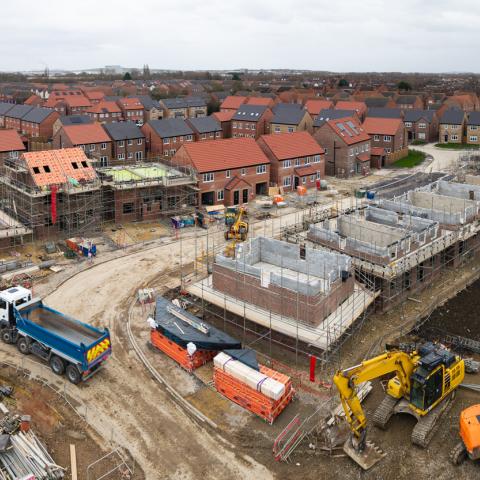
Temperatures rise at London Climate Action Week
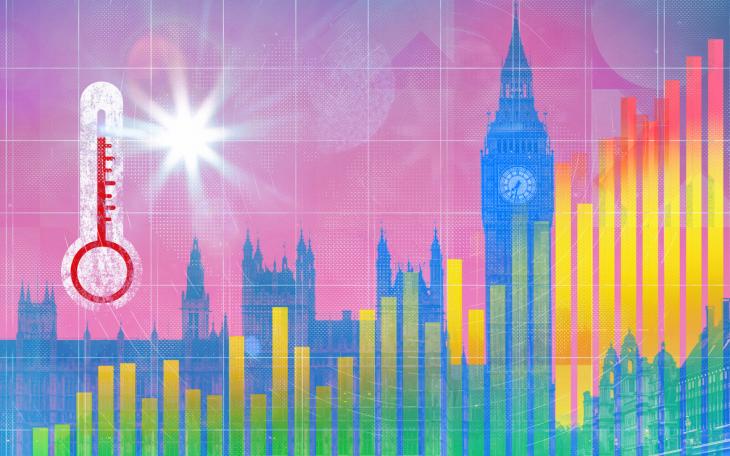
London Climate Action Week (LCAW) opened this week amid searing temperatures, making it “hotter than Belem”, according to Ana Toni, executive director of COP30.
Extreme weather should be an appropriate backdrop to focus minds on discussions around driving greater climate action at the largest LCAW to date, attracting around 75,000 people to more than 1,000 events, including those developed and hosted by SEC Newgate.
Yet it has been fiery political rhetoric, rather than temperatures, which has been focusing most minds, in a world that is increasingly shaped by rising climate scepticism, divided political narratives, and the urgent need to build new coalitions to deliver climate action in a way that attracts public, commercial and political support.
It has been noticeable that LCAW 2026 has been far more international in its approach than in previous years. Speakers and guests from around the globe have been prominent, with one Indian delegate telling us that when faced with the choice of going to either Climate Week NYC or LCAW her organisation had opted for London, as more constructive discussions are possible here. In her words: “I had to decide between attending New York or London. I chose London. The conversations seem better here.”
This is a huge opportunity for London, which remains one of the world’s largest green finance centres despite grappling with its own political fractures around climate science and the consensus on the Paris Agreement.
Discussions so far have focused heavily on examples of real-world solutions that are driving public and economic benefit beyond climate. In a world where the climate consensus has broken down, there is a feeling that driving progress on decarbonisation, electrification and nature has to be framed through a lens of tangible, local benefits. Delivering outcomes that matter to people, communities and business, not just positioned as ‘the right thing to do’ to accelerate transition on a theoretical net zero pathway.
The power of narrative in driving climate consensus and building bridges that connect different groups with action has been a consistent theme in a world of contested facts. The impenetrable language of climate science and diplomacy called out as a blocker to progress and a barrier to capturing hearts and minds. Rooting action in the language and motivations of different stakeholder groups seen as more likely to secure support.
We have also heard much about the transition to renewable energy, set against the Iran and Ukraine wars. At the E3G Climate Politics event, today, we were reminded that “the world is not facing an energy crisis, its facing a fossil fuel crisis”, by Ramon Mendez Galain, Executive Director of IVY and chief negotiator of the Paris agreement for Uruguay, who went on to outline how his country has managed to weather the current global energy crisis by investing in renewables. Ensuring that the economy is sheltered from future fossil fuel price shocks and creating thousands of jobs, equivalent to 3% of the country’s labour force.
We’ve also heard much about the risk of misinformation, that public support for sustainability quickly breaks down once you start delving into policy detail, with political bravery often sapped by the risk of activism and backlash on social and media channels.
While the record June temperatures should be a rallying point for the need to build new coalitions and activate ‘middle powers’ and new partnerships between countries, finance, business and communities, finding universal actions to gather around seems to be the missing part of the puzzle.
We’ll be reporting back on discussions through the course of LCAW, and on the opportunities that delegates believe exist for business to play its role in finding solutions for the benefit of people, planet and profit.
What to read next
Browse below for the latest news, insights and thought leadership from our team of experts

Abundant energy at Climate Week NYC

Conference season meets energy reality

Ed Sheeran’s case study on the death of strategic neutrality
Merz's election setback and what it means for Germany
From manifestos to bricks and mortar: how do we get more homes built?
From coalition to collapse ... and back again?
Framing the narrative in favour of Jackdaw
From Manchester to Manhattan: Andy Burnham's Trump test