War and markets: Are investors becoming more resilient?
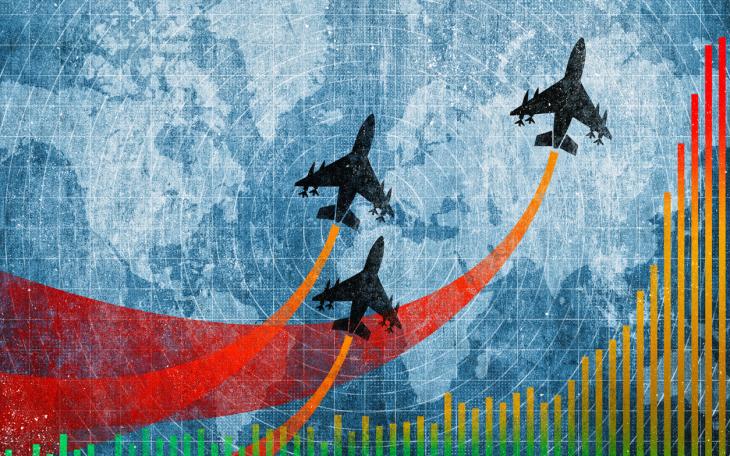

The market reaction to the US’s attack on Iran was surprisingly muted on Monday, with the S&P 500 (a proxy for the US market, accounting for 80% of its capitalisation) actually finishing up on the day, and this during a period of relative stagnation; the S&P had been down year-to-date until yesterday.
The US’s previous conflicts with Middle Eastern adversaries show a different story. The Iraq War of 2003 caused the S&P 500 to fall for seven successive days during which 5.3% of value was lost; the first Gulf War in 1990 caused a six-day decline shedding 5.7%; and more significant still, was the Global War on Terror in which the S&P fell 11% in just six trading days following Al Queda’s attack on 11 September 2001.
Perhaps even more surprising is that markets should, given the greater retail participation, be more volatile today. Retail investors are traditionally more short term in their investment horizons than institutions and certainly more prone to panic. At the turn of the century, at the height of the tech boom, it is estimated retail investors accounted for 10% of daily trading volumes. This would have been considerably less at the time of 9/11 with the tech crash causing a major reduction in investor confidence and activity throughout 2001.
Fast forward to today and retail investors typically make up some 25% of trading volumes on the S&P 500, reaching as high as 35% on Liberation Day in April last year. This growth has been driven by many factors including a reduction in trading commissions, the availability of online trading platforms, a proliferation of social media driven investment advice, and younger generations choosing to invest in stocks over property, which is out of reach for most.
So, why have US stocks not undergone a more negative and more acute reaction to events? One potential answer is that investors are becoming inured to global conflict and geopolitical risks.
War has been a constant in the headlines for the past four years from Ukraine to Gaza. At the same time, the Trump administration takes every opportunity to undermine international alliances and democratic norms, from threatening to annex Greenland, invading Venezuela or telling Europeans the enemy is not Russia but lies within. In normal times, any one of the above would be enough to cause sufficient investor anxiety to seriously rattle markets, but these are not normal times.
Furthermore, retail investors may be getting wise to the fact that, invariably, markets quickly recover from these terrible events. It only took the S&P 500 16 days to bounce back from the first Gulf War, 15 days to recuperate from 9/11 and 16 days to regain its losses from the invasion of Iraq.
More recent market shocks include the Covid-19 pandemic, which knocked a full third off the S&P between 19 February and 23 March 2020, but the market now trades at over three times its low point; and the Liberation Day tariffs of 2025 which quickly knocked the S&P by some 12% but the market is now valued at 40% higher than at its 8 April nadir.
Most of today’s retail investors will have experienced these more recent events and will have learnt, often through bitter experience, that the safest thing you can do in these situations is sit on your hands. Trading in and out of your portfolio will almost certainly result in losses when you fail to time the bounce. Although the Fidelity study that showed their best performing retail investors were their dead ones has been shown to be mythical, there is plenty of evidence to show that, for retail investors, inaction is the best strategy.
Perhaps if there are any positives to be taken from the awful events of recent times it is that we are becoming more resilient, more sensible investors.
What to read next
Browse below for the latest news, insights and thought leadership from our team of experts

The art of the teal

Pay to stay: can England’s mayors follow Manchester’s lead and turn a ‘tourist tax’ into growth?
All change on local government reorganisation

From drought to disruption: Why adaptation matters now

Australia's AI chart crackdown signals a wider shift in trust and disclosure
From Waiting for Godot to winning trust: Communications lessons from IPEM 2026

Farage, Burnham, and the battle for authenticity

What Aristotle can tell us about corporate statements