Was Labour's 1.5 million new homes target a promise or a vague aspiration?
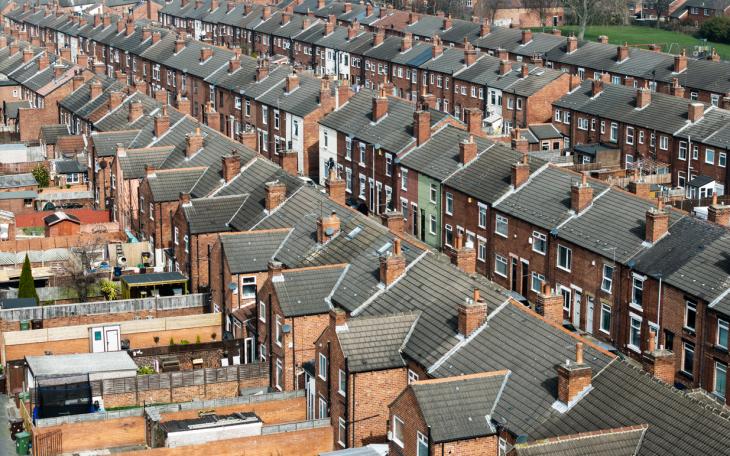

Going into my second term as councillor in 2018, the Labour group wanted to make a pledge on council house delivery for the manifesto. The figure of 1,000 completions over the next term was floated by the deputy leader. As this was from a standing start, and I knew a bit about how long things take in our industry, I suggested this wouldn’t be achieved so it was better to be vaguer or lower on numbers. I remember a colleague saying, ‘if it’s a pledge you have to deliver it – it’s not an aspiration’. Others were less concerned. The pledge was bumped to number one. Despite fast work by officers, the pledge was missed badly with purchasing s106 blocks from developers filling most of what was achieved.
It didn’t matter. Talk is cheap; expectations are low. We still won the 2022 election, and by that time things were up and running, the financial situation had changed, and lots of great council housing was delivered and is lived in now. But that’s local politics. What about for a national government?
Was the Labour government’s 1.5 million new homes target a promise or a vague aspiration?
In October 2023, Keir Starmer announced that ‘Labour will build 1.5 million homes to save the dream of homeownership’. It duly made it to the manifesto. Within months of taking power in 2024, industry was sceptical and Starmer was challenged on the deliverability of this promise.
In one of his several mission relaunches, Starmer said: “Building 1.5 million homes is ambitious. A little too ambitious, perhaps… We face an almighty challenge to hit these milestones by the end of this parliament. And if that level of candour surprises you then, honestly, it shouldn’t. After all, what is the point of setting a target that you can deliver without bold action. That’s not public service – that’s political cynicism. The job of these milestones is to take our country forward. Drive reform through the public sector. It’s not about making the government look good. So, yes, they are risky for us.”
It’s an interesting debate: is it better to have an achievable target, or to set a target you know won’t be met in order to signal bold ambition. In any case, it was around this time I started thinking he wouldn’t see out the parliament. Since then, we’ve heard successive housing secretaries, Angela Rayner, Steve Reed, and Rayner again commit to the 1.5 million. By last month Rayner called it ‘a stretch target’.
On current trajectory (according to Savills) new home completions will be 856,000 in the five years to March 2029, which is 57 per cent of the target. Since the 2024 elections, 450,000-480,000 homes have been built, Savills estimates.
The reasons for underdelivery are well rehearsed. Increased build costs, of course. Access to capital, skills. The environmental and other financial commitments now required by the system. And now demand for new homes is in such trouble that the government’s has unveiled a new Help to Buy scheme (Your First Home) to assist. Clearly, if prices are falling and demand depressed, the value on which whole developments are predicated cannot be realised. It is no longer ‘if you build it; they will come’ [sic], but simply ‘it doesn’t stack-up’.
This puts everything on hold, and last week we saw some large indications: LandSec paused Lewisham Shopping Centre, and British Land paused the next phase of Canada Water. All until market conditions improve. But will they?
And finally, for Starmer’s target, the denouement. On Monday, the FT reported that the government will quietly drop the 1.5 million target. Ministers will stop mentioning it. Still, you can’t prove a counterfactual. An early election would be one escape from facing the headline five-year stat.
What to read next
Browse below for the latest news, insights and thought leadership from our team of experts

Data centres and a backlash moving faster than its argument

Building for growth: Budget targets housing, planning and infrastructure constraints

The activist advantage: Why boards need a clearer story

Lula secures a fourth term and accelerates Brazil’s regulatory agenda

John Healey's maiden budget

Does Lena Dunham have a point about thought leadership?

Bringing Gen Z into the pensions debate

Reflections from Liverpool: reputation, risk and a changing pensions landscape