What Aristotle can tell us about corporate statements
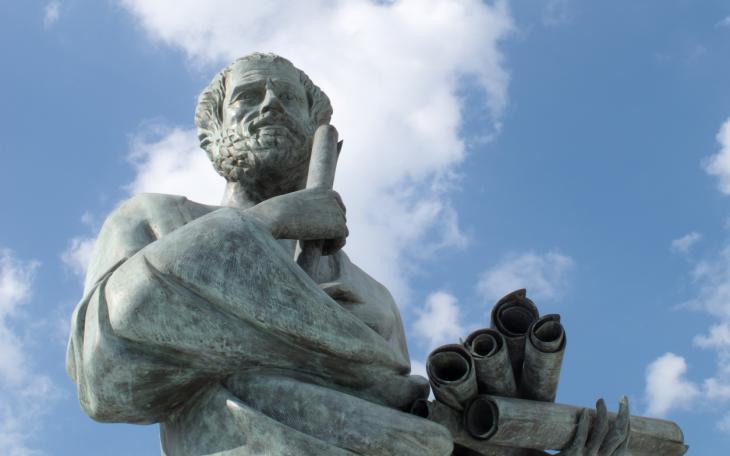

The ancient Greeks, having codified Western democracy, philosophy and the symposium, understood that assembling people in a room was no guarantee of anything sensible happening. They therefore gave considerable thought to the art of persuasion.
Aristotle identified three principal methods: logos, the appeal to reason; pathos, the appeal to emotion; and ethos, the authority conferred by character and credibility. Two and a half millennia later, these remain the core ingredients of both political and corporate communications.
Arguably their relevance has become even harder to ignore because the global information environment has become a vast, unmoderated dinner party at which everyone is speaking and very few people are listening. Writer and critic Rebecca West once rather tartly observed that there is no such thing as conversation, merely “intersecting monologues”. She was of course describing a perennial feature of human communication rather than social media, but modern platforms seem to have given this tendency unprecedented reach.
The statistics offer little comfort. The Reuters Institute reports declining engagement with traditional media, persistently low trust in institutions, and an accelerating shift towards a fragmented ecosystem of podcasters, creators and partisan commentators. Meanwhile, the World Economic Forum has ranked misinformation and disinformation among the leading short-term global risks.
The sad truth is that whilst information has never been more plentiful, shared understanding and wisdom have become endangered commodities. Facts now seem to be inevitably followed by “alternative facts” (and videos from outraged people explaining what ‘they’ do not want you to know).
This is fertile terrain for pathos. Politicians have always recognised that people feel before they calculate. Fear, pride, grievance and hope travel faster than hard facts. Political campaigns these days typically begin with a story about who we are, what has been taken from us, and who might restore it.
Corporates require pathos, too. Customers affected by disruptions or communities living beside major infrastructure projects rarely experience these issues as abstractions. They experience them personally. Pathos gives an argument human meaning by showing that the organisation understands what is at stake for the people affected.
Logos, meanwhile, restores discipline to the argument. It is the realm of evidence, causation and the unfashionable idea that conclusions should follow from premises. It matters whenever a company must explain a price increase, defend a strategy or demonstrate progress towards a climate target.
The best corporate use of logos transforms complexity into something intelligible. A bank explaining capital strength through a few consistent measures will fare better than one releasing 100 pages of reassurance. During a crisis, dashboards, timelines and independently verified data can give anxious stakeholders something solid to hold.
Yet evidence has its limits. Facts seldom persuade audiences who distrust the person presenting them. A beautifully written paragraph from an organisation with a record of evasion is still a beautifully written paragraph from an organisation with a record of evasion.
This brings us neatly to ethos. For corporates, ethos is now the most important of the three because it determines whether the other two carry any weight. It is accumulated through competence, candour and conduct over time, especially when candour is commercially inconvenient. Johnson & Johnson’s response to the 1982 Tylenol poisonings became a classic of crisis management not simply because the company withdrew products nationally and placed public safety ahead of immediate commercial loss, but because those actions gave its subsequent communications credibility. Stakeholders believed what the company said because its conduct demonstrated that it deserved to be believed.
The problem is that ethos cannot be manufactured in the crisis meeting. It is built through consistent leadership, transparent reporting and fair treatment of stakeholders.
The Greeks of old understood persuasion as an art of balance. Pathos gives people a reason to care, logos gives them a reason to agree, and ethos gives them a reason to believe. But unlike the other two, ethos must exist before the crisis statement is written to have credibility.
If you are looking to get your press release published or content to get good engagement, it is worth asking yourself whether Aristotle would have approved it.
Note: In this article, I use the term “ethos” in a broader contemporary sense to describe credibility, character, and trustworthiness. This usage is informed by, but not identical to, Aristotle’s original conception of ethos in classical rhetoric.
What to read next
Browse below for the latest news, insights and thought leadership from our team of experts

From drought to disruption: why adaptation matters now
Australia's AI chart crackdown signals a wider shift in trust and disclosure

From waiting for Godot to winning trust: Communications lessons from IPEM 2026

Farage, Burnham, and the battle for authenticity

The changing boundaries of privacy

The politics of presence: Why institutions need to be seen to be trusted

The CEO transition tightrope: How to signal change without undermining trust

Built to last? JLR redundancies challenge the government’s industrial ambitions