Immigration reform: Mahmood holds her ground as Burnham keeps his distance
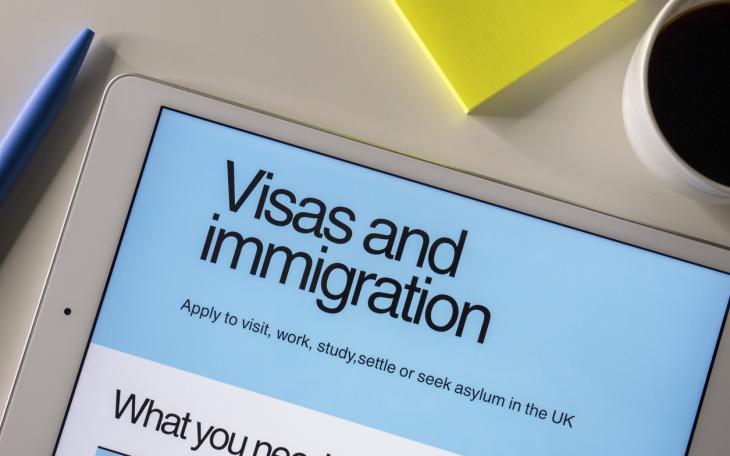

Nigel Farage has described the government's latest immigration concessions as “the beginning of the capitulation”. The media has accused it of a “U-turn”, but Shabana Mahmood was in no mood to concede an inch when challenged repeatedly by Nick Robinson on the Today programme this morning.
And she may have a point. The central proposal to double the standard qualifying period for indefinite leave to remain from five to ten years has survived. Migrants will still face different settlement requirements depending on their earnings and contribution, and those who have breached immigration rules could face considerably longer waits.
The main change concerns care workers. Around 280,000 eligible workers and their dependants will retain access to a five-year settlement route, rather than facing waits of up to 15 years. That's a substantial concession for the sector, but hardly the wholesale dismantling of Mahmood's plans suggested by some of the coverage. If this amounts to capitulation, Mahmood has managed to surrender remarkably little.
The announcement offers an early insight into how Andy Burnham intends to run his government. His decision to retain Mahmood as Home Secretary was, in itself, notable. Her approach to immigration has not always sat comfortably with his political instincts, and her future was far from certain when he entered Downing Street. Yet she remains in post, defending the central elements of her policy.
Burnham has taken a different approach to the language surrounding immigration. He has resisted calls for numerical targets, arguing that migration should reflect the needs of the economy, and recently reopened the debate about Britain's relationship with the EU and freedom of movement.
His plans for a National Care Service may also help explain the concession. Burnham has made social care reform one of his major domestic ambitions, including a commitment to free personal care for older people. That will require considerably more staff in a sector already struggling to recruit and retain workers, particularly when there is such an apparent lack of interest among British people in taking up these roles. Making it harder for experienced overseas care workers to remain in Britain would be a peculiar way to begin.
There is a marked contrast with Keir Starmer's handling of the welfare reform rebellion last summer. Faced with mounting opposition from Labour backbenchers, Starmer eventually abandoned a central element of his proposals, leaving much of the original package stripped away. Burnham has secured a compromise without sacrificing the principal measures or allowing the disagreement to become a confrontation with his Home Secretary.
The handling of the announcement itself is also notable. Starmer had a habit of making himself the face of almost every major government decision, leaving him personally exposed when policies ran into trouble. Burnham was similarly prominent during the opening weeks of his premiership but has been noticeably less visible on this latest announcement.
Indeed, while Mahmood was facing Robinson on the Today programme, Burnham was several thousand miles away playing cricket in Antigua as part of the Commonwealth Heads of Government Meeting. Howzat, Shabana? A difficult delivery to face, but Mahmood, one of the government's more effective communicators, has defended her position without sounding as though she is reading from a set of approved lines.
The political backdrop is improving for Labour. The latest Ipsos polling puts the party on 32%, eight points ahead of the Conservatives, with Reform falling to 20% and the Greens to 8%. After months in which Farage and Zack Polanski appeared to have the momentum, both parties are losing ground.
Perhaps just as noteworthy is the recovery in Conservative support. At 24%, the party is now second in the Ipsos poll, having gained three points in a month, while polling in today’s Times puts Badenoch’s party just two points behind Labour. Whisper it quietly, but is Kemi Badenoch making the Conservatives electable again? They are some distance from convincing the public they are ready to govern, but she is at least beginning to give them a chance of being heard again.
Burnham now has a stronger political platform from which to govern, and his handling of the immigration reforms suggests he is prepared to let ministers take responsibility for difficult decisions rather than making every disagreement a test of his personal authority.
The danger is that in trying to accommodate different parts of his party and the electorate, he ends up satisfying neither. But this week's announcement suggests a Prime Minister more willing to compromise before a disagreement becomes a full-blown rebellion, and less inclined than his predecessor to turn every difficult policy decision into a personal battle.
What to read next
Browse below for the latest news, insights and thought leadership from our team of experts

Saving for a rainy day: The trust bank and crisis comms

Your First Impression: What Your First Home’s lukewarm reception tells us about managing expectations

Will the latest UN climate conference be much COP?

Elections, dear boy, elections

Rosebank tests Burnham’s new energy settlement

The silent power of procurement to drive impact in the value chain

Data centres and a backlash moving faster than its argument

Building for growth: Budget targets housing, planning and infrastructure constraints