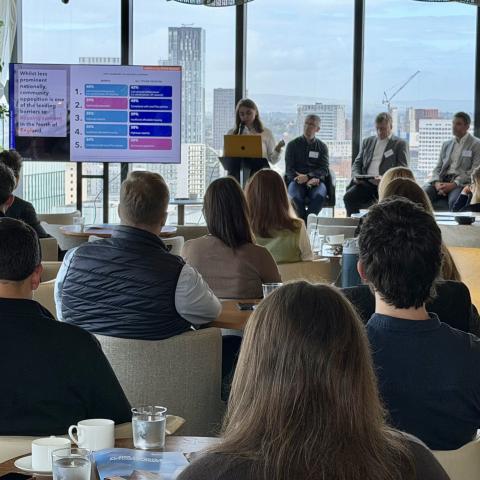
Burnham goes big in first conference speech, but real test still lies ahead at the Budget

Twelve months ago, Andy Burnham arrived at Labour Party Conference as the party's insurgent-in-chief. Fresh from Greater Manchester and armed with an ambitious vision for reshaping the country, there was no shortage of enthusiasm for brand Andy. By the end of conference, however, the sense among members, the media, and MPs alike was that he’d gone too far too soon, with the then Prime Minister Keir Starmer’s position strengthened, albeit temporarily.
What a difference a year makes. This time, Burnham walked onto the conference stage not just as Labour's ambitious standard-bearer, but as Prime Minister. More importantly, he looked entirely comfortable in the role, something which his predecessor never managed. While last year's conference felt like a pitch, this year's felt like an arrival.
For a party that has endured a bruising period of internal division, difficult economic choices and declining morale, Burnham's speech was notable as much for the tone it tried to set as the policies it contained. Put simply, the good vibes are back, for now.
The Prime Minister has spent his first months in office attempting to reconnect Labour with some of the instincts many members felt had been lost with a blitz of quick-win policy announcements focused primarily on the cost of living and devolution.
Today’s speech doubled down on elements of that approach. Commitments around greater public ownership, electoral reform, scrapping the Triple Lock, continued transfer of power away from Westminster and a more balanced position on Israel and Palestine landed well with a conference audience eager for evidence that Labour remains connected to its values.
None of these announcements were especially surprising. Burnham has spent much of his political career arguing that public services work best when they are accountable to the people who use them and that decisions should be taken closer to the communities affected. His speech was, in many respects, an attempt to bring together the themes that have defined his political journey: devolution, public service reform, community power and a belief that government can be a force for good.
One of the loudest rounds of applause came, unsurprisingly, during the sections focused on public ownership and local control. The promise of greater local influence over transport, housing, infrastructure and economic development remains one of Labour’s strongest political assets.
Yet for all the optimism inside conference, the political reality awaiting Burnham is considerably less forgiving. There are big policy challenges and debates to be had coming from today’s announcements. There is far from consensus across the country let alone within his own party regarding the Triple Lock. Social care reform remains a mammoth task, with tax rises to pay for it almost guaranteed. Though many have been arguing for electoral reform away from first-past-the-post, it is still unclear exactly what system is the best to replace it, if at all.
Meanwhile, the Budget next month will provide the first real test of the Burnham premiership. Supporters may welcome the direction of travel and the renewed sense of purpose, but aspirations alone do not balance the books. Weak growth, pressure on public finances and continued demands on public services have not disappeared simply because Labour has found its confidence again.
For now, however, Burnham has succeeded in achieving something important. He has restored a sense of optimism among Labour members and reminded the party why it believed in him in the first place. He has drawn his lines in the sand, picked the big issues to campaign on and make political arguments for. Whether he succeeds remains to be seen but be in no doubt that this is a Prime Minister ready to make the big political arguments again.
What to read next
Browse below for the latest news, insights and thought leadership from our team of experts

Why dark social matters more than ever

Corporate affairs and navigating dystopia
The new reputation battlefield: Navigating risk in a fragmented media landscape

Investors ponder what's next in property

Abundant energy at Climate Week NYC

Conference season meets energy reality

Ed Sheeran’s case study on the death of strategic neutrality
Merz's election setback and what it means for Germany