Investors ponder what's next in property


When Europe’s property industry gathers for EXPO REAL in Munich next week, the mood should be more constructive than in recent years, but nobody will mistake that for a return to easy money.
The dominant question is no longer simply when interest rates will fall, but how investors price risk when the direction of rates, energy costs and geopolitics can change quickly. The Bank of England has held Bank Rate at 3.75%, while warning that persistent energy-driven inflation could require further tightening. Recent rate increases by the US Federal Reserve and Reserve Bank of Australia underline that the global cycle is no longer moving uniformly towards easing, complicating asset pricing and cross-border capital allocation. For property professionals, financing remains central, but certainty itself has become a valuable and scarce commodity.
Capital is returning, but selectively. Investors are favouring sectors where demand is structural, income can grow and assets solve a recognisable economic or social need. Logistics, living, student accommodation, healthcare, and high-quality offices should all attract attention. Assets without a clear occupier proposition, credible decarbonisation pathway or defensible location will find capital far less forgiving.
The industry is also entering a period of consolidation. Prologis’ agreed takeover of SEGRO and Savills’ acquisition of Eastdil Secured point to a market in which scale, specialist capability and access to capital matter more. The conversations in Munich will therefore extend beyond buying buildings to buying platforms, capabilities and market access.
However, the defining theme may be the convergence of real estate and infrastructure. EXPO REAL is giving investable infrastructure its own forum for the first time, covering energy, digital, social and defence infrastructure - a clear reflection of where institutional capital is heading.
Data centres sit at the centre of this shift, with Google’s announced $15 billion investment in Finnish AI infrastructure and nuclear power just one of many investment announcements in recent months. Yet the opportunity is inseparable from the constraint. Power availability, grid connections, water use, planning consent and community acceptance now determine whether digital ambitions can become investable assets. In this market, megawatts may matter more than square metres.
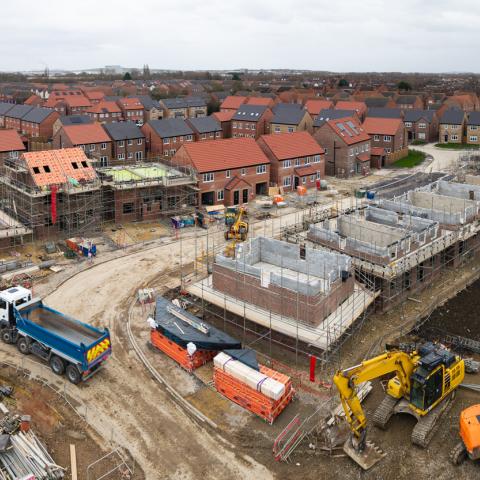
Housing will remain the most politically charged conversation. Europe needs more homes, but viability, regulation, construction costs and local opposition continue to frustrate delivery. The winners will be those who are able to align private capital with public outcomes and communicate that partnership convincingly.
My expectation is that EXPO REAL will be less about calling the bottom of the cycle and more about identifying where durable value can be created. The market is no longer rewarding property exposure in itself. It is rewarding relevance to infrastructure, technology, productivity, demographic change and resilience. Munich will reveal who is positioned to shape the next cycle and who remains anchored to the last.
What to read next
Browse below for the latest news, insights and thought leadership from our team of experts

Abundant energy at Climate Week NYC
Conference season meets energy reality

Ed Sheeran’s case study on the death of strategic neutrality

Merz's election setback and what it means for Germany

From manifestos to bricks and mortar: how do we get more homes built?

From coalition to collapse ... and back again?
Framing the narrative in favour of Jackdaw

From Manchester to Manhattan: Andy Burnham's Trump test