From coalition to collapse ... and back again?
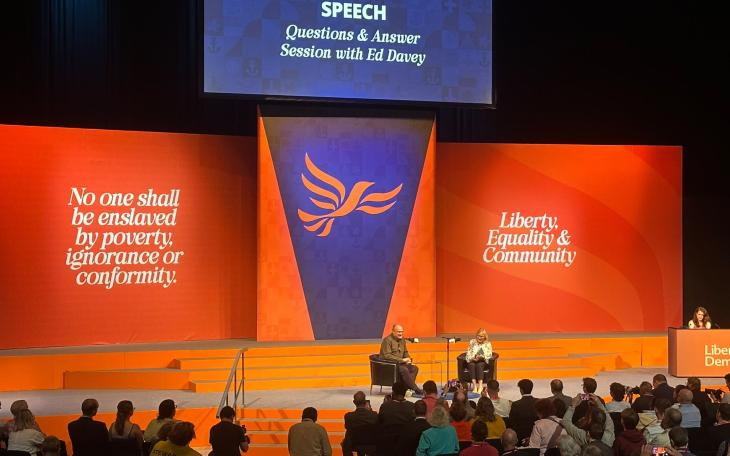
On the surface, this year's Liberal Democrat conference has been about growth, public services and the cost of living. Liberal Democrat Deputy Leader and Treasury Spokesperson Daisy Cooper MP has used conference to launch the party's growth plan, while Liberal Democrat Leader Sir Ed Davey MP has sought to position the party on the side of hard-pressed households with proposals including a temporary cut to fuel duty.
Scratch beneath the surface, however, and a different conversation is taking place.
For much of the past decade, the party has focused on rebuilding from the scars of coalition. In Brighton, there are signs that the conversation is beginning to shift. The question is no longer simply how the Liberal Democrats win seats. Increasingly, it is what would they do if power came within reach?
That tension was visible at a More in Common fringe event examining who the Liberal Democrats are and what they stand for. Max Wilkinson MP, the party's Home Affairs Spokesperson, described the party as a broad church, capable of appealing both to former Conservative voters in seats recently won from the Conservatives and to the more progressive, liberal communities that have traditionally formed the party's base.
That balancing act has been central to the party's success. Yet it also creates strategic questions. Asked about the prospect of entering government, Bobby Dean MP said there was "definitely" a piece of work to be done in the coming year on what the party's red lines would be. Wilkinson was more cautious, stressing that Liberal Democrats wanted to deliver liberal values and effect change in the most effective way possible. Yet he stopped short of ruling anything out.
The launch of the Britain Project provided a similar insight into where the party's thinking may be heading. Officially established as a policy think tank designed to "reinvent liberalism for the 21st century", much of the discussion focused on governing rather than campaigning.
The room was packed. Senior Liberal Democrats, including Daisy Cooper MP and Foreign Affairs Spokesperson Callum Miller MP, were sat prominently in the front row and both spoke in support of the project. Sir Ed Davey also attended the launch, arguing that the Britain Project would help arm the party with the robust ideas and policies needed to govern effectively. He suggested that the greatest opportunity to deliver lasting liberal change comes through government, pointing to the Liberal Democrats' record in coalition, particularly on renewable energy, as evidence that participation in government can deliver tangible outcomes.
Perhaps more revealing was the language used throughout the event. Lord Tim Leunig, Director of Policy at the Britain Project and a former senior civil servant and adviser to two Chancellors, spoke about preparing parliamentarians for the realities of government, understanding what tough choices look like in office and ensuring ideas are robust enough to survive scrutiny from the civil service and be put into practice. He positioned the think tanks aim as not to simply produce liberal policy announcements but to supply ideas that are genuinely ready for the scrutiny of government.
This matters because the wider political context continues to evolve. Andy Burnham's arrival in Downing Street has transformed the landscape. While Liberal Democrats remain wary of discussing any future arrangements publicly, many privately recognise that Britain's increasingly fragmented politics has reopened questions that once appeared settled.
No one in Brighton is openly campaigning for coalition. The political risks remain obvious. Equally, no one can ignore the arithmetic. A divided right and a more competitive electoral environment mean that the possibility of a future hung parliament no longer feels remote.
What makes this conference notable is not that Liberal Democrats are talking openly about coalition. They are not. It is that increasingly they appear to be preparing for government.
For a party that has spent years recovering from power, that may be the clearest sign yet that it believes power could one day return.
What to read next
Browse below for the latest news, insights and thought leadership from our team of experts

Ed Sheeran’s case study on the death of strategic neutrality
Merz's election setback and what it means for Germany
From manifestos to bricks and mortar: how do we get more homes built?
Framing the narrative in favour of Jackdaw
From Manchester to Manhattan: Andy Burnham's Trump test
The art of the teal
Pay to stay: can England’s mayors follow Manchester’s lead and turn a ‘tourist tax’ into growth?
All change on local government reorganisation