Regional water councils, and the lessons from a demanding summer
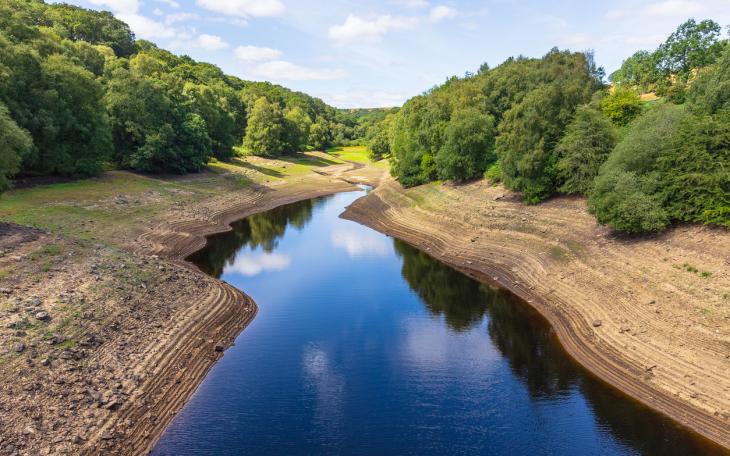

Last week, the Government announced eight new regional water councils to shape water investment. The intention behind them is to bring local leaders, customers and businesses together to set priorities for their region and help shape billions of pounds of investment in water and flood infrastructure.
Each council will draw up a plan setting out its region’s main pressures, the decisions to be made and the public and private investment that would be needed. Local leaders have until the end of the year to submit proposals for how the bodies will run. And in Andy Burnham’s latest push for devolved powers, Mayors will also gain new powers through the strengthened Water Bill to hold water companies to account.
The announcement comes as the sector reflects on what this summer showed. As part of the Future Water Association's Year in Water event on 3 November, hosted at SEC Newgate’s London office, we heard from Meyrick Gough of Water Resources South East, who covered the lessons from a summer dominated by heatwaves and what the regional groups will need to prepare for.
This included covering how repeated heatwaves and sustained demand can create issues that some planning scenarios hide. Exceptionally low rainfall and high temperatures produced prolonged system stress with very little downtime for maintenance, while repeated peaks also gave networks and other sector systems limited opportunity to recover. The conclusion was that resilience now needs much greater focus, and across the board, not just in public water supply systems.
Regional collaboration is central to the Government’s thinking in tackling some of these issues and in announcing the water councils Defra points to Water Resources East and Greater Manchester’s Integrated Water Management Plan as examples of partners working together around local pressures. The new councils are intended to build on that approach.
Environmental organisations have broadly welcomed the announcement. The Rivers Trust said it had long called for region-wide systems planning and looks forward to working with local leaders. Wildlife and Countryside Link described regional control as an opportunity, while stressing that the councils will need the powers and funding to deliver. The Wildlife Trusts said bringing together everyone with a stake in the water system could support freshwater recovery.
As usual, others have asked whether the model goes far enough. The Green Party has raised concerns that the councils are “advisory” bodies, and further detail on their powers and funding is likely to shape how the proposals are received.
Regarding what this means for new projects coming forward, three themes stood out from the event last week.
Firstly, regional water resources groups already produce long-term plans. The councils will need to work alongside that existing planning, so clarity on boundaries, roles and relationships will be an important next step once proposals emerge.
Secondly, discussion around hidden scenarios at the FWA event suggests regional plans will benefit from testing back-to-back heatwaves, limited recovery time and maintenance constraints, not just average conditions.
Lastly, public understanding is critical. Councils that give communities a real say will also benefit from communities having a clear picture of the trade-offs. That means explaining why peak demand matters as much as annual totals, how new supply and demand-side action work together, and how everyday habits connect to pressure on the wider system. Practical, locally rooted messages on using water efficiently are likely to land best when people have helped shape the priorities.
The councils are still to be established, and questions of powers, funding and governance remain to be settled. The direction of travel, though, is towards water planning that is more regional and more visible to the public, and the experience of summer 2026 offers a useful benchmark for what that planning needs to withstand.
What to read next
Browse below for the latest news, insights and thought leadership from our team of experts
Mixed messages on renewables or a plan taking shape?
Number 10 North’s new conundrum: Ensuring fiscal devolution is delivered fairly and for all

Will tokenisation reshape financial markets?

From the cloud to the community

AI’s great expectations problem
Who ordered another Mamdani?
Mixed messages on renewables or a plan taking shape?

Immigration reform: Mahmood holds her ground as Burnham keeps his distance