Mixed messages on renewables or a plan taking shape?
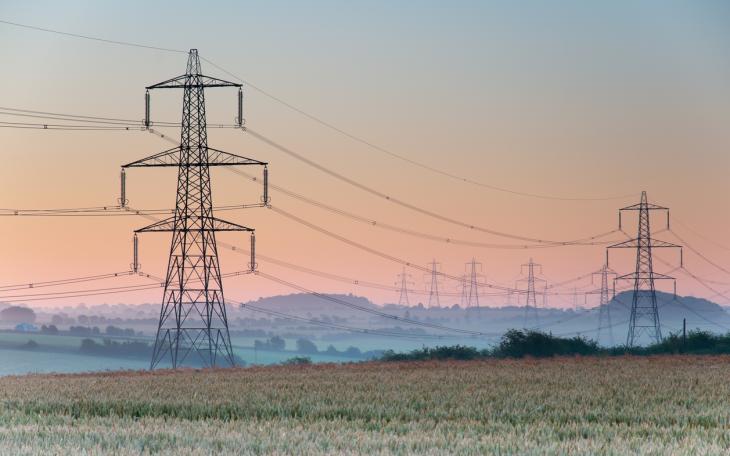

The renewable energy sector has been watching closely since Andy Burnham moved into number 10 for signs of how energy policy might be changing. While government has largely maintained support for Clean Power initiatives, there has been a clear reframing underway, to shift away from net-zero towards a focus on cheap power.
Some messaging has been a bit confusing for the sector, seeming to send mixed or contradictory messages. The Contracts for Difference (CFD) scheme is an excellent example. Earlier this summer, Government announced it was bringing forward the next round of funding to send a message of support to the industry (known as Auction Round 8 or AR8), while just last week, Energy Minister Michael Shanks made a statement that they would now be delaying the following funding round (AR9) planned for next year to consider significant changes to the scheme.
While renewable energy projects do not receive a subsidy from the Government, the CFD programme is the flagship mechanism to help support these types of projects.
The programme allows developers to lock in the energy price they will accept for the energy they produce. When energy prices are above the agreed price, developers must pay back the difference; whereas when energy prices drop below the agreed price, developers are paid back the difference by a government-backed entity.
The scheme has typically run on an annual basis, so developers who want to opt in can programme their developments according the rough timelines. Thus, shifting the funding rounds either earlier or later is problematic for large developments that take multiple years to develop and may rely on this financial security mechanism. Uncertainty is always the enemy of investment.
While the messaging hasn’t always been clear, the plan is beginning to come into focus. Home-grown renewable energy is still the cheapest option, so the policy goals to reduce carbon emissions and reduce consumer costs are still very much aligned. The issue is that energy prices are very complex, so it is not as simple as adding more cheap renewables to the mix to bring prices down.
One key issue is that energy costs in the UK are typically set by gas prices, because it is the marginal supply, or the last to come online to meet demand. In order to bring these costs down, we need to decouple the link between gas prices and consumer energy prices. This is just what Government has proposed to do, to shift existing producers who were on the old Renewables Obligation scheme to the CFD programme, which would be implemented in the AR9 funding round.
Another key issue is grid reform. ‘Curtailment’, refers to instances where there is more energy being produced (typically large wind farms in Scotland) than the grid has the capacity to move to where it needed (typically in south). When this occurs, the National Energy System Operator pays developers to switch off while often switching on gas plants in the south (excellent explanation here), all helping to drive up energy costs for consumers. While the Great Grid Upgrade is underway to update grid infrastructure across the country, it is the Strategic Spatial Energy Plan (SSEP) that would provide a more strategic assessment of where new energy projects should be developed based on local demand and grid infrastructure. This energy blueprint is expected to be released next year, right around the time of the AR9 funding round.
Thus, this wonky policy milestone has the ability to make a significant change for consumers by both setting energy prices by the actual costs of production and aligning funding decisions with spatial energy plans to ensure that projects are prioritised in locations where the grid can actually deliver them. In short, I think anyone who saw the headline that AR9 was being delayed may have had a quick panic; but with a little more time to process, this announcement should be seen as a perhaps poorly delivered but thoughtful manoeuvre to align key funding decisions with the other initiatives underway.
As all eyes turn towards COP31 this week, I would anticipate further announcements on this front to help reduce concerns, reestablish certainty for developers and clarify that this is all part of a cohesive and strategic plan to get energy prices under control.
What to read next
Browse below for the latest news, insights and thought leadership from our team of experts
Regional water councils, and the lessons from a demanding summer
Number 10 North’s new conundrum: Ensuring fiscal devolution is delivered fairly and for all

Will tokenisation reshape financial markets?

From the cloud to the community

AI’s great expectations problem

Who ordered another Mamdani?

Mixed messages on renewables or a plan taking shape?

Immigration reform: Mahmood holds her ground as Burnham keeps his distance