From Manchester to Manhattan: Andy Burnham's Trump test
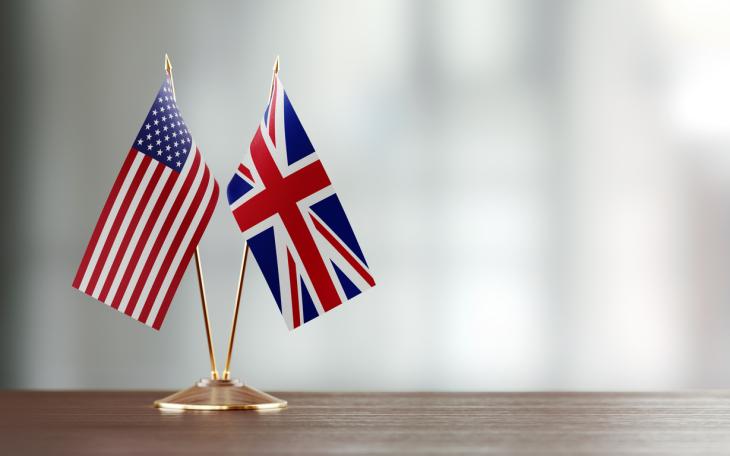
Andy Burnham on Tuesday faces one of his first major tests as Prime Minister on the international stage, heading to the UN General Assembly in New York for meetings with world leaders and a major speech of his own (not until around 1.50am UK time).
He is bringing his closest aides and will hold talks with the EU Commission about trade and the ‘Brexit reset’. He’s even bringing his AI Minister, Kanishka Narayan, to discuss recent doomsday warnings around the evolution of artificial intelligence, signalling this as a priority theme.
But all eyes are on what many see as the bigger test of the day: his meeting with US President Donald Trump.
By mid-morning, the news pages were already full of commentary, suggesting that Burnham will adopt a middle-of-the-road approach to the US President, a ‘third way’ between the adversarial approach of Canada and the fawning style associated with his predecessor, Keir Starmer.
So far, so good. Trump has already labelled Burnham a “nice guy” but “unfortunately” liberal after their two phone calls since Burnham became Prime Minister. But that may matter little, as Lord Kim Darroch, a former UK ambassador to the US, suggests that “for Trump, personal chemistry is much more important than ideology”.
In an apparent early show of goodwill, Burnham invited Trump to Manchester during their first phone call. The invitation was reportedly accepted. This morning, No. 10 announced that Manchester will host the next G20 Summit, when Britain assumes the presidency of the group in 2027, with preparations already underway.
So where are the fault lines, assuming that positive personal connection survives its first face-to-face encounter?
AI and tech regulation
The Prime Minister has said he believes Britain may be “uniquely positioned to play a leadership role on AI", adding that “the G20 presidency gives us that opportunity”. He is pitching the UK as an “honest broker” capable of driving global agreements thanks to strong relationships with the US and Europe, alongside “a strong dialogue” with China.
AI Minister Kanishka Narayan posted whilst in transit that his mission is to ensure international collaboration on AI is driven by a single test: “will the British public benefit?”.
However, there is little point trying to broker anything without US support. Washington remains vexed by the UK's digital services tax, the Online Safety Act, and plans for an under-16 social media ban, which many Americans view as disproportionately affecting US technology firms. Trump has previously threatened “a big tariff” in response.
Any positive signals may have been helped by the convening power of King Charles III, who last week brought together senior leaders from OpenAI, Anthropic, Google DeepMind and Nvidia to discuss AI. But those watching closely may reserve judgement until after OpenAI CEO Sam Altman concludes his briefing to the UN Security Council on Wednesday.
Foreign policy
Among the issues Burnham is expected to raise is support for the agreement to transfer sovereignty of the Chagos Islands to Mauritius while maintaining use of the military base in Diego Garcia. It has been suggested he could even raise the Falklands, following comments from Trump suggesting he might not stop Argentina taking them back.
More broadly, Burnham appears determined to link international conflict back to its impact at home, particularly his promise to ease cost-of-living pressures and “secure the interests of Britain and the wider region”.
A clear argument has emerged from Downing Street: household pressures have been exacerbated by higher fuel and energy prices, first following the war in Ukraine and more recently the conflict between the US and Iran, which caused oil tankers to avoid the Strait of Hormuz.
Mindful that his only other foreign trip as Prime Minister was to Kyiv, Burnham is expected to prioritise pressing for lasting peace in Ukraine, while also pushing for an end to the conflict in the Middle East.
As he said this morning: “We want to see an end to the conflict as quickly as possible and we stand ready to play our part.”
Energy
A net-zero-phile government in the UK, with all the “windmills” President Trump dislikes so much, recently sent a signal suggesting it may open up the North Sea, a move warmly received by Trump.
While the Jackdaw and Rosebank fields, off Aberdeen and Shetland respectively, now appear likely to secure approval, which could attract praise from President Trump in turn, it remains a delicate political tightrope.
Not least because withholding permission is widely seen as being in the spirit of Labour's manifesto commitment. Furthermore, 575 experts have written to Burnham and Energy Secretary Miatta Fahnbulleh warning that approval would defy climate science and could breach national and international climate obligations.
Critics argue that the climate damage would outweigh any economic benefit, while doing little to lower energy bills or improve energy security given that much of the fossil fuel output would ultimately be exported.
Known for his upbeat tone and “vibe politics”, Burnham will aim to strike a hopeful note in his UNGA speech. Back at home, however, he faces an anxious and impatient audience ahead of Labour Party Conference in Liverpool this weekend.
However successfully he passes his test this week, businesses and markets are acutely aware of the challenges facing this new Prime Minister. His Conference speech next week and first Budget on 28 October will present very similar constraints and dilemmas to those faced by his predecessor.
What to read next
Browse below for the latest news, insights and thought leadership from our team of experts
Short-term gains vs. long-term climate costs
The art of the teal
Pay to stay: can England’s mayors follow Manchester’s lead and turn a ‘tourist tax’ into growth?
All change on local government reorganisation

From drought to disruption: Why adaptation matters now
Australia's AI chart crackdown signals a wider shift in trust and disclosure

From Waiting for Godot to winning trust: Communications lessons from IPEM 2026
Farage, Burnham, and the battle for authenticity