From councils to country: The election that could unseat a Prime Minister
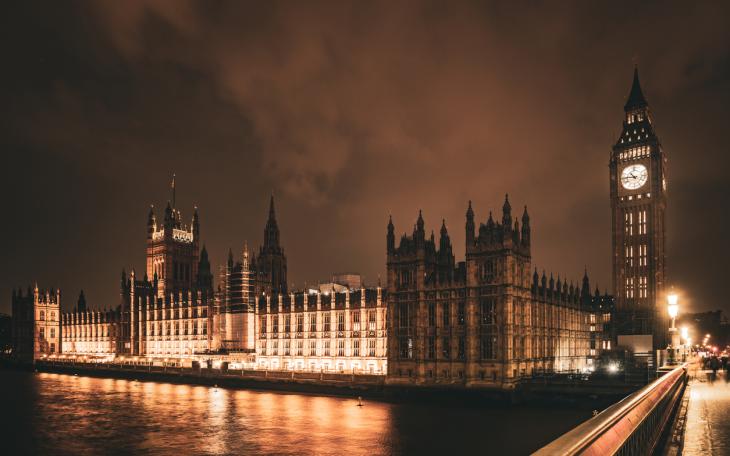

After what seems like an interminable build-up – with more than the average dose of pre-election drama, speculation and power struggles – more than 30 million people across Britain will get the chance to go to the polls this Thursday in what is set to be the most significant election since Labour took power in 2024.
The significance is not only for those places facing elections and a change of power at local level, but more importantly for the future of the country and its national political leadership.
Several factors make these elections momentous, not least the scale and breadth of the polls: more than 4,500 councillors are set to be elected across 136 local authorities, including all London boroughs, every large English city, and some county councils. In addition, but no less importantly, voters in Scotland and Wales will be deciding who will run their devolved parliaments for the first time since 2021.
Most notably, however, and much more than is usual in such mid-term polls, the outcome of these elections is being seen as a referendum on Keir Starmer’s continued leadership of the Labour Party and country. Indeed, many commentators will be pointing to the results as a critical litmus test on Labour’s ability to win elections across the country with Starmer at the helm.
Against a backdrop of covert leadership challenges and backbench plots, a bad night for the governing party would surely signal the beginning of the end for Starmer, if that end has not started already. But how badly do Labour have to do?
It’s pretty much priced-in that Labour are going to have a bad night, with numbers being bandied around of between 1,500 and 2,000 council seat losses. Though I would argue that it’s not necessarily the number of seats that is most significant (though losing 2,000 councillors of the 2,560 they are defending would be a body blow) but more the number and location of actual councils lost, particularly those that have always been considered safe territory for the red team.
A truly terrible night for Labour, in the eyes of the media, its MPs, and the party membership would see them losing several previously safe London boroughs, such as Islington, Southwark and possibly Starmer’s back yard of Camden. This, framed against the backdrop of a wipe-out in northeast England, the loss of control of key authorities in the north and midlands, and the possibility of going from first to fourth in Wales, would likely be terminal for the Prime Minister.
Another very significant factor in these elections, and one that breaks with decades of psephological orthodoxy, is the fact that for the second year running it is almost certain that neither of the two main parties will come either first or second in the national vote share. We are now in the era of five-party politics (plus others) and votes are likely to be split by the insurgent populist parties of the left and right - the Greens and Reform UK - as well as Liberal Democrats and independents building in their areas of strength. British electoral politics has never looked so fragmented, and it would be a brave person to make firm predictions.
Like any election, the impact of the results is as much about expectation as the reality. The expectation in these elections is less about the political picture ahead of the still distant general election (though it is a factor) or how well Reform UK will do across the country or how many inroads the Greens will make in urban areas. The focus here is much more immediate and is about the extent to which losses by the governing party will impact who is running the country in the months and years ahead. Thursday’s polls are significant, not just for the various councils or devolved nations, but on their wider impact on the leadership and the future of the UK as a whole.
What to read next
Browse below for the latest news, insights and thought leadership from our team of experts

Abundant energy at Climate Week NYC

Conference season meets energy reality

Ed Sheeran’s case study on the death of strategic neutrality
Merz's election setback and what it means for Germany
From manifestos to bricks and mortar: how do we get more homes built?
From coalition to collapse ... and back again?
Framing the narrative in favour of Jackdaw
From Manchester to Manhattan: Andy Burnham's Trump test