A message from Minneapolis to the rest of the world
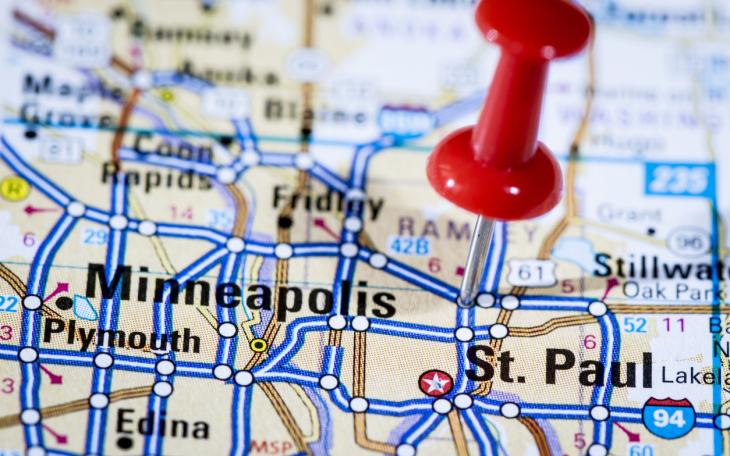

When you grow up in a place like Minneapolis, you don’t expect your little corner of the world to become a global headline. And yet, here we are, at the centre of an international conversation. Recent events in Minnesota, particularly the large‑scale strikes against federal immigration action under the US Immigration and Customs Enforcement (ICE) agency, initially felt a bit surreal and hyperlocal. But the events in the town where I grew up have reminded me of something so essential to our fundamental human existence: no government, no community, no company exists in isolation. What happens in one city, however small or familiar, can have both subtle and large-scale implications for our interconnected economies and social systems.
In Minnesota, the protests deliberately focused on economic activity, because when governments fail to listen, communities often turn to the one remaining lever that gets attention: profit, or the withholding of it. As uncomfortable as it may be, economic interdependence means businesses are often the most effective pressure point available. Not because companies caused the harm, but because they sit at the intersection of public life and political decision‑making. When business stops, people notice. When entire sectors pause, decision‑makers listen. And when the people that these systems are designed to serve would willingly halt them altogether in the interest of something bigger, it becomes impossible to ignore.
The 14 Fortune 500 companies based in Minnesota likely never imagined being drawn into the national spotlight in this way. And frankly, neither does any organisation. Companies are no longer neutral actors in society: they are implicitly visible, influential, and deeply consequential, whether they choose to be or not. They hire, invest, build, withdraw, partner, or pull out, and each of those actions sends an impactful message to the people around them. That doesn’t mean companies should become political pawns. But it does mean they cannot assume that “quietly cracking on” is a viable strategy in a world where information travels instantly, where consumers and employees expect clarity, and where silence is often interpreted as indifference.
For leaders, particularly those of us operating in multinational environments, this moment is a wake‑up call. The world is too interconnected, the pace of information too fast, and the scrutiny too intense for reactive posturing. People today - employees, consumers, citizens - crave honesty, transparency, and authenticity. They want leaders who acknowledge complexity rather than evade it. The recent display of collective action highlights the responsibility of companies in a globalised world, and the need for clearer, more courageous governance. And in an age of global interdependence, governance extends into communities, supply chains, labour markets and, ultimately, public trust.
As someone watching my hometown navigate these complex pressures in real time, I am reminded that activism is not solely about resistance; it is also about protection - of people, of principles, and of the social fabric that allows communities and businesses alike to flourish. Wherever you are in the world, the message is the same: values still matter, and they matter most when they are expressed not in words, but in action. The best time for political and business leaders to define and defend their values was a long time ago. The second-best time is now.
What to read next
Browse below for the latest news, insights and thought leadership from our team of experts

Protecting trust in an age of AI and impersonation

A recovery measured in discipline, not exuberance: Views from the property sector’s EXPO REAL
An Iron Dome and an Iron Lady: Reflections on the Conservative Party Conference

Going for the Grid: Burnham tries to take back control

Your First Home: a helping hand for buyers or a boost for housebuilders?

Solar and Storage Live: The shift from tick-box consultation to meaningful engagement

Burnham goes big in first conference speech, but real test still lies ahead at the Budget

Why dark social matters more than ever