Devolution cannot arrive quickly enough for transport reform

A futuristic Waymo driverless taxi welcomed visitors at the entrance to the Interchange transport conference in Manchester this week, its all-seeing rooftop camera no doubt scanning the road ahead for hazards and opportunities.
The same could be said of delegates representing pretty much every mode of public transport apart from boats (apologies if I missed the boats), all here to better understand what the future holds for them.
If there was any uniting theme, it was that further devolution cannot come quickly enough for people seeking to improve local public transport provision. That’s both in terms of the powers and funding to replicate the successful roll out of Greater Manchester locally controlled buses, but also in terms of unlocking investment in landmark rail infrastructure projects.
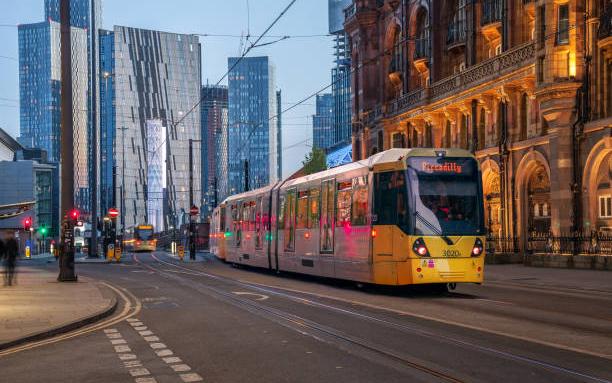
Starting with buses, Greater Manchester's success was clear to see and hear across Manchester Central, and also across town at Co-op Live for the Greater Manchester Green Summit, where another local event on the same day, and with similar themes, (they really do arrive like buses), was being told about the positive environmental impact of the all-electric net zero bus fleet that will be in place by 2030.
Back at Manchester Central and Interchange, a raft of combined authorities now “en route” with their own bus franchising journey were represented. For mayoral combined authorities, with devolved spending powers, the hope is that improvements will be along soon. But there’s a LOT of work to do.
For those local transport authorities not currently represented by an elected mayor, there's even more work to do. It remains to be seen how many will opt for local control of buses or opt for enhanced partnerships with operators.
Legislation allowing this was passed last year, the Bus Services Act, and now the call is for government funding through devolved spending to achieve the ambition of bus services that meet local needs.
That point was made clear in a session hosted by the Campaign for Better Transport, which unveiled the stark findings of research into people’s proximity to a bus stop. Its findings were of an inequity in access to public transport, particularly in more rural areas.
There was a suggestion that it would cost up to £1bn a year in government funding to correct this, but that it will be a price worth paying as it unlocked access to employment and opportunity, and economic growth.
Asked what his request of Transport Secretary Heidi Alexander would be, panellist Andrew Summers, Chief Executive of Transport East, the sub-national transport authority for Essex, Norfolk, Suffolk, Southend-on-Sea and Thurrock, said that it would be to get on with the job of delivering devolution, with delays currently stopping the important job of increasing access to buses.
Shifting mode to rail, there were further calls for government reform and action, with some big numbers touted as the potential benefits.
In conversation on the topic of Northern Powerhouse Rail, Northern Powerhouse Partnership Chief Executive Henri Murison and Manchester Airport Managing Director Chris Woodroofe, spoke passionately about what must now happen to fully unlock the vision outlined by government, which recently earmarked £45bn for rail in the north, with £1.1bn during this spending review cycle.
Murison is clear that more investment will be needed, both regionally from the local mayors, and from the private sector, as was the case with London’s Crossrail development.
In return, he said, government must allow regions to retain more of the tax revenues that job creation would generate.
Woodroofe in turn presented some very compelling statistics on the economic benefits that are in reach if rail connections are improved to Manchester Airport, which currently sees less than 20% of passengers arrive via public transport.
With better connections delivered through improved rail, he suggested that the airport can contribute and additional £10bn in GVA to the regional economy, and that this would lift the number of jobs supported from the current total of 80,000 to an additional 100,000.
Alongside the innovative promise of an autonomous future provided by Waymo, these are interesting times for more familiar forms of transport. But there remains much work to do if government is to support the innovators in transforming their ambitions into reality.
What to read next
Browse below for the latest news, insights and thought leadership from our team of experts

Pensions reform in focus

Data Centres - Will we learn from the past?

Profit warnings and the importance of context

Delhi's protest. India's growth story.

It’s about housing, stupid

Budget 2026: What’s in store for developers?

Delegation Nation

Reframing Britain’s Brexit debate