No decision yet for Sussex and Brighton & Hove
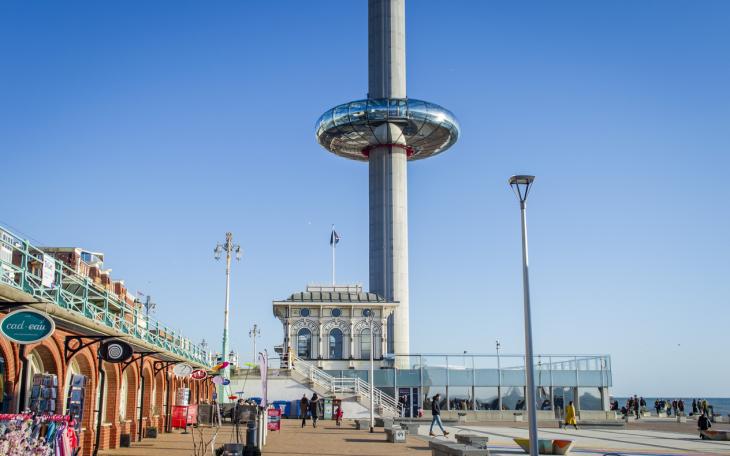

The unique decision in Sussex and Brighton & Hove was that there was no decision. Evidently MHCLG was unconvinced by any of the proposals that had been submitted.
According to Steve Reed’s letter to leaders in the area:
Brighton & Hove City Council’s (BHCC) five-unitary proposal had implementation challenges
The two-unitary proposal for East Sussex & Brighton (submitted by East Sussex and its districts) was strong but the proposal to keep BHCC the same was a problem
The concern with the two-unitary proposal for West Sussex was over grouping Chichester with coastal districts
That leaves Sussex and BHCC the only Devolution Priority Programme area to stay in limbo. Although the department did helpfully provide a draft alternative for further discussion.
What we can garner is that there will be one unitary over the majority of East Sussex with Brighton & Hove City expanding eastwards. Steve Reed’s letter to leaders in Sussex is quite clear that the city’s status quo is intolerable: ‘By keeping Brighton and Hove on its current boundaries the two unitary proposal limits opportunity for future economic growth in the city as well as the ability to build new homes there. By binding Brighton and Hove into its current geographies, we limit the city’s future potential as a key economic engine on the south coast and do nothing to combat the issue of Brighton and Hove’s high affordability ratio.’
When I spoke to a BHCC cabinet member friend a while ago, I found a bullish outlook, confident that the government would allow expansion despite the reticence of neighbouring district councils. After all, Brighton merged with Hove in 1997, and perhaps not everyone was happy about that. But the BHCC Labour leadership was less overt than Reed that a primary reason is space to build homes, prioritising BHCC as an economic driver within the county during consultation events.
The possible solution for the Chichester Conundrum is a modification to the original submission to put Chichester into an inland unitary with Horsham, Crawley and Mid Sussex and create a coastal unitary comprising Arun, Adur and Worthing.
We are heading for four unitaries across the region, but with boundaries still to be decided. BHCC is the only player that is content with the direction of travel. And if Reed’s communication is to be believed, developers should expect lots of support for housing delivery in Peacehaven, Telscombe, East Saltdean, and Falmer.
The political make-ups are anyone’s guess, certainly in the short term. Labour gained BHCC, Worthing, Arun and Crawley between 2022 and 2023. The outlook for the next few years looks less rosy.
The larger, more rural unitaries should favour the Conservatives, and they have held both East and West Sussex County Councils. But the party everywhere is haunted by the sceptre of Reform who may expect to do well at the now-back-on 2026 elections. Beyond that the question is about the ability of Conservatives to recover, including against the Lib Dems who are in power now in several former Conservative districts. The liberal-minded urban populations may work to keep defeat Reform at the strategic mayoral elections in 2028. The Greens have tasted power in Lewes and Hastings recently, and with the national party deputy leader standing for strategic mayor, they are in with a fighting chance of regional executive power. All the fragmented parties of English Politics 2026 are in play in Sussex, with a high number of close-calls and unpredictability expected.
What to read next
Browse below for the latest news, insights and thought leadership from our team of experts

Protecting trust in an age of AI and impersonation

A recovery measured in discipline, not exuberance: Views from the property sector’s EXPO REAL
An Iron Dome and an Iron Lady: Reflections on the Conservative Party Conference

Going for the Grid: Burnham tries to take back control

Your First Home: a helping hand for buyers or a boost for housebuilders?

Solar and Storage Live: The shift from tick-box consultation to meaningful engagement

Burnham goes big in first conference speech, but real test still lies ahead at the Budget

Why dark social matters more than ever