Scotland: The Battle for Holyrood
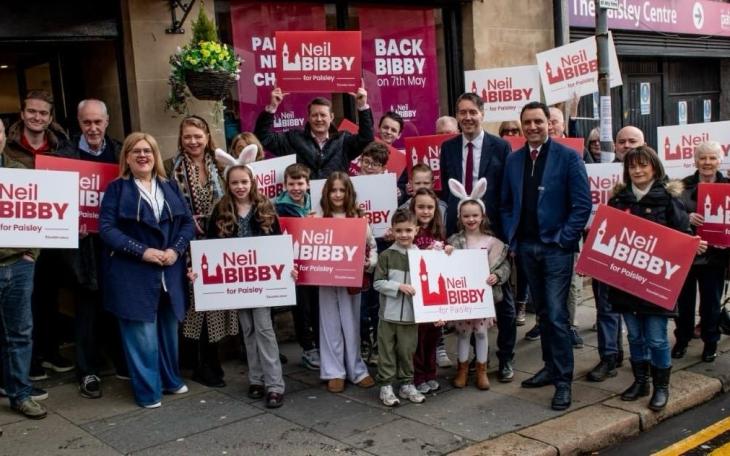

With the Easter holidays now over, the campaign for the next Scottish Parliament election has moved decisively into gear, ahead of polling day on 7 May. This contest is markedly different from the elections underway elsewhere in England and Wales. In Scotland, the Scottish National Party enters the race as a long‑standing incumbent, having been in power for nearly two decades, and the political dynamics are correspondingly more complex.
In reality, this election is not a single contest but several overlapping battles, varying sharply by geography. Across the Central Belt, the primary struggle is between the SNP and Labour. In the Borders and Aberdeenshire, the SNP continues to face its strongest challenge from the Conservatives, while in parts of the Highlands and in several university constituencies, the Liberal Democrats remain the principal opposition. Overlaying all of this is the regional “top‑up” list vote, which is likely to benefit the Scottish Greens and Reform UK. These two populist parties are expected to secure most, if not all, of their representation via the proportional element of the system.
Labour’s hopes are highest in the Central Belt, where the party is aiming to build on its improved performance at the last Scottish election and the momentum gained from winning 37 Scottish seats at the 2024 General Election. Under the leadership of Anas Sarwar, Scottish Labour has begun to look more coherent and credible, with a revitalised campaign infrastructure and a higher public profile. Sarwar himself remains broadly popular, though the party continues to face the challenge of distancing its Scottish message from an unpopular UK leadership while still presenting a credible alternative government. While it is still relatively early in the campaign, Labour is hopeful of making gains, helped by tactical voting from Conservatives and Liberal Democrats seeking to block the SNP. That said, the availability of Reform as an alternative protest vote complicates this dynamic. Overall, Labour is likely to finish second in the constituency vote, picking up a small number of additional seats, largely as a result of declining Conservative and Liberal Democrat support in these areas.
The SNP, meanwhile, is campaigning on the argument that the party has stabilised under John Swinney’s leadership and is once again focused on competent government. Swinney has undeniably steadied the ship after the damaging tenure of Humza Yousaf and continues to rely on a solid pro‑independence base, which accounts for around a quarter of the electorate. However, the party is increasingly being challenged on its record in government, with concerns around the NHS, education standards, and economic performance all featuring prominently on the doorstep.
In Aberdeenshire and the Borders, the Conservatives remain the main unionist alternative to the SNP, benefiting from voters switching tactically to oppose nationalism. However, their position is under pressure from Reform UK and from lingering hostility towards previous UK Conservative governments. While Reform is unlikely to win constituency seats, its presence risks splitting the unionist vote, indirectly helping the SNP to retain seats it might otherwise struggle to hold.
The Liberal Democrats continue to perform relatively well in parts of the Highlands and in certain university seats. Although they suffer from limited Scottish media exposure, they retain strong local organisations and campaign effectively where they are established. Their representation may change slightly, though rising Green support could erode their vote in some areas.
On the doorstep, there is clear evidence of growing interest in Reform UK, though not on the same scale as in England and Wales. Reform’s prospects are limited by weak local organisation and a lack of high‑profile Scottish figures, relying instead on centrally funded digital campaigning, advertising, and direct mail. As a result, both Reform and the Greens are far more likely to benefit from the regional list vote, which better reflects proportional support.
In summary, the SNP is likely to remain part of the next Scottish Government, either governing alone as a minority or once again in partnership with the Greens. However, with many voters still undecided and a significant period of campaigning still to come, the final outcome remains far from settled.
What to read next
Browse below for the latest news, insights and thought leadership from our team of experts

It’s about housing, stupid

Budget 2026: What’s in store for developers?
Delegation Nation

Reframing Britain’s Brexit debate

The missing sector in Britain's growth strategy
Pacific Pre-COP31: Testing the waters ahead of Turkey

How communications drives deal outcomes

Vibes win the click. Only substance wins the trust.