Shaking up the system: NESO’s spatial planning reforms move forward
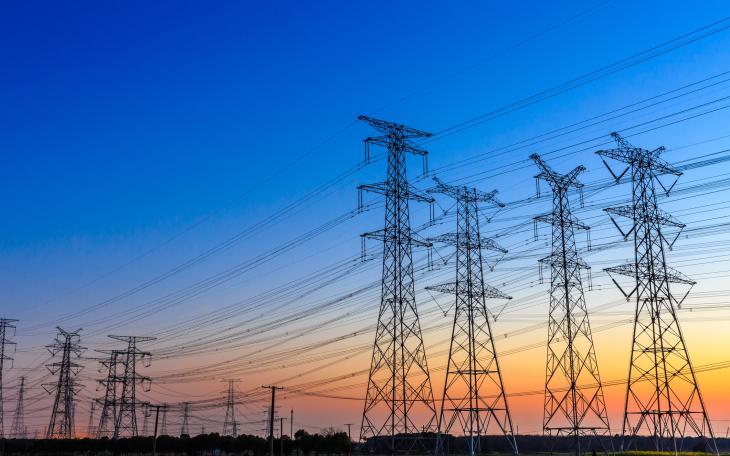

A quiet revolution is gathering pace in the UK electricity system. The National Energy System Operator’s (NESO) development of three inter-related spatial planning strategies promises to alter how aspects of the energy system work, in what may well be the biggest shake-up since privatisation.
The process to develop the plans can appear opaque and confusing. In essence, the Strategic Spatial Energy Plan (SSEP) seeks to produce a top-down plan of the electricity generation required over the next few decades, broken down by technology type in each area of the country. The Regional Energy Spatial Plans (RESPs) on the other hand look bottom-up to assess what’s feasibly deliverable in each area, crucially taking account of local demand. At a network level, the Central Strategic Network Plan (CSNP) indicates the costs to the system of grid upgrades and sets out the priorities for new grid build.
With the plans in place, Britian will be moving decisively away from a market-led, reactive approach to providing electricity infrastructure. Under the current system, the onus is on developers to propose new projects and move them through the system, while interacting as customers with the transmission (TO) and distribution network operators (DNO) to connect into the grid.
This approach has let Britain see rapid growth in new renewable capacity but has also led to projects ‘clustering’ together in certain areas, with an inconsistent approach to grid upgrades and a sometimes-adversarial relationship between generators and the network operators.
The new plans are among a series of recent interventions to make the system fit to deliver net zero while reducing costs and protecting energy security. Sorting out the ‘queue’ to connect projects into the grid through NESO’s Connections Reform process is another, while all of this change sits alongside the government’s Clean Power 2030 ‘mission’ and the winding road towards ‘reformed national pricing’. Developers will still play a major role in the new system, but the old approach to proposing new sites will be up-ended, as the SSEP determines in broad terms the upper limit on capacity across each onshore and offshore ‘zone’; while the RESPs will give an indication of how a project aligns with local needs.
On the network side, the CSNP will also seek to rationalise the system, promoting a centralised view of what new grid infrastructure is required in each region, and replacing the overlapping priorities that characterise the current system.
Key to understanding the new regime is how political it is set to be. The new plans will explicitly take account of land-use, socio-economic and environmental factors, with governmental sign-off a critical step in the process. Different runs of the model will emphasise different priorities, for instance reducing the impact on land (so relatively fewer solar projects), or assuming a lower reliance on unabated natural gas in the system. What each ‘pathway’ means for a given region could conceivably vary wildly.
The political nature of the process is an indication of potential disputes ahead, particularly if a new government comes to power which disagrees with the modelling used to construct the plans. The modelling itself is also a risk, as without the proper assumptions and inputs, the end-products could propose a system which is at odds with on-the-ground reality.
All this is great news for fans of acronyms, but what does it mean for the year ahead?
Late January saw NESO’s publication of the ‘transitional RESPs (tRESP)’, to provide a coordinated view of network development in each region of the UK between 2028-33, while the work to produce the final RESPs is ongoing.
Separately, NESO hosted a webinar last week to outline some initial findings from the SSEP modelling process. They are solely focused on economic inputs for now (with geo-spatial inputs such as planning constraints, environmental factors and societal consideration to follow later), but the early results indicate the direction of travel. The model appears to prioritise solar development in most scenarios on the basis of cost-efficiency, with onshore wind favoured over offshore for similar reasons. SMR nuclear has an edge over large-scale stations, while BESS systems are foreseen to be mainly located in areas with a lot of renewable generation. Green hydrogen is seen as most sensitive to changes in the level of other technologies.
Much of the work to develop the plans will carry on behind the scenes, and there is no guarantee that the process will not be delayed (NESO is already re-running the SSEP modelling following the release of new data). Nevertheless, industry stakeholders would benefit from taking time to get familiar with the key milestones on the road ahead:
- February 2026: NESO hosts regional tRESP webinars
- Q2 2026: Publication of RESP Methodology
- April 2026: Publication of CSNP Methodology
- Summer 2026: Submission of SSEP pathways to Secretary of State
- Summer 2026: Publication of second transitional CSNP (tCSNP2) refresh
- Early 2027: Public consultation on draft SSEP
- Autumn 2027: Final SSEP published
Complex stuff certainly, but also a package of measures that promise to change how financing, planning and development of projects operates across the country. For further insight and strategic advice on the development of the new strategic spatial plans and other developments in the energy and infrastructure sectors, please reach out to hello@secnewgate.co.uk
What to read next
Browse below for the latest news, insights and thought leadership from our team of experts

Protecting trust in an age of AI and impersonation

A recovery measured in discipline, not exuberance: Views from the property sector’s EXPO REAL
An Iron Dome and an Iron Lady: Reflections on the Conservative Party Conference
Going for the Grid: Burnham tries to take back control

Your First Home: a helping hand for buyers or a boost for housebuilders?
Solar and Storage Live: The shift from tick-box consultation to meaningful engagement

Burnham goes big in first conference speech, but real test still lies ahead at the Budget

Why dark social matters more than ever