Beyond Manchester: Will Burnham deliver for two other English regions?
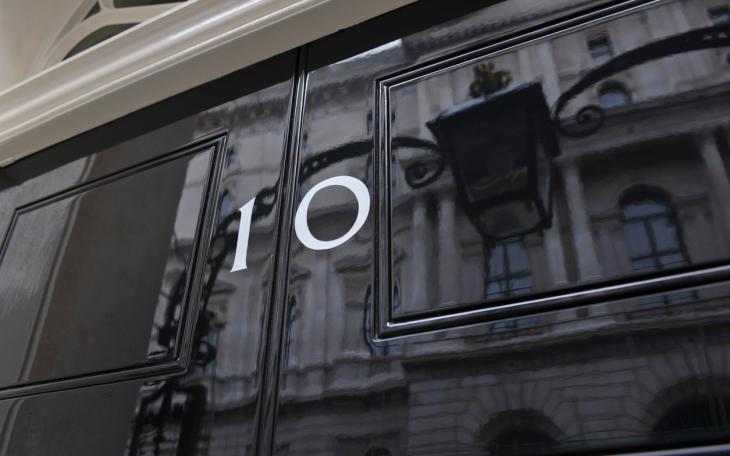

Andy Burnham becoming prime minister feels like a coup for the regions.
It is the latest chapter in a process that began with devolution in the late 1990s, accelerated through the creation of metro mayors in 2017 and was further reinforced by the levelling-up agenda that followed from 2019.
Burnham moving into No. 10 is the culmination of this rebalancing: unlike recent prime ministers whose careers were forged almost exclusively in Westminster, Burnham arrives having spent nearly a decade governing Greater Manchester and with a pledge to deliver “the biggest rebalancing of power the country has ever seen”. Among the 87% of the UK population that doesn’t live in London, there is a sense that here is someone who understands them and will put their interests first.
But expectations are high and, despite talk of a ten-year plan, given that we are now on our seventh prime minister in 10 years and, with a general election just three years away, he won’t have long to prove himself.
So, will Andy Burnham’s regional roots and more local approach be right for Britain and win him long-term popularity? Or will someone who successfully ran a city find himself out of his depth running the country?
The view from the Midlands
‘Manchesterism’ is a term that sits awkwardly in the heads of those in Birmingham.
For years, Manchester and Birmingham have been pitted against each another as bitter rivals, with debates over which is bigger (objectively Birmingham), and which is ‘better’ (subjectively also Birmingham).
More often than not, these comparisons miss the point. Speaking at an Insider Media lunch last year, Joanne Roney CBE, managing director of Birmingham City Council and former chief executive of Manchester City Council, said Birmingham is Birmingham and Manchester is Manchester; one is not better than the other, they’re just different and both should focus on building their unique character rather than making comparisons.
This perspective feels particularly relevant now. A by-product of Andy Burnham’s campaign to become prime minister has been an increased profile for and positivity around Manchester, as the proof point of what he can deliver.
This has added to an already significant sense of civic pride for Mancunians, who have never been shy of declaring their home to be the best city in the world. Self-deprecating Brummies, on the other hand, have seen a run of bad press, focused on a bankrupt council cutting services and selling off assets to get itself back in the black, and the bin strikes that have continued for well over a year. With a full recycling bin in one hand and a dramatically increased council tax bill in the other, Birmingham residents may rightly be sceptical about putting more power in the hands of local government.
Yet the growing attention on Manchester also creates a challenge. If Burnham's political success is seen as validation of the Manchester model, is this a blueprint every other city should follow? Many in Birmingham would argue not. The city has different economic strengths, different demographics and different challenges. Its aspirations cannot be met by a simple copy and paste of another place's approach. What works in Greater Manchester may not automatically work in the West Midlands.
Yet if Brummies can get over the term, Manchesterism – or perhaps regionalism – should be a coup for them too. This isn’t about one city being placed above another; it’s about more consideration of the people and businesses operating in the regions, and giving greater powers and resources to enable them to control their own destinies. The big winner from a Burnham government may not be Manchester but the broader principle that decisions should be made closer to communities. The devil will be in the detail to ensure that devolution is a success.
The view from the Southwest
Message to Burnham: South West has plenty more postcodes that just BS and SN
From my perspective and having worked along political regional boundaries for almost 25 years, devolution in the South West is an example of when one size definitely does not fit all.
I get the uneasy feeling that, when Andy Burnham talks about the North, he is really talking about just the Northwest, and specifically his Greater Manchester stomping ground, and the assumption that successes claimed within those boundaries will naturally lift all neighbouring boats.
Whilst the West of England Combined Authority (WECA) has devolved decision-making powers under Labour Mayor Helen Godwin, WECA is just the council areas of Bristol, South Gloucestershire, Bath & North East Somerset, with North Somerset set to join the group.
So, when Burnham starts talking about the South West, I will be keeping a watching brief on whether he is really thinking about the combined authority boundary or the actual South West which includes Wiltshire, Somerset, Dorset, Devon (including Plymouth and Torbay), Cornwall and the Isles of Scilly and the remaining part of Gloucestershire.
The announcement that the MP for Swindon South, Heidi Alexander, will continue as Secretary of State for Transport, and with Darren Jones MP (Bristol North West) not being offered a place in Andy Burnham's government, means that Heidi will be the sole MP to represent a South West constituency at Cabinet.
She has worked with Burnham before in the shadow cabinet formed by Ed Miliband and, like Andy, Heidi is experienced in devolved politics, having served as London’s Deputy Mayor of Transport.
This is positive news for consistency as we have Great Western Railway (GWR) set to be renationalised by the end of 2026. Bringing GWR into public ownership is part of the government’s drive to create Great British Railways (GBR) and will, in their words, bring “both track and train together” under a single system.
This is very welcome as the move is aimed at tackling reliability problems caused by the current poorly coordinated and fragmented system, and with profits reinvested rather than paid out to private shareholders.
The main good news is that, under nationalisation, operators will be directly accountable to ministers and Parliament. With performance data and funding decisions more transparent, it will make it easier for local MPs, councils and regional bodies to influence service priorities.
However, I question whether the announcement today that the Ministry of Housing, Communities and Local Government (MHCLG), and local economic growth policy, will be moved from HM Treasury directly into No. 10 North will bring any benefits to the South West. I suspect we will need to wait for the detail to be revealed in plans for local economic growth and devolution in the coming months.
With both Bristol and Swindon, the South West cities closest to London (but not so close to Manchester!), well placed through mayoral and Cabinet representation to have the ear of the new prime minister, it will be up to the rest of the region to seize the opportunity and provide clear messaging and a coordinated regional ask to government. The alternative is to risk continuing a situation where major investment, economic growth and infrastructure are regional by name but, in reality, are not regional at all.
What to read next
Browse below for the latest news, insights and thought leadership from our team of experts

Protecting trust in an age of AI and impersonation

A recovery measured in discipline, not exuberance: Views from the property sector’s EXPO REAL
An Iron Dome and an Iron Lady: Reflections on the Conservative Party Conference
Going for the Grid: Burnham tries to take back control

Your First Home: a helping hand for buyers or a boost for housebuilders?

Solar and Storage Live: The shift from tick-box consultation to meaningful engagement
Burnham goes big in first conference speech, but real test still lies ahead at the Budget

Why dark social matters more than ever