Going for the Grid: Burnham tries to take back control

Energy policy has become too interesting, according to Polly Billington, the Department for Energy Security and Net Zero’s (DESNZ) minister for energy consumers.
Today’s release of forecasts predicting a dramatic increase in household bills is another reminder that the Government can’t avoid the politics of energy and how we pay for it, no matter how appealing that prospect may be.
“I want energy to be boring again and, until it’s boring, I don’t think I will have done my job”, Billington told journalists this week. She will likely have a long way to go.
Prime Minister Andy Burnham’s speech to the Labour party conference yesterday contained enough energy-related announcements to keep the wonks busy and was another signal of the Government’s move away from the framing of the Starmer administration.
Gone is the primary focus on clean power and climate action – these will never lose their relevance to a Labour government - but having recognised the growing backlash to net zero from parts of the electorate, the pivot towards speaking about energy policy in terms of affordability and public control is notable.
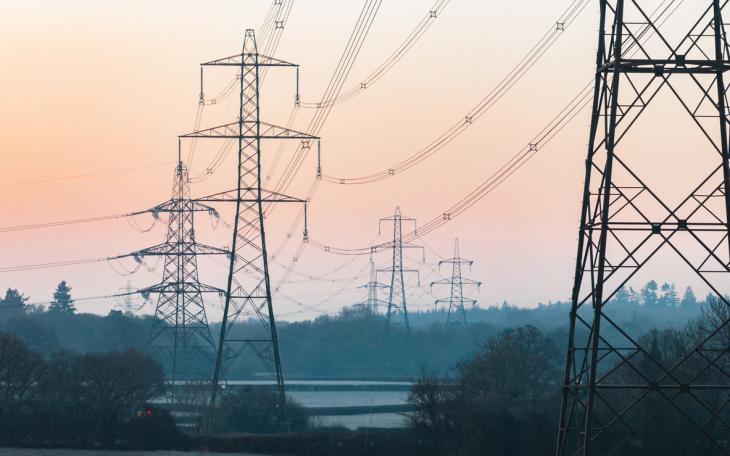
Alongside some consumer-facing measures, Burnham’s main energy announcement was probably to announce the creation of ‘GB Grid’, a new publicly-owned body within GB Energy, with a remit to improve grid connections, enhance competition, reduce costs and lower consumer bills.
The announcement was framed as a major step to “rewire public control into Britain’s energy system” and will be seen as a follow-up to the Prime Minister’s repeated statements since the Makerfield by-election campaign regarding increased public control of utilities.
Grid company performance has been the subject of significant discussion in energy circles in recent weeks, and the Prime Minister described GB Grid as a publicly-owned company that would "challenge the private sector operators". The announcement follows the release of a National Audit Office report earlier this month, which highlighted a striking lack of progress on dozens of the transmission upgrades seen as essential to delivering Clean Power 2030.
The Government sees increased competition as a key mechanism for reducing costs and accelerating delivery.
From a developer perspective, allowing the new body to assist in self-build of grid infrastructure could prove important. Increased self-build has been discussed in NESO and Ofgem working groups over recent months, and in this sense yesterday’s announcement is not a shock.
DESNZ cites examples from Ireland, where contestable works are permitted, saying that the Irish regime has “sped up connections by 11 months” at a lower cost, by allowing companies to procure and construct much of the connection infrastructure themselves.
However, the efficacy of a £4 billion pot in the context of the overall £70 billion cost of the necessary grid upgrades will depend on the specific design of the organisation and the details of how it will interact with the generators and users of energy.
More broadly, the announcement suggests the Government increasingly views grid constraints as an economic growth challenge rather than solely an energy infrastructure issue. In his speech, Burnham argued that businesses were being held back because they "can't get connected to the grid", warning that "it pushes costs up. It drags growth down. And it holds Britain back".
Public control over utilities will remain a feature of Burnham’s first year in No 10. The launch of GB Grid forms part of the administration’s efforts to re-orient significant parts of public policy over a ten-year period, partly reversing what he sees as 40 years of misdirection.
Secretary of State Miatta Fahnbulleh said in a statement that “alongside GB Energy, this is another step towards mending the decades of Tory policies which ripped out public control from our energy systems”.
However, industry groups have also stressed that implementation will be critical. Offshore Energies UK said that "clear, long-term signals and effective coordination will be essential to provide industry with the certainty needed to plan and invest", while Energy UK said it was looking forward to more detail on how GB Grid would address barriers around planning, supply chains and skills.
What to read next
Browse below for the latest news, insights and thought leadership from our team of experts

Your First Home: a helping hand for buyers or a boost for housebuilders?
Solar and Storage Live: The shift from tick-box consultation to meaningful engagement

Burnham goes big in first conference speech, but real test still lies ahead at the Budget

Why dark social matters more than ever

Corporate affairs and navigating dystopia

The new reputation battlefield: Navigating risk in a fragmented media landscape

Investors ponder what's next in property

Abundant energy at Climate Week NYC