Britain’s weather obsession has just got serious
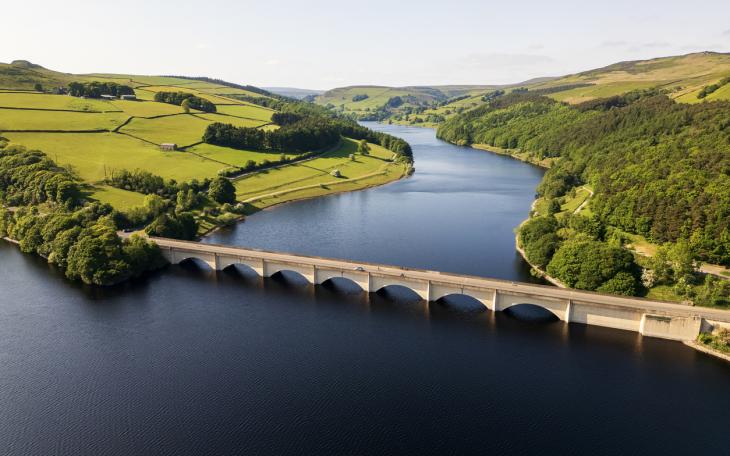

With temperatures finally beginning to ease, we've emerged from what is likely to be the hottest summer on record for the UK. Even if you've spent the last few months hiding in an air-conditioned office, discussion of the weather has been almost impossible to escape.
It has long been known that Britain has a, perhaps unhealthy, obsession with the weather. A survey for the Met Office found that people in the UK spend over two days a year discussing it. The topic crops up three times a day on average and remains one of the nation's favourite forms of small talk. It's our collective comfort blanket - safe, harmless, reliably non-controversial and a fantastic meeting intro.
The media is no different. Few countries cover weather quite like Britain; there is often a steady stream of headlines comparing temperatures in Birmingham to Barcelona or Blackpool to the Costa del Sol. While the fascination usually passes as quickly as the weather itself, this year it has persistently dominated the news agenda – and with good reason.
As of August, 71% of England is officially in drought. Months without rain have left reservoir levels well below average, while millions of people are living under water restrictions, and experts warn that river levels may not recover until next spring without significantly above-average winter rainfall. What is concerning, is that months ago, England emerged from one of its wettest winters on record. For policymakers, businesses and infrastructure providers, this whiplash presents a serious challenge.
Adding to that concern is the emergence of what could become a record breaking El Niño. The climate phenomenon, driven by unusually warm sea surface temperatures in the Pacific, influences weather patterns around the globe and is forecast to be one of the strongest ever recorded. For the UK, this points towards a very wet and stormy autumn and winter.
At first glance, that might sound like welcome news after one of the driest summers in decades – but if Britain is facing a cycle of droughts in summer and flooding in winter, our real problem is not a shortage of water, but a shortage of ways to store it. As an island nation synonymous with rain, we should arguably be better equipped to capture excess water during wet periods and retain it for the hotter, drier summers that are becoming increasingly common.
This has thrust reservoirs into the political spotlight. No new large-scale reservoir has been completed in England since 1992, despite the population growing by around ten million people in that time. Slow progress on the nine reservoirs promised by the Government has allowed Reform UK to cast water security as another symptom of Britain's wider inability to build. The party has responded by calling for planning restrictions to be loosened and for reservoirs and desalination plants to be accelerated.
Yet the consequences extend far beyond water infrastructure itself. Last year, the Environment Agency warned that England could face a shortfall of five billion litres a day in public water supplies by 2050 unless urgent action is taken. That has significant implications for the Government's wider growth agenda. Many of the areas facing the greatest water stress are also expected to accommodate substantial housing development under plans to build 1.5 million homes during this Parliament. In July, Water UK warned that existing supplies would support only around 420,000 of those homes.
None of this sounds much like small talk. Rather, it's about whether new homes can be connected to reliable water supplies, whether businesses can plan confidently for growth and whether infrastructure built for the climate of the twentieth century can cope with the realities of the twenty-first.
It seems to me that if the first five minutes of every Teams call continue to be spent talking about the weather, perhaps that's because for the first time in a long time, the weather really is the main story.
What to read next
Browse below for the latest news, insights and thought leadership from our team of experts

It’s about housing, stupid

Budget 2026: What’s in store for developers?

Delegation Nation

Pacific Pre-COP31: Testing the waters ahead of Turkey

Vibes win the click. Only substance wins the trust.

How communications drives deal outcomes

The missing sector in Britain's growth strategy

Reframing Britain’s Brexit debate