Does the UK need a Help to Buy 2.0?


As the Government pursues ambitious housebuilding targets and the housing sector continues to grapple with affordability challenges, an increasingly familiar debate has resurfaced: should Help to Buy return?
While the scheme closed to new applicants in England in 2022, it remains one of the most recognisable housing policies of the past decade. Recent industry commentary has seen developers, analysts and policymakers once again discussing whether greater support for first-time buyers is needed to stimulate demand and support housing delivery.
The continued prominence of Help to Buy is interesting not just from a housing perspective, but from a communications one. Few government housing initiatives have achieved the same level of public recognition. Despite criticism, most people understood what the scheme was designed to do: help aspiring homeowners overcome the challenge of saving a large deposit. In a policy environment often characterised by complex terminology and changing initiatives, Help to Buy was simple, memorable and easy to explain.
That simplicity was undoubtedly part of its appeal. For many first-time buyers, the scheme provided a clear pathway onto the housing ladder. It also supported the delivery of new homes and became a key feature of sales and marketing strategies across the housebuilding sector. Supporters argue that, in a market where affordability remains stretched, many buyers still face the same barriers that Help to Buy was created to address.
Critics, however, paint a different picture. They argue that the scheme artificially inflated demand, contributed to house price growth and ultimately made homes more expensive. Questions have also been raised about whether government support should focus on helping people purchase new-build homes specifically, or whether broader interventions would deliver better outcomes for buyers.
These arguments explain why the conversation continues to resurface. Housing affordability remains one of the UK's biggest economic and social challenges, and many of the underlying issues that existed when Help to Buy was introduced have not disappeared. As a result, the scheme has become a familiar reference point whenever discussions turn to supporting first-time buyers.
The bigger question is what a modern successor might look like. Future support could focus instead on helping buyers raise deposits, improving mortgage accessibility or expanding discounted home ownership schemes. Any new approach would need to reflect today's market conditions while demonstrating clear value to both buyers and taxpayers.
For communications professionals, the renewed debate offers an important lesson. Policy success is not determined solely by outcomes; it is also shaped by how well a policy is understood. Help to Buy became part of the national housing conversation because it communicated a simple proposition that people could quickly grasp. Whatever form future homeownership support takes, policymakers and industry leaders will need to communicate it with the same level of clarity.
As the search for solutions continues, perhaps the real challenge is not simply designing the next Help to Buy but creating a policy that is both effective in practice and easy for the public to understand. After all, if people cannot clearly see how support is intended to help them, even the best-designed scheme risks failing to gain traction.
What to read next
Browse below for the latest news, insights and thought leadership from our team of experts

Going for the Grid: Burnham tries to take back control
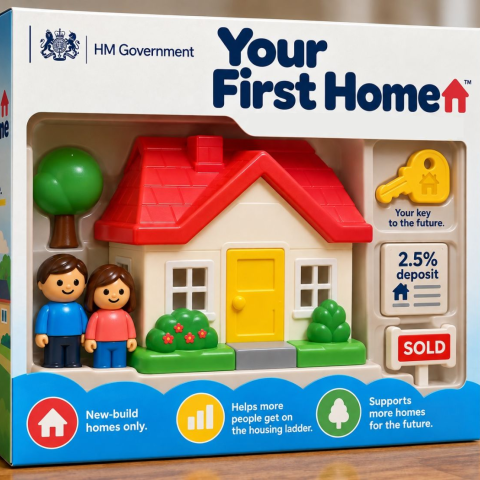
Your First Home: a helping hand for buyers or a boost for housebuilders?

Solar and Storage Live: The shift from tick-box consultation to meaningful engagement
Burnham goes big in first conference speech, but real test still lies ahead at the Budget

Why dark social matters more than ever

Corporate affairs and navigating dystopia
The new reputation battlefield: Navigating risk in a fragmented media landscape

Investors ponder what's next in property