An Iron Dome and an Iron Lady: Reflections on the Conservative Party Conference
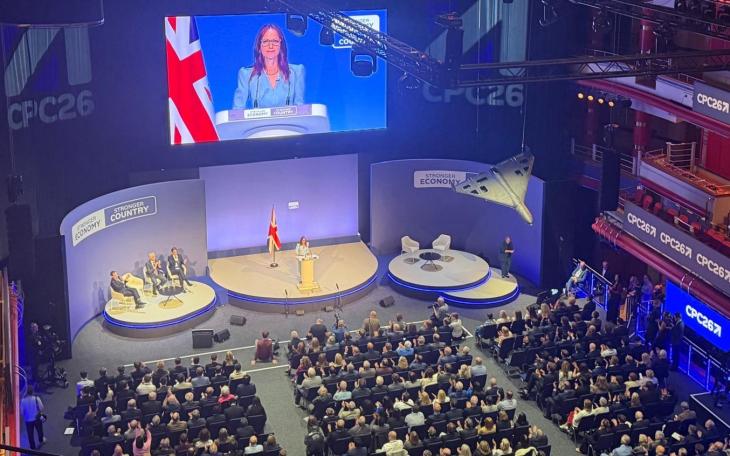

This year's Conservative Party Conference was branded a ‘Festival of Ideas’, reflecting a party that is increasingly focused on demonstrating policy substance and government readiness. Across Birmingham, Conservative figures sought to project a message of competence, fiscal discipline and national renewal, with particular emphasis on defence, economic growth and rebuilding trust with business.
Defence emerged as one of the defining themes of the conference. The headline announcement was the proposed Britannia Shield, a nationwide missile and drone defence system designed to protect critical national infrastructure and military assets. In an article penned by Kemi Badenoch in The Sun, she said, “Modelled on Israel’s Iron Dome, Britannia Shield will invest £10bn over ten years in the radar, missiles and technology needed to detect these threats and stop them before they reach British soil”. Badenoch was quick to correct the record that it is different and would be fully funded by reducing the welfare bill. Commentators have dubbed it a “gimmick”, or worse, “an Ed Davey style stunt”, with some estimating that it would cost £100bn or more to deliver.
Alongside defence, the party sought to re-establish a clear economic narrative. Under the banner “Stronger economy, strong country”, shadow ministers focused heavily on growth, entrepreneurship and deregulation. New Shadow Chancellor Andrew Griffith used the conference to outline plans to reduce the cost of a new-build home by up to £50,000 through the removal of what he described as unnecessary regulations. The broader message was familiar but deliberate: lower taxes, fewer barriers to investment, and a smaller state. Additional commitments included repealing a number of Labour-era tax measures and maintaining a pledge to deliver at least one tax cut in every Budget.
Yet the central issue facing the party is one of translation. While Badenoch is personally polling well, rising from around -30 last year to around neutral, the party remains in the low 20s in the polls. The party has undergone what some call a “Keminisation” or “Keminaissance” to the point that she is unquestionably an unassailable leader. With the reshuffle taking place just before recess, Badenoch seeks to strengthen her team as they prepare for an early general election. However, a more fundamental challenge remains. Badenoch's growing popularity has not yet lifted the broader Conservative brand. The task for the party over the coming year is to convince voters that change extends beyond its leader and that lessons have genuinely been learned from its period in government.
The atmosphere in Birmingham was noticeably more positive than twelve months ago. Last year's conference was overshadowed by continued defections to Reform UK, leadership uncertainty and persistent concern about the party's direction. By contrast, this year there was a greater sense of purpose and confidence. The Guardian and the Independent have been critical about empty seats, a lack of queues and exhibitors. As is often the case at the Conservative Conference, the most meaningful discussions took place away from the main auditorium. Fringe events, policy discussions and business receptions were generally well attended, with several events reaching capacity and attendees being turned away.
Perhaps the most notable takeaway from Birmingham was that the Conservative Party is no longer talking primarily about survival. Instead, it is beginning to talk about power again. Whether voters are prepared to listen remains an open question. The conference demonstrated that the party retains intellectual energy, policy ambition and a leader whose position appears secure. What remains uncertain is whether that is enough to persuade the electorate that the Conservatives are ready for government once more.
What to read next
Browse below for the latest news, insights and thought leadership from our team of experts

Protecting trust in an age of AI and impersonation

A recovery measured in discipline, not exuberance: Views from the property sector’s EXPO REAL

Going for the Grid: Burnham tries to take back control

Your First Home: a helping hand for buyers or a boost for housebuilders?
Solar and Storage Live: The shift from tick-box consultation to meaningful engagement

Burnham goes big in first conference speech, but real test still lies ahead at the Budget

Why dark social matters more than ever

Corporate affairs and navigating dystopia