SEC Newgate launch 2026 UK Impact Monitor

Corporate reputation under threat as majority of public expect business to act responsibly, yet fewer than half think they do so
SEC Newgate UK’s 2026 Impact Monitor finds:
- Expectations remain high, but confidence is falling: 73% of the UK public say it is important for large businesses to act responsibly, yet only 47% believe they do.
- Resilience is now part of the business mandate: 55% believe the UK has too little local manufacturing, 52% say it has too little energy independence and 59% believe it is overly reliant on other countries for critical minerals and microchips.
- AI and the energy transition are becoming public fault lines: support for change becomes more conditional when the potential effects on jobs, privacy, energy bills and security feel closer to home.
- There is no single playbook for responsible business: expectations vary by issue and market. Businesses have greater permission to engage on environmental and social issues connected to their operations, but public support becomes more divided as they move into political territory.
You can download the full UK report here
The UK public continues to expect businesses to act responsibly, but confidence that companies are meeting that standard is falling, according to the 2026 SEC Newgate UK Impact Monitor - Navigating business in a fragmented world, which is now into its sixth year.
Almost three-quarters of the UK public, 73%, say it is important for large businesses to conduct themselves responsibly. However, fewer than half, 47%, believe they are doing so.
This confidence gap has widened across most of the economy. Perceptions of responsible conduct have fallen across 21 of the 25 UK sectors measured, with the media, social media, fashion, chemicals, and mining and resources among the lowest-rated sectors.
The pattern extends across Europe, where 76% say responsible conduct matters but only 44% believe large businesses are delivering it.
The report finds that responsible business begins with tangible performance on the fundamentals that companies can directly control. In the UK:
- 77% expect businesses to be open and transparent
- 75% expect businesses to operate with strong morals and ethics
- 75% expect businesses to pay their fair share of tax
- 67% expect businesses to listen and respond to stakeholders
However, expectations become less uniform when companies move beyond their own conduct and impacts into contested areas such as artificial intelligence, wider social issues, political debate and geopolitics.
In a fragmented world, there is no single operating context for responsible business. Companies must combine credibleperformance on the fundamentals with a deeper understanding of the stakeholders, markets and issues shaping how their actions will be judged.
A confidence deficit is raising the bar for business credibility
Businesses are operating against a backdrop of persistent pessimism and relatively weak trust in institutions. Only 38% of the UK public believe the country is heading in the right direction. Although this has increased from 32% last year, fewer than four in ten people remain positive about the country’s trajectory.
In the UK, this confidence deficit extends into the information environment in which businesses are attempting to establish credibility.
Half of the public do not trust journalists and the news media to act in their best interests. Only 36% believe the media conducts itself responsibly, while 37% say the same of social media platforms.
More than eight in ten, 81%, say addressing false or misleading news and information should be a priority for the UK, while77% say the same about biased news and information. Almost two-thirds, 64%, believe AI will make it easier for false or misleading material to spread widely.
In this low-trust information environment, corporate claims alone will not establish credibility. Businesses must substantiate what they say through responsible conduct, tangible impact and clear evidence.
Fragmenting global relationships are making resilience a public concern
Alongside this confidence deficit, the report finds that resilience is becoming more prominent in public thinking about economic and business decisions.
Half of the UK public, 51%, believe the country is overly reliant on global supply chains. Almost as many believe the UK is too reliant on foreign workers and foreign companies, both at 48%.
Concern increases when people consider the strategic resources on which energy, technology and national security depend:
- 59% believe the UK relies too heavily on other countries for critical minerals used in renewable energy
- 59% say the country is too reliant on others for microchips
- 47% express concern about reliance on other countries for defence and military equipment
This is matched by an appetite for greater capability at home. More than half of the UK public believe the country has too little local manufacturing, at 55%, too little local food production, at 54%, and too little energy independence, at 52%.
These concerns are emerging as traditional global relationships become less certain. Positive perceptions of the UK’s relationship with the United States have fallen significantly from 58% last year to 42% this year.
This is part of a wider European shift. Only 39% across the eight European markets now describe their country’s relationship with the US positively, down from 44% last year. By comparison, 41% rate their country’s relationship with China positively.
The report suggests that resilience is becoming part of how the public judges economic choices. Businesses are increasing expected to demonstrate a meaningful contribution to the UK, including through domestic investment, employment, production and energy security, while showing that critical dependencies are understood and managed.
The energy transition and AI reveal significant public fault lines
The energy transition and AI demonstrate how support for major areas of change becomes more conditional when their costs and risks feel immediate.
A slim majority of the UK public remains positive about the transition from fossil fuels to renewable electricity. However, positivity has fallen significantly from 61% last year to 54% this year.
The concerns sitting behind this shift are tangible. Among the UK public:
- 81% are concerned about increases in the cost of energy resulting from the transition
- 76% are concerned about reliance on other countries for renewable-energy materials
- 68% are worried about energy shortages or blackouts
This does not amount to a rejection of environmental responsibility but the findings show that support for the transition cannot be separated from questions of affordability, security and dependence.
AI reveals a similar tension between recognition of potential benefits and concern about personal consequences.
46% of the UK public believe AI will make everyday life easier and more convenient, slightly below the European average of 50%. The UK is the most negative of the eight European markets surveyed, with 37% viewing AI’s growing use as negative for society.
Two-thirds of the UK public are concerned about AI increasing risks to privacy, while 64% are concerned about its impact on job opportunities.
There is strong demand for oversight. More than two-thirds of the UK public, 69%, expect the Government to play a key rolein regulating AI, while 63% expect companies developing the technology to do so and 61% want international organisations involved.
Businesses cannot assume recognition of innovation’s potential amounts to unconditional public support. Companies operating around AI and the energy transition need to understand the specific concerns of their stakeholders and demonstrate how benefits, costs and risks will be managed.
Beyond the fundamentals, responsible business becomes a judgement call
The public gives businesses its clearest permission to act and speak on issues connected to their own operations and impacts. Seven in ten people either want companies to speak more on environmental issues or believe they currently have the balance right.
Expectations become more divided as businesses move into political and geopolitical territory. On international disputes, 35% believe global companies should remain neutral, while 31% think they should support the position of their home country.
The findings show that global businesses still need coherent principles, but cannot assume that the same position or intervention will be received equally well in every market. Increasingly, responsible business requires detailed stakeholder intelligence and careful judgement about where an organisation has the credibility to lead, how it should engage and when restraint may be more effective.
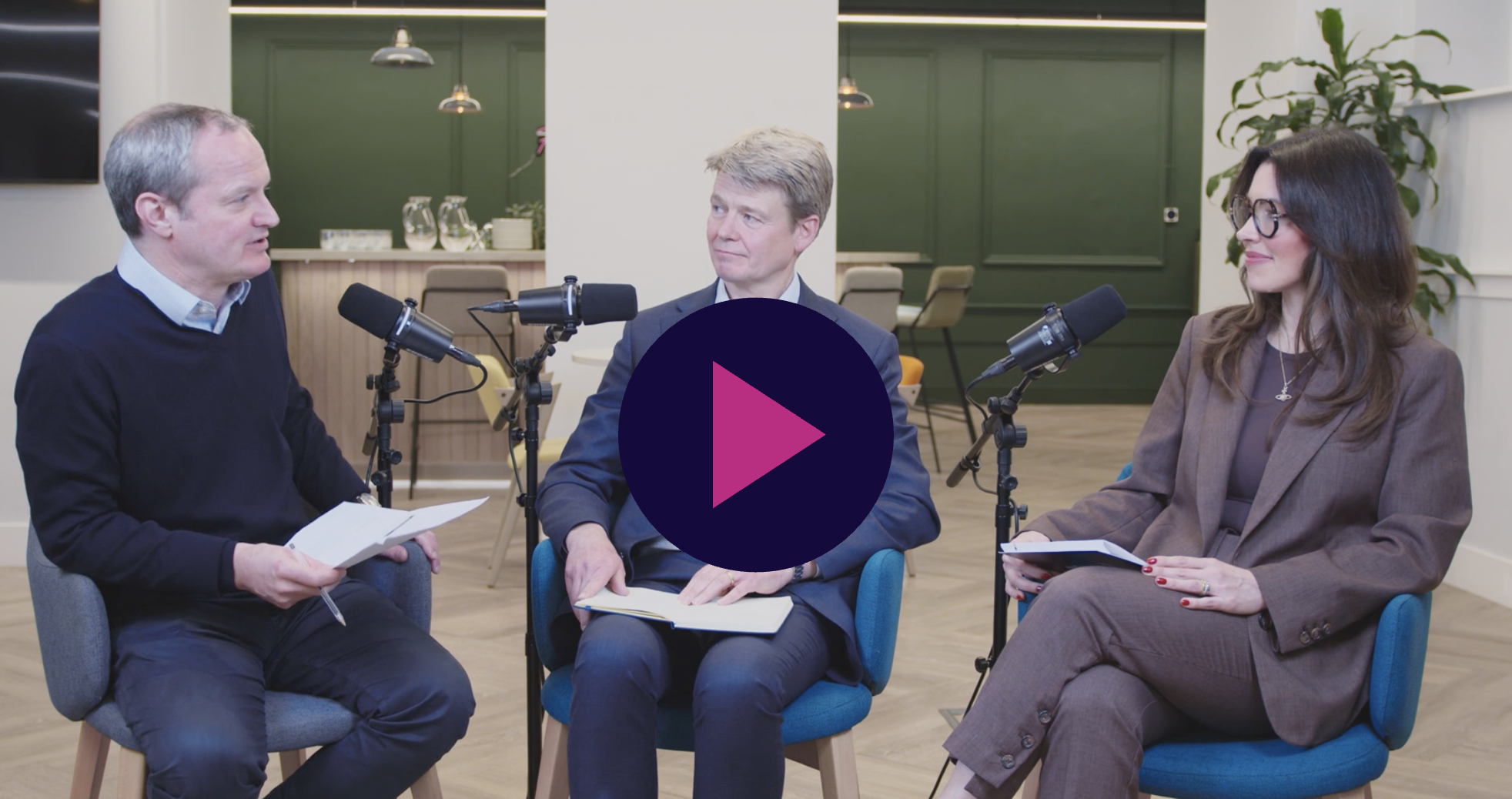
In this video, SEC Newgate Senior Counsel, Richard Griffiths speaks to Leyla Hart-Svensson (MD, Insight & Intelligence) and Andrew Adie (MD, Strategy & Impact) about the 2026 report findings and what it means for UK businesses.
You can download the full UK report here
What to read next
Browse below for the latest news, insights and thought leadership from our team of experts

The government does do PDA
What is Burnham’s endgame on Europe?
COP31: Business cannot wait for certainty

Building out in Paris, not London

Guess who's back? The extraordinary return of Jensen Huang
Burnham beware: EU hokey-cokey risks being bad for business

A year in the making, a decade to deliver

Succession before crisis: Why boards need to plan for the unexpected