Why businesses should pay attention to this week’s APEC meeting in Shenzhen

By William Brocklehurst - Managing Partner, SEC Newgate China
The next Economic Leaders’ Meeting of the Asia-Pacific Economic Cooperation (APEC) forum will take place on Wednesday and Thursday this week in Shenzhen. APEC was started back in 1989 as an Australian government initiative with 12 members. It now has 21, covering around 38% of the world’s population and 60% of global GDP. The forum brings together an eclectic collection of economies, from Argentina and Chile, through to the US and Canada, as well as Russia, China, and the Philippines, among others.
Given the disparate nature of APEC’s membership, and its skeletal secretariat structure, the meeting itself is unlikely to deliver significant political or economic outcomes. Still, the political platform it provides for major world leaders to meet makes this week’s meeting worth paying attention to.
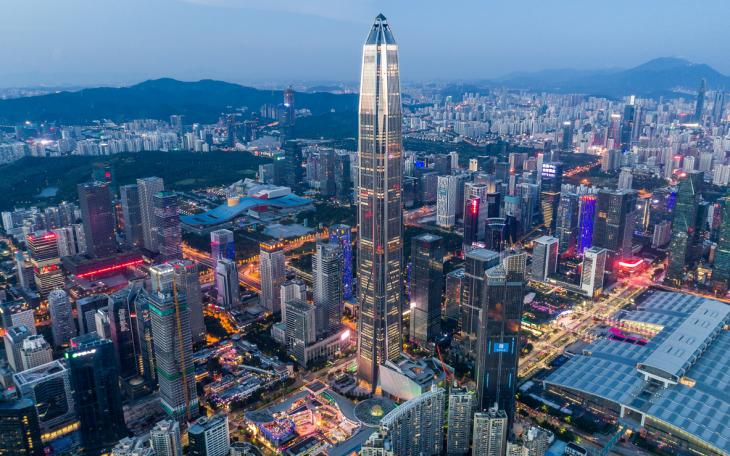
First, for China itself, the meeting is important. The last major diplomatic meeting the country hosted was the G20 in Hangzhou in 2016. Before that, there was the 2014 APEC meeting in Beijing, where the phrase ‘APEC blue’ was coined for the colour of the sky after somewhat magical disappearance of pollution around the time of the meeting. This time round, the location is Shenzhen, China’s Blade Runner-esque city in Guangdong, a province in the far south of the country. Best known for its skyscraper-dominated skyline, and the fact that as recently as the 1980s it was essentially a fishing village, Shenzhen today is the epicentre of China’s technology industry.
Back in 2015, China launched the ‘Made in China 2025’ initiative, aiming to upgrade its manufacturing sector from labour-intensive production into a high-tech, innovation-driven industrial machine. That plan was delivered, if not over-delivered, by many measures. By choosing to host APEC in Shenzhen, President Xi Jinping is showcasing the country’s many leaps forward in technology, whether in electric vehicles, new energy, advanced manufacturing, or software and artificial intelligence. China’s technological prowess will be on full display in Shenzhen.
China has also used its hosting of APEC to showcase the Greater Bay Area initiative, which brings together 11 cities across the two Special Administrative Regions of Hong Kong and Macau, and nine cities in Guangdong province, including Shenzhen and Guangzhou. In the run-up to this week’s APEC leaders’ meeting, Hong Kong hosted the APEC Finance Ministers’ Meeting, and Macau the APEC Tourism Ministers’ Meeting. The location of both these meetings was deliberate, demonstrating, at least politically, the connectivity of the GBA and the strengths of core cities within it: technology, finance, and tourism.
Second, for geopolitics, this week’s meeting provides a diplomatic platform that brings Presidents Trump and Xi together again for the third time in 2026. The fragile truce negotiated at their last meeting in Busan, Korea, seems to continue to hold, although tensions continue to play out in relation to exports of rare earths by China and aerospace products by the US. Both sides are likely looking for some leverage ahead of Xi’s visit to Miami in December for the G20 meeting. Close observers will be watching for how Trump is greeted in China and how much pomp and pageantry surrounds his visit, which will need to not only be matched but exceeded by the US in December.
On Monday, 16 November, the Chinese government officially confirmed that this APEC meeting will see a third President – Putin – sitting down in a room with Presidents Trump and Xi. While media reports have speculated about what the meeting might focus on, given the individuals involved, no one can accurately predict what will come out of it. However, the sheer fact that the three Presidents are due to sit down at a table together is politically unprecedented. The Chinese foreign ministry described the meeting as having “groundbreaking significance,” and some commentators have drawn parallels all the way back to the 1945 Yalta conference. Whatever happens, each side will want to spin the outcomes in their own way. The eyes of the world will be on what is said afterwards, which could set the tone of political dialogue for many globally important issues.
While there is a major CEO delegation at the event, the impact of APEC on businesses will be felt through the political and policy developments the meetings being scheduled around the forum produce. These meetings provide the potential for quite major course corrections, as well as course collisions, on major global military conflicts, arms control, and issues around AI. While APEC will produce a communique, businesses should place their focus on the outcomes of these meetings over those of the APEC forum itself.
What to read next
Browse below for the latest news, insights and thought leadership from our team of experts

Burnham beware: EU hokey-cokey risks being bad for business

A year in the making, a decade to deliver

Succession before crisis: Why boards need to plan for the unexpected

Regional water councils, and the lessons from a demanding summer
Mixed messages on renewables or a plan taking shape?

Number 10 North’s new conundrum: Ensuring fiscal devolution is delivered fairly and for all
Mixed messages on renewables or a plan taking shape?

From the cloud to the community