It’s Your Party and I’ll cry if I want to
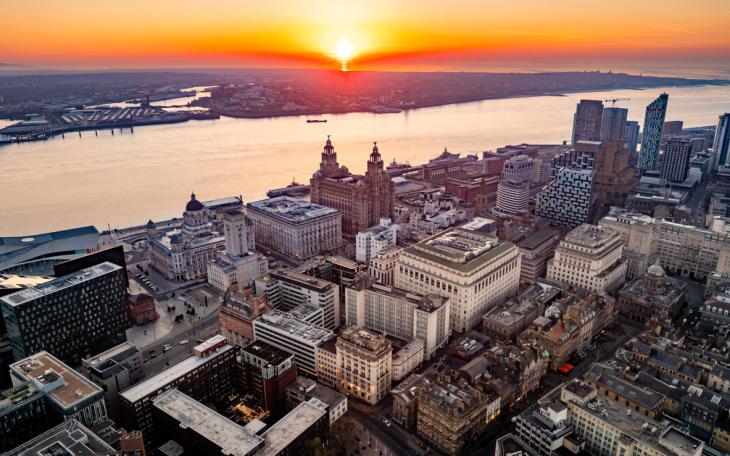
The inaugural conference of Your Party in Liverpool was meant to be a moment of unity: a launchpad for a new force on the British left. Instead, as even those who were inclined to be sympathetic to the newly established movement had reluctantly come to expect, it exposed deep fractures and raised questions about whether this fledgling group can survive its own contradictions. Over two days, the event oscillated between idealistic rhetoric and bitter infighting, culminating in a leadership structure that says as much about the party’s internal dynamics as it does about its prospects.
Jeremy Corbyn opened proceedings with a familiar call for unity, urging delegates to “come together” to challenge inequality and injustice. Yet, within hours, co-founder Zarah Sultana was boycotting the first day in protest at expulsions of members linked to the Socialist Workers Party - a dispute that spiralled into public accusations of witch-hunts and toxic culture. By Sunday, Sultana was back in the hall, delivering a fiery speech that drew standing ovations and underscored her growing influence. Her language was uncompromising: abolition of the monarchy, nationalisation of banking and construction, and a declaration that, “Your Party will be an anti-Zionist party”.
The optics were stark. Corbyn, stony-faced behind her, walked off without acknowledgment. For a man whose politics were forged in discussion circles and on marches, this was an uncomfortable tableau; a reminder that his consensus-driven style and aversion to conflict sits uneasily in a movement increasingly shaped by digital-age combativeness.
The substance of Corbynism and Sultana’s new, online left may not look radically different to those outside the bubble of hard left politics; anti-austerity economics, support for public ownership, and opposition to foreign wars. But within a milieu where the small differences are everything, their styles could not be further apart. Corbyn, now 76, embodies a politics of deliberation shaped by decades of committee meetings, discussion groups and rallies: wary of conflict, and often paralysed by the process of decision-making. His Labour leadership was dogged by crises that stemmed from this aversion - hesitation over Brexit, equivocation on his response to the party’s antisemitism crisis, and a tendency to be “bounced” into action by figures like Karie Murphy, the veteran organiser who served as his chief of staff and has popped up again as a factional Your Party figure.
Sultana, by contrast, developed her politics in the student movement – where politics thrives on direct confrontation, bold statements and real-time communication designed to galvanise your audience and leverage the weight of their collective voice to help you win internal debates. Her formative years were spent at National Union of Students (NUS) conferences and winning control of student and youth Labour Party organisations for the party’s left, honing a style emblematic of the activism of the generation that came of political age on Twitter before it was X. Though I doubt either would relish the comparison, in some ways she is the left’s answer to Labour-right Health Secretary (and former NUS President) Wes Streeting: unafraid to turn ideological skirmishes into an opportunity to build a political brand. Where Corbyn seeks consensus with those he sees as broad ideological allies, Sultana seeks positional clarity.
This divergence partially explains why the leadership model chosen at Liverpool – a collective executive council rather than a party leader – was a victory for Sultana. It institutionalises the model of committee politics she knows best and sidelines team Corbyn’s bid for a singular leadership role. Yet, as with so much in Your Party, the triumph may prove pyrrhic.
If Your Party hoped to carve out space on Labour’s left flank, it faces a formidable rival in the Green Party. Under Zack Polanski’s charismatic leadership, the Greens have surged in polls and membership, offering a socially liberal, anti-austerity pitch that resonates with younger voters disappointed with what for many is their first real taste of a Labour government. The Greens’ communications strategy has made Polanski a fixture on screens and streams, while Your Party remains mired in procedural rows.
It's not clear what sets Your Party apart from the Greens, and as a less established organisation which has already gone a long way to losing the confidence of their prospective support base, that’s a significant problem. With the departure of the more socially conservative of the so-described ‘Gaza Independent’ MPs cementing Your Party’s status as a socially liberal grouping, in truth there is little to set the two parties apart – except for foreign policy. Your Party has doubled down on positions like severing ties with NATO and cutting all diplomatic relations with Israel. These positions may galvanise a core activist base, but they risk alienating the broader electorate and reinforcing perceptions of ideological insularity.
For all the drama in Liverpool – the chants, the constitutional wrangling, the rhetoric of “maximum member democracy” – the strategic picture is bleak. The Greens have already won the battle for relevance. Their message is clear, their organisation more disciplined, and their leader adept at turning values into viral content. Polanski’s ability to fuse climate politics with economic justice, while projecting authenticity, has propelled the Greens into contention not just as a protest vote but as a serious electoral force with a clear demographic to target. This is likely to win them several more seats at the next general election.
Your Party, by contrast, looks like a movement still trapped in its own echo chamber. Yes, some candidates may win seats – and perhaps even claim a scalp as big as Wes Streeting in Ilford North, where Leanne Mohamad’s insurgent campaign nearly toppled him last year. But here’s the rub: those victories will owe more to local dynamics and Labour’s Gaza stance than to any formal Your Party endorsement. If Mohamad runs next time and wins under the Your Party banner or as an independent, while the distinction may matter to activists, it will likely matter little to voters.
Liverpool confirmed what many suspected: Your Party is less a vehicle for governance than a stage for generational theatre. Its committee model may satisfy demands for grassroots control, but it will not resolve the deeper tension between a politics of protest and the pragmatics of power. In the months ahead, expect more rows, more resignations, and more headlines about internal chaos. Meanwhile, the Greens will likely keep climbing, with a clarity of purpose that Your Party, for all the political noise it has generated, has yet to find.
What to read next
Browse below for the latest news, insights and thought leadership from our team of experts

Protecting trust in an age of AI and impersonation

A recovery measured in discipline, not exuberance: Views from the property sector’s EXPO REAL
An Iron Dome and an Iron Lady: Reflections on the Conservative Party Conference

Going for the Grid: Burnham tries to take back control

Your First Home: a helping hand for buyers or a boost for housebuilders?

Solar and Storage Live: The shift from tick-box consultation to meaningful engagement
Burnham goes big in first conference speech, but real test still lies ahead at the Budget

Why dark social matters more than ever