Twelve months of trash: Can Labour survive after Birmingham’s bin-strike anniversary?
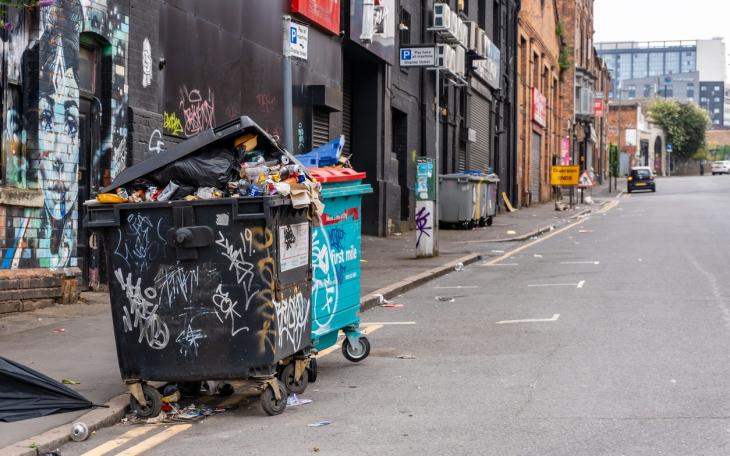

Tomorrow marks an anniversary few people in Britain’s second city will be toasting: one full year since bin workers began an allout strike that has become part civic headache, part political symbol.
It started as a dispute over plans to downgrade job roles and quickly escalated into a wider confrontation. Today, Unite has announced that its members have voted to keep industrial action running through the spring and into the summer, maximising pressure on Labour just as Birmingham heads into local elections in May. So, will the council’s majority be dumped like a flytipped mattress?
With all 101 seats up for grabs, it has the feel of a volatile contest. Labour held overall control in 2022, but only just, with 51 councillors, and this time control could hinge on a handful of marginal wards.
Labour’s pitch is steady hands. Council leader Cllr John Cotton points to the landmark settlement of historic equalpay claims late last year. He also insists the worst of the city’s financial crisis is receding, declaring only last month that the “bankrupt Birmingham” tag should now be consigned to the past.
Add the promise of an extra £130m for frontline services in this year’s budget, and you can see why the leadership is reluctant to blink. Concede too easily to Unite and Labour risks looking like it has learned nothing from the crisis; dig in, and it risks looking indifferent to a city that can’t get its waste collected.
The council’s responsibility is to the whole city, not just any one group of workers or any one union. After effective bankruptcy, voters will expect taxpayers’ money to be handled with care, and they will be wary of any deal that looks like a politically convenient concession dressed up as prudence.
But will voters buy it? Birmingham feels more divided than it has for years, with neighbourhoods that feel left behind set against those seeing investment. Residents want the basics fixed, while others demand bigger change, and patience is thin after months of visible failure. That tension cuts both ways for Labour. A pitch of competence may appeal to a weary electorate that wants the bins collected and the drama to stop, but it will fall flat if daily life still feels like managed decline. Even the streetlights have become a symbol of retreat, with February 2025 reports saying the city is dimming them from 100% to 70% from 9pm. In May, the test is simple. Can people actually see stability returning on their street?
After twelve months of rubbish, Birmingham voters may be in no mood for slogans, but they may be ready to reward a council that finally looks boring in the best way. Labour can still scrape through, but only if its promise of steady hands shows up where it counts: in cleaner streets, credible finances, and a sense that the city is turning a corner rather than just marking time.
What to read next
Browse below for the latest news, insights and thought leadership from our team of experts
The art of the teal
Pay to stay: can England’s mayors follow Manchester’s lead and turn a ‘tourist tax’ into growth?
All change on local government reorganisation

From drought to disruption: Why adaptation matters now

Australia's AI chart crackdown signals a wider shift in trust and disclosure

From Waiting for Godot to winning trust: Communications lessons from IPEM 2026

Farage, Burnham, and the battle for authenticity

What Aristotle can tell us about corporate statements