When a “world-class” vision meets reality – a lesson in communications
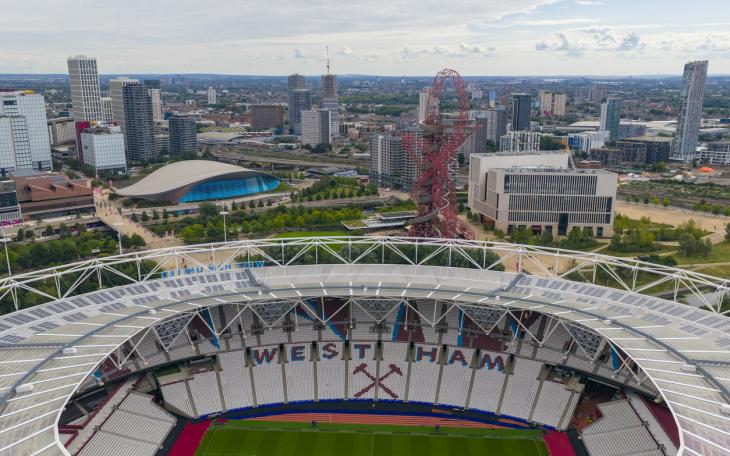

In March 2013, Vice Chair Karen Brady set out an ambitious vision for West Ham United’s future, tied to the move to the Olympic Stadium. Reaffirmed that June, her assertion was unequivocal: a “world-class stadium” would underpin a “world-class team”, financed by enhanced commercial revenues. It was a compelling narrative for fans (of which I am one), promising to break the cycle of occasional good seasons followed by regular battles against relegation and get the club challenging for honours.
More than a decade on, with West Ham about to be relegated, the contrast between the narrative which explained why the club needed to leave its much loved but aging home in the East End and the eventual outcome is striking, particularly when viewed alongside the trajectories of Bournemouth, Brighton and Brentford. These are clubs that, for most of my football-supporting life, have been in the lower divisions and in some cases battling against extinction.
None of those clubs promised “world-class” transformation. Instead, their communications have tended to emphasise sustainability, data-led recruitment, incremental progress, and clear operating models. Brighton’s long-term investment in analytics and player trading, Brentford’s disciplined approach to squad-building and managers, and Bournemouth’s steady evolution all point to a different kind of narrative: one grounded in process over proclamation.
Compared to West Ham they have delivered more, outperforming expectations relative to their financial base, and doing so with a clarity that resonates with their fans. At West Ham, when a player leaves for a bigger club, there is soul searching, whereas at those clubs, the players are calmly replaced with often equally good prospects at lower fees. At West Ham, huge fees have been spent on players who didn’t perform and often shipped out at a loss. In recent years, two of our managers have previously managed Real Madrid, and both were sacked with the club in a perilous state.
The contrast highlights a key communications challenge. Bold statements can crystallise stakeholder expectations around specific outcomes. In West Ham’s case, the implied promise was that enhanced revenues would reliably translate into sustained competitive advantage, making up for the loss of our spiritual home.
But as both football and business repeatedly demonstrate, the path from investment to outcome is rarely linear.
By comparison, the messaging from clubs like Brighton and Brentford has left greater room for manoeuvre. By focusing on principles, systems and discipline, rather than headline outcomes, they have created narratives that are more resilient to short-term performance swings. Brighton has arguably had a less good season than promised, but there are no loud calls for change because fans trust there is a plan to address it.
The lesson for business leaders is clear: ambition should inspire, but it must be framed with precision. Investors don’t just assess vision; they assess delivery against implied promises. Overstating the certainty of outcomes risks eroding trust if results fall short.
Ultimately, credibility lies not in how bold the claim is, but in how consistently reality aligns with the expectations that claim creates. Anyway, I am excited to see how West Ham get on against Lincoln next season.
What to read next
Browse below for the latest news, insights and thought leadership from our team of experts

Pensions reform in focus

Data Centres - Will we learn from the past?

Profit warnings and the importance of context

Delhi's protest. India's growth story.
It’s about housing, stupid

Budget 2026: What’s in store for developers?
Delegation Nation

Reframing Britain’s Brexit debate