Where has everyone gone?

This week, CoStar Group data reported in The Times showed UK retail square footage is shrinking for the first time in modern history, underscoring how profoundly the high street’s traditional role is changing. At the same time, it has been reported that visitor numbers to state-funded museums in England have still not recovered from the pandemic, with attendance down 8% in the last three months of last year compared to 2019, and visitor numbers at Tate Modern and the National Gallery down by as much as 26% and 31% respectively. Considered alongside data that suggests more Britons than ever are eschewing alcohol and profit warnings from businesses such as JD Wetherspoon, it begs the question: where is everyone?
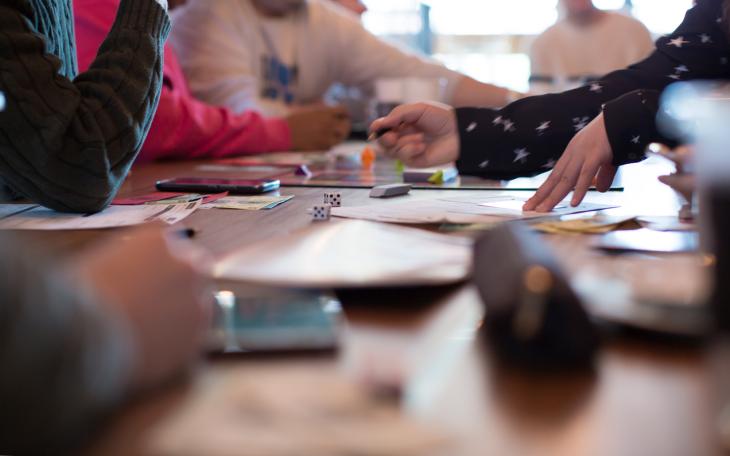
With 98% of Gen Z and 97% of Millennials using social media, it could be that the British public has replaced in-person socialising with doomscrolling. Or, if an article in Bloomberg is to be believed, perhaps they are simply all playing mahjong. Despite mahjong-related events growing 45-fold from 2021 to 2025, according to Eventbrite, it is probably a leap to suggest that everyone is now trading tiles instead of going to the shops, but this headline points towards a broader trend in how and why people gather that reveals what is happening to the traditional third space in Britain.
From chess nights to craft groups in pubs, run clubs, book swaps and co-working communities, social life appears to be moving away from large institutional spaces and toward smaller, participatory ones. What people increasingly seem to want is not just somewhere to go, but something to do: a shared activity, recurring ritual or community identity that feels more active than just passive consumption. In that sense, the decline of traditional third spaces may be less about isolation than about a broader rewiring of how social connection is organised.
This matters because third spaces have historically shaped not only how we spend time and money, but how we build community. For decades, retail districts, shopping centres, museums and pubs functioned as default social infrastructure. If those spaces no longer command social gravity in the way they once did, commercial real estate faces both a structural and cultural recalibration. Value may increasingly flow toward spaces that successfully blend commerce, leisure and community, while offices may also be evolving from purely professional settings into some of the few remaining consistent venues for in-person interaction. They are not replacing traditional third spaces, but they may be absorbing some of their social function.
As physical spaces compete harder for attention, communications can no longer rely solely on heritage, scale or footfall. Whether a retailer, cultural institution, employer or landlord, the challenge is increasingly about articulating why a space matters socially, not just functionally. A museum may need to position itself less as a hallowed hall of legacy or culture and more as a site of participation, while a workplace needs to be a site of connection rather than mandatory attendance. The rise of hobby-led and community-first spaces suggests that the narrative about what a place represents, who it is for and how it fits into people’s lives, is becoming as important as location itself.
For those thinking about audiences, communities and place, the key question is not simply where people have gone, but what today’s gathering spaces offer that older ones do not. The answer is participation: spaces that feel less like backdrops and more like social ecosystems. The third space has not vanished; it has fragmented, diversified and become more intentional. Understanding that shift may prove essential not only for landlords or institutions, but for anyone trying to understand how public life is being reshaped.
What to read next
Browse below for the latest news, insights and thought leadership from our team of experts

Going for the Grid: Burnham tries to take back control
Your First Home: a helping hand for buyers or a boost for housebuilders?

Solar and Storage Live: The shift from tick-box consultation to meaningful engagement

Burnham goes big in first conference speech, but real test still lies ahead at the Budget

Why dark social matters more than ever

Corporate affairs and navigating dystopia
The new reputation battlefield: Navigating risk in a fragmented media landscape

Investors ponder what's next in property