What's at stake today and why it matters
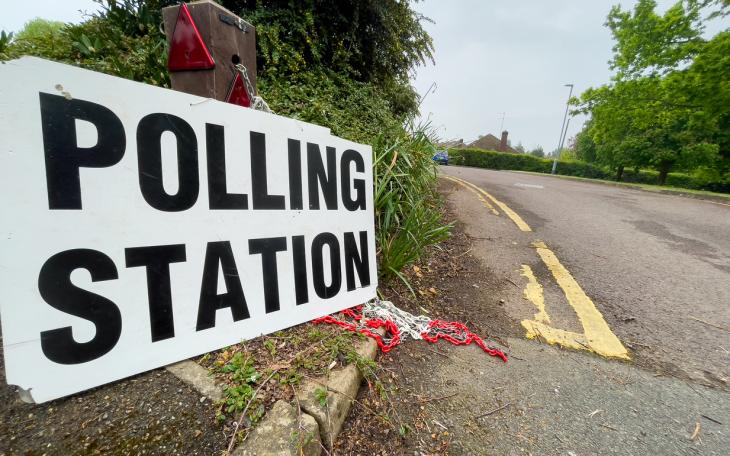

Voters across England, Scotland and Wales head to the polls today in what amounts to the most significant set of elections outside a general election in years. More than 5,000 councillors are being elected across 136 English councils, including all 32 London boroughs. Six mayors will be chosen in England. All 129 members of the Scottish Parliament are up for election at Holyrood. And in Wales, all 96 members of an expanded Senedd will be elected for the first time under a new proportional system.
The results on Friday morning could reshape the trajectory of British politics.
SEC Newgate’s experts set out what to watch for in each of the key battlegrounds, but we begin with Practice Head, Tom Nutt, who outlines why the 2026 elections matter for business and corporate affairs advisers.
Why this matters for business: Tom Nutt, Practice Head, The Lab
“For corporate affairs leaders, everything has become political, and they will need to watch these local elections in the UK like never before with the embedding of multi-party politics. Corporate reputation has become inextricably linked with the policy and political arena and the sands are shifting in unpredictable ways. There is very little that any organisation is doing, even ones operating outside a regulated environment, that does not carry a political dimension. The need for what we call corporate diplomacy has never been higher.
“The idea of a coherent global narrative has broken down entirely. You must be hyper-local while maintaining some coherence at a global level, agile to individual nuance without appearing to flip-flop. Corporate diplomacy means thinking, as an international organisation, about how you are going to influence the environment you operate in at a local, national and supranational level.”
England: Phil Briscoe, Managing Director, Advocacy
“In the East of England, arguably Reform UK's heartland, home to three of its five MPs and to Nigel Farage's own Clacton constituency, the party faces its biggest test yet. Across five counties, 611 seats are being contested, and while the Conservatives are defending the largest share, all parties are bracing for disruption. Some polls project Reform gaining over 2,000 seats nationally, with more than 320 in the East of England alone. But if they gain fewer than 200 in the region, serious questions will follow about the party's momentum and endurance in the area it needs most.
“The more immediate question may be what happens the morning after. With hung councils a possibility and significant blocs of Reform councillors arriving for the first time, the negotiations over who governs, and who is willing to work with whom, could prove just as consequential as the results themselves. Many of these newly elected councillors will inherit a single overriding priority: managing the transition to new unitary authorities as part of local government reorganisation.
“There is also the potential that three of the four nations of this United Kingdom could now be led by parties committed to a break-up of the United Kingdom. It would be a fundamental mistake not to recognise that fact as both an extraordinary and pivotal moment in British history."
Read Phil's full analysis: Will the sun rise in the east for Reform on Friday?
Manchester: Simon Donohue, Head of Manchester
Simon Donohue, Associate Director leading the Manchester office of SEC Newgate, said: “The North has witnessed two incredibly significant by-elections in recent months, one parliamentary and one at local government level, which illustrate perfectly what we might expect from today’s polling.
“The Gorton and Denton parliamentary by-election was a headline-grabbing victory for the Greens, with Hannah Spencer taking a Labour seat which had been mooted as a potential route back into parliament for Greater Manchester’s Labour Mayor, Andy Burnham. It illustrated what strong local campaigning can do to keep Reform UK out.
“The Barton and Winton local by-election resulted in Reform UK’s first ever seat on Labour-led Salford City Council, reversing a majority of more than 1,200 for the previous Labour councillor to beat Labour’s by-election candidate by only 34 votes. The Greens finished in third place, with less than half of the votes for Reform UK and Labour.
“What this tells us is the impact of fractured party politics and an end of the traditional two-party political system. Labour is defending 16 of the 21 north west councils that are holding local elections in North West England, while five are currently under no overall control. It is fighting on three fronts – addressing the low mood for Labour nationally, knowing that any previous support is likely to be split between Reform UK and the Greens.
Wales: Dafydd Rees, Senior Counsel, Communications
"The significance of these Senedd elections cannot be overestimated. Here are three reasons why what happens in Wales today matters.
“Over a century of Labour's political dominance in Wales looks set to come to an end. The reality of that result has yet to seep into the consciousness of the British Labour Party and could well be the long-awaited trigger for a challenge to the Prime Minister's leadership.
“No party appears close to securing a majority in Wales. The reality of multi-party coalition politics and the end of single party rule could be a foretaste of what lies ahead at Westminster after the next general election.”
Scotland: Mark Glover, Executive Chairman
“North of the border, the contest is markedly different. The SNP enters as a long-standing incumbent after nearly two decades in power, and the political dynamics vary sharply by geography. Labour is the main challenger across the Central Belt, the Conservatives remain strongest in the Borders and Aberdeenshire, and the Liberal Democrats hold ground in parts of the Highlands. Overlaying all of it is the regional list vote, which is expected to benefit both the Greens and Reform UK.
“Scottish Labour under Anas Sarwar has grown more coherent and credible, but still faces the challenge of separating its Scottish message from an unpopular UK leadership. Reform's presence north of the border is less dramatic than in England or Wales, hampered by weak local organisation and a lack of high-profile Scottish figures, but it still risks splitting the unionist vote and inadvertently helping the SNP hold seats it might otherwise lose. Though with many voters still undecided, the final picture is far from settled.”
Read Mark's full analysis: Scotland: The Battle for Holyrood
What to read next
Browse below for the latest news, insights and thought leadership from our team of experts

Protecting trust in an age of AI and impersonation

A recovery measured in discipline, not exuberance: Views from the property sector’s EXPO REAL
An Iron Dome and an Iron Lady: Reflections on the Conservative Party Conference
Going for the Grid: Burnham tries to take back control

Your First Home: a helping hand for buyers or a boost for housebuilders?

Solar and Storage Live: The shift from tick-box consultation to meaningful engagement
Burnham goes big in first conference speech, but real test still lies ahead at the Budget

Why dark social matters more than ever