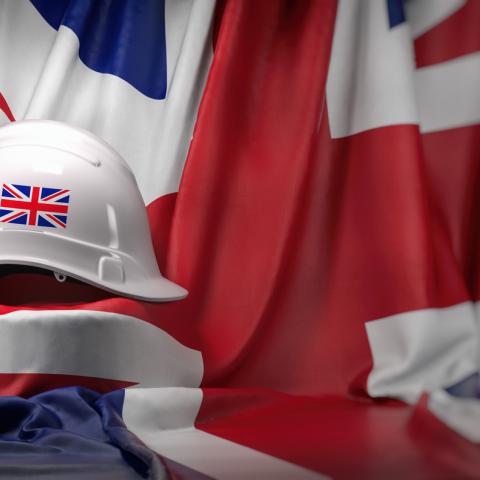
Trade chaos is the UK’s chance to get borders moving
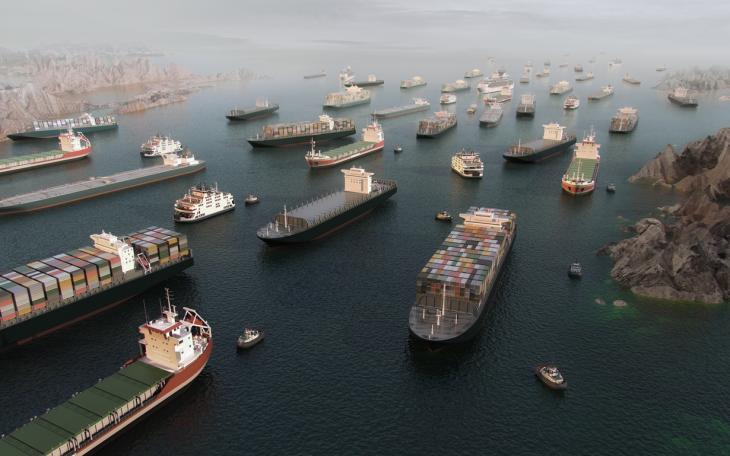

This latest crisis in the Middle East is just the most recent of a series of challenges for global business. Brexit followed by the pandemic and Trump 2.0’s tariff tangles have given business leaders plenty of practice in controlling what they can.
Politicians now must use the levers at their disposal to make goods flow across borders as efficiently as they can. As an island nation with a proud trading history, the UK should make the most of this opportunity.
Supply chains are rapidly being restructured in and around the Middle East, as different trade corridors and ports flex to pick up capacity where other shipping routes are put under strain.
As air freight capacity has dipped considerably with flight suspensions and predictability changing almost daily, surface transportation is responding at pace. Jeddah Port in Saudi Arabia for example has rapidly become a major player in the region, with goods increasingly shipped there and then taken by lorry to their destination.
Freight forwarders are working tirelessly day and night, reacting quickly to cargo becoming stuck and liaising with shipping lines as well as hauliers to reroute containers as fast as possible. At the same time, the cost of transportation is skyrocketing, thanks to everything from oil price fluctuations to risk surcharges and spikes in trucking rates.
Intermediaries responsible for moving goods across the globe cast a weary and wary eye at these fee hikes -particularly for freight nowhere near the Gulf. Yet, when the priority is getting A to B and C, delivery trumps doubt – for now.
Back in Britain, politicians wring their hands about what can be done to shield consumers from the costs of geopolitical conflict, yet more thinking is needed to connect the dots to bringing down the costs of trade.
Reset with the EU? That could certainly help reduce time and paperwork for agrifood exports to Europe. Trade deals further afield? Finalising the UK’s agreement with Gulf countries and Turkey while implementing the one with India is definitely the way to go, and securing sweeping stability in trade terms with the US right now is of paramount importance.
But what about our own border, something that is entirely within our own gift to sort out? Other big trading nations, from advanced economies to developing nations, put a premium on facilitating trade using domestic levers. The actual business of moving goods is critical to reaping the benefits of international trade, and a matter taken seriously by our counterparts.
From the Dutch and the Americans to Nigeria and Singapore, simplifying government systems to make it easier to move trade in and out of countries has become a core national project in many of them.
Yet we have paused our version, the Single Trade Window concept, at a time when the need for efficiency savings is critical.
HM Treasury has always taken a rather dim view of the need to spend money on trade, questioning the need for it as if the costs of conflicts and challenges to trade don’t get passed on down the chain to businesses and consumers alike.
Luckily, the intermediaries industry - those tasked with getting freight in and out of the UK - continues to plug away at alternative solutions with officials to simplify customs and border procedures, but greater engagement across both Westminster and Whitehall is needed to make these gains a reality.
At a time when the government as a whole has committed to a 25% reduction in the regulatory burden on businesses, and when the costs of getting our goods and supplies is going up thanks to a global crisis not of our making, diverting some time to cross-government collaboration in making trade as efficient as it is secure seems a no-brainer.
The logistics and freight industry stands ready to do its part – indeed, it already is - but policymakers and politicians need to see the bigger picture on how best to future-proof the UK from geopolitical shocks.
What to read next
Browse below for the latest news, insights and thought leadership from our team of experts

From drought to disruption: Why adaptation matters now

Australia's AI chart crackdown signals a wider shift in trust and disclosure

From Waiting for Godot to winning trust: Communications lessons from IPEM 2026

Farage, Burnham, and the battle for authenticity
What Aristotle can tell us about corporate statements

The changing boundaries of privacy
The politics of presence: Why institutions need to be seen to be trusted

The CEO transition tightrope: How to signal change without undermining trust